The Simple Prevention Plan (Works for Most Homes)
Daily: Wipe Dry (especially base and handles)
If I could recommend only one habit, it would be this: wipe the faucet dry.
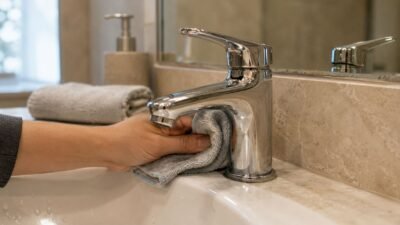
Hard-water spots form because water evaporates and minerals remain on the surface. Getting in the habit of wiping fixtures dry with a microfiber cloth after use can stop minerals from drying on the surface in the first place.
I keep a microfiber cloth under the sink. I do a quick pass over the spout, handles, and especially the base. Ten seconds now saves me a bigger cleanup later.

Weekly: Gentle Cleaning Routine (non-abrasive, finish-safe)
Weekly cleaning isn’t about scrubbing harder. It’s about removing the thin film that helps minerals stick.
A simple routine works well:
- mild soap + warm water
- soft cloth
- rinse
- dry
If you’re using anything that feels like “polishing compound” or sounds gritty, you’re probably wearing the finish down faster than you realize.

Monthly: Descale + Aerator Maintenance
If you have hard water, monthly descaling is the step that keeps things from turning into a crusty mess.
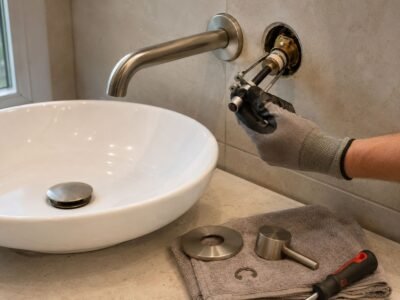
If you’re not sure what counts as the aerator, cartridge, or base plate—and which parts can safely be removed for cleaning—this diagram-style walkthrough will help: Understanding Faucet Structure: A Practical Guide. It makes the monthly maintenance step much less guessy.
I treat it like maintenance, not an emergency: short soak, gentle brush, thorough rinse, then dry.

Use the Right Cleaning Method for Your Finish
Finish-Safe Cleaning Rules (soft cloths, mild soap, rinse + dry)
These four rules are boring—but they protect finishes:
- Soft cloths only (microfiber is ideal).
- Mild soap for everyday cleaning.
- Rinse well so cleaner residue doesn’t sit on the finish.
- Dry completely (especially around seams and the base).
In my experience, most “corrosion” complaints start with either residue left behind or finish damage from abrasion. Keeping the routine gentle helps prevent both.
If you’re trying to figure out whether you’re dealing with true corrosion, mineral spotting, or just finish wear from cleaning, it’s worth checking the root causes first. I break down the most common triggers—and what each one typically looks like—in What Causes Bathroom Faucets to Corrode?. Knowing the cause helps you choose the gentlest fix that actually works.
Vinegar/Citric Acid: When It’s OK (and when it’s risky)
Vinegar works because it dissolves mineral deposits. A commonly suggested approach is a 1:1 mix of white vinegar and water, with a short sit time (a couple of minutes), then wipe clean.
But vinegar is still an acid. Some finishes don’t love frequent acid exposure, and long soaks can dull certain surfaces. If you’re unsure, test a small, less-visible area first.
When I mention vinegar in A-TORNEIRA content, I always frame it the same way: use it occasionally, dilute it, keep contact time short, rinse and dry immediately.
What to Avoid (bleach, strong acids, abrasive pads/powders)
If someone tells me, “My faucet got worse after cleaning,” it’s usually one of these:
- abrasive pads/powders
- strong disinfectants used on finishes
- repeated heavy acid use
- letting products sit too long
- air-drying after cleaning
Here’s a quick table that makes it easier:
| Avoid this | Why it backfires | Use this instead |
|---|---|---|
| Bleach / strong disinfectants on finishes | can weaken coatings and dull finishes over time | mild soap + water |
| Abrasive pads / powders | scratches the protective layer, making pitting more likely | microfiber cloth |
| Long acid soaks | can dull/etch some finishes | short, diluted descaling |
| Air-drying | leaves minerals behind as water evaporates | rinse + wipe dry |
Keep Moisture From Sitting on the Faucet
Improve Ventilation (fan timing, airflow, humidity control)
Humidity makes everything harder to keep clean.
If your mirror stays foggy long after a shower, your faucet is spending more time damp too. Dampness gives minerals time to stick and gives corrosion a better chance to start.
You don’t need perfection—just consistent airflow:
- run the fan longer
- crack the door after showers
- reduce lingering steam when possible

Stop Water Pooling at the Base (wipe habits + splash control)
The base is the “problem zone” in a lot of bathrooms.
Water pools there from splashing, wet hands, and condensation. If you also have soap scum or toothpaste residue around the base plate, it becomes a moisture trap.
Small changes help:
- wipe the base daily
- keep containers from trapping water against the base
- adjust splash patterns if the stream hits the deck a lot

Reduce Residue Buildup (soap scum/toothpaste film traps moisture)
Residue matters more than most people think.
Soap scum and toothpaste film create a sticky layer that:
- holds moisture
- grabs minerals
- makes spotting return faster
A quick weekly wipe around handles and the base keeps that film from building into crust.
Water Quality Fixes That Reduce Repeat Corrosion
Hard Water: Softener vs Filter (what each actually solves)
If spots return no matter what you do, it might be the water.
Here’s the simple breakdown:
| Option | Helps with | Doesn’t fully solve |
|---|---|---|
| Water softener | hardness minerals that cause limescale/spotting | disinfectant taste/odor |
| Carbon filter | improves taste/odor, reduces some chemicals | hardness minerals (scale) |
High Chlorine/Chloramine: what to try if finishes keep spotting
Not every “spot problem” is pure hardness.
If finishes seem to dull quickly or marks come back fast, start with:
- gentler routine (less abrasion)
- consistent drying
- a basic water test (hardness + pH)
If you’re reacting to recurring staining by using stronger products, it can backfire—because finish damage makes future spotting stick harder.
Well Water Basics (minerals, pH—why it changes outcomes)
Well water can vary a lot. If you see unusual staining (especially blue-green), it’s worth checking water chemistry.
If stains return quickly after cleaning, treat it as a “water + habit” issue, not a “use stronger cleaner” issue.
Choose More Corrosion-Resistant Materials & Finishes
Solid Brass vs Stainless Steel (what holds up better long-term)
Material choice is your baseline resistance.
Brass bodies resist rust (iron oxide), but brass can oxidize depending on conditions. Stainless steel can be durable, but it isn’t immune—especially in salty environments.
My practical advice: match your faucet material to your reality (hard water, humidity, coastal air), then support it with good habits.
PVD Finishes (why they resist wear and spotting)
Durable finishes matter because finish damage is often the gateway to corrosion.
When a finish resists wear, it’s easier to maintain and less likely to develop “sticky” spots where minerals bond and re-bond over time.
Quick Buying Checklist (warranty, finish type, build quality)
When I’m choosing with long-term appearance in mind, I look for:
- strong warranty terms
- clear care guidance
- durable finish options
- solid construction
If hard water is unavoidable, it’s also worth knowing that brushed/matte-style finishes can hide water marks better than mirror-shiny surfaces.
If you’re shopping with maintenance in mind, it’s also worth avoiding a few designs that look great in photos but are frustrating to keep clean. I list the most common ones here: Faucet Pitfalls: 7 Types to Avoid for Kitchen & Bathroom.
This is the kind of realistic tradeoff I like to call out in A-TORNEIRA content: the “prettiest in the showroom” isn’t always the easiest to live with.
Conclusion
The 3 habits that prevent most corrosion cases
If you want the simplest plan that works in most homes:
- Wipe dry daily (especially around the base).
- Clean gently weekly (soft cloth + mild soap).
- Descale monthly if you have hard water.
Boring, consistent prevention beats occasional intense cleaning.
If corrosion keeps returning, what to change first (water vs cleaning vs humidity)
If the same issues keep coming back, I’d troubleshoot in this order:
- Cleaning method (abrasives? harsh chemicals? long soaks?)
- Moisture (ventilation, pooling at the base, residue traps)
- Water (hardness + pH, especially if staining is unusual)
Once you fix the biggest driver, the faucet usually gets much easier to maintain.
FAQ
How do I prevent hard water spots on bathroom faucets?
Wipe the faucet dry after use so minerals don’t dry on the surface. If the problem is constant, address hardness at the source (softening is a common long-term solution).
Is vinegar safe for all faucet finishes?
Not always. A diluted vinegar-and-water solution is commonly recommended for mineral deposits, but contact time should be short, and you should rinse/dry immediately—especially on specialty finishes.
What’s the best cleaner for bathroom faucet finishes?
For everyday care: mild soap and water with a soft cloth, then rinse and dry. Avoid abrasives that scratch and make future spotting stick worse.
How often should I clean or descale a bathroom faucet?
Weekly gentle cleaning is enough for most homes. In hard-water areas, monthly descaling helps prevent buildup from becoming stubborn.