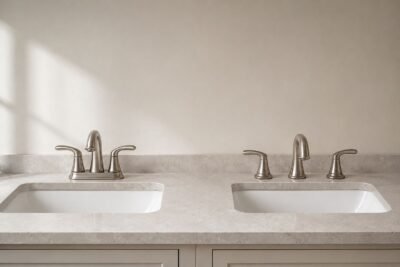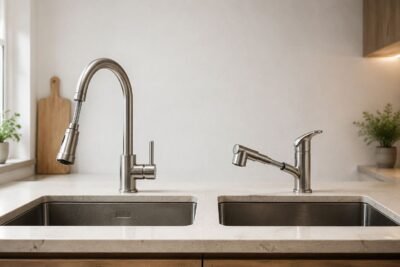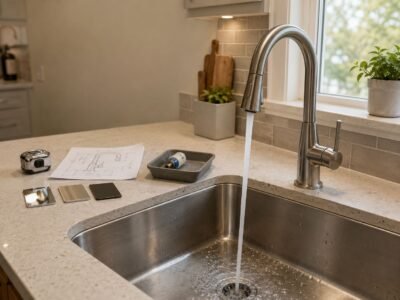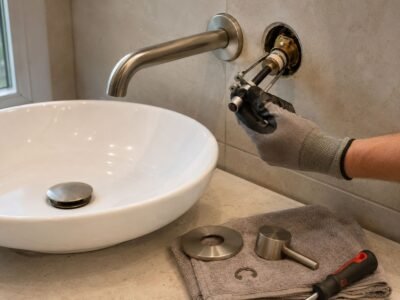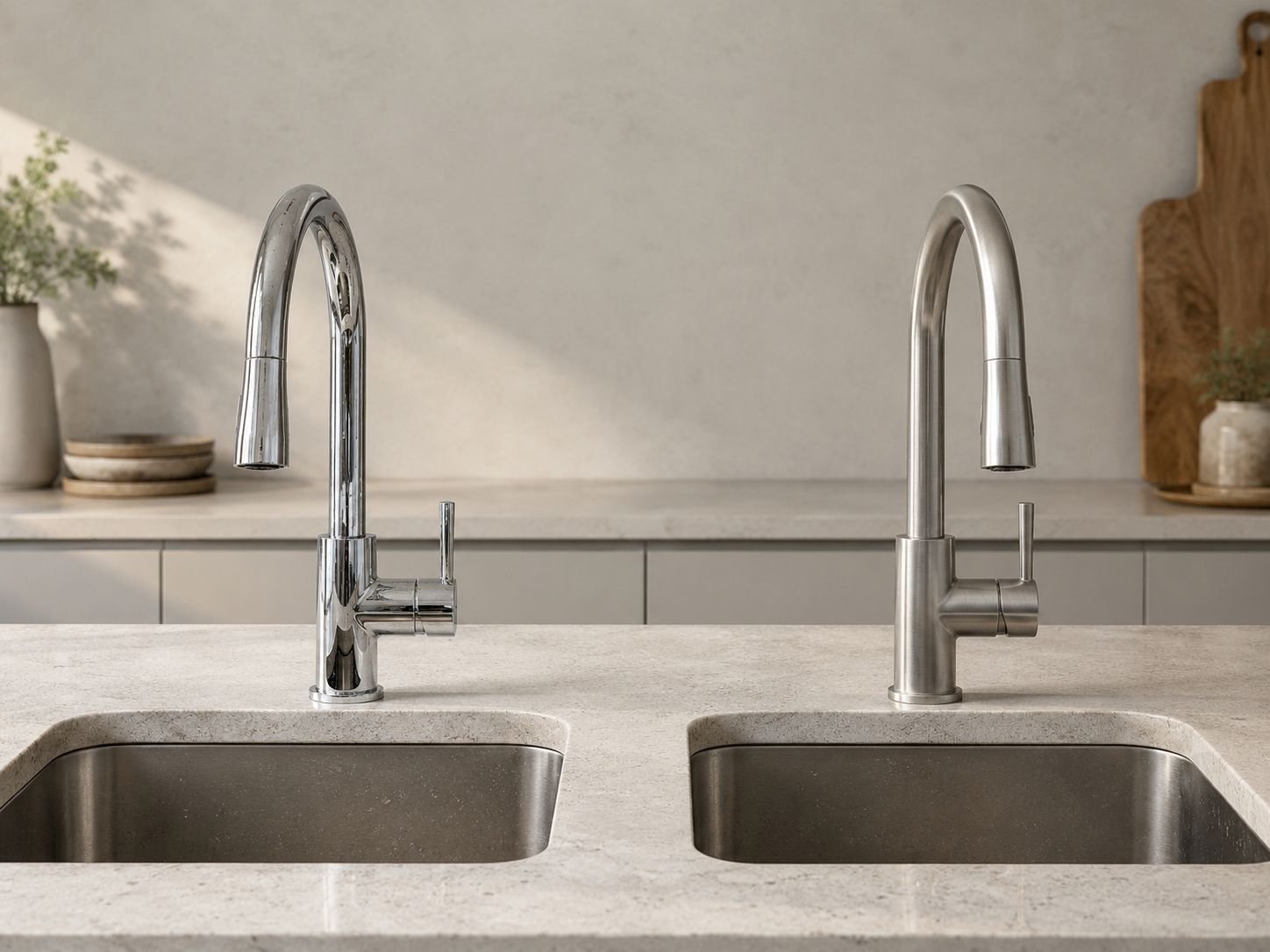
Choosing between chrome and stainless steel faucets involves more than comparing two colors. Chrome usually describes a reflective plated finish, while “stainless steel” may refer either to a solid stainless steel faucet body or to a brushed stainless-style finish applied over another metal.
For most homeowners, polished chrome is the better choice for maximum shine and a lower entry price, while brushed stainless steel is often easier to coordinate with appliances and less likely to show fingerprints. However, durability and drinking-water safety depend on the faucet’s underlying materials, construction quality, certifications, and maintenance—not on the finish name alone.
Chrome Finish vs Stainless Steel: What Is the Difference?
Chrome Is Usually a Plated Finish
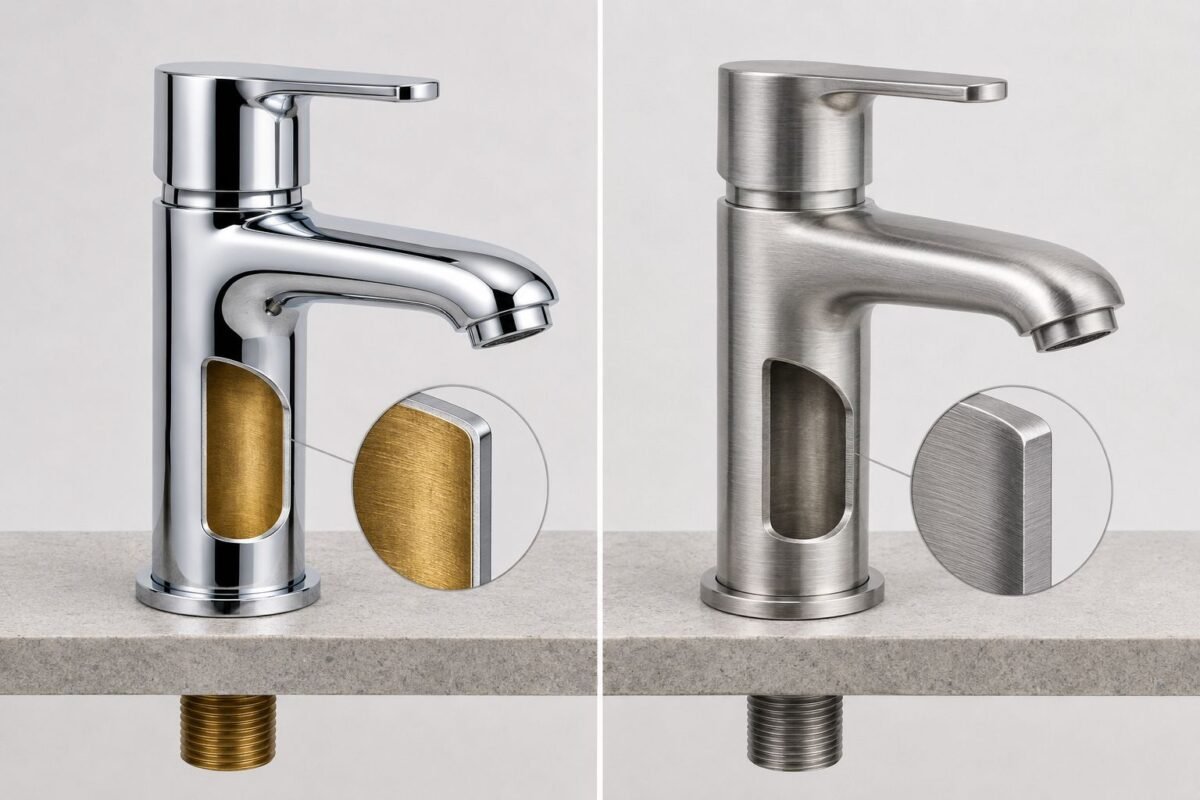
Chrome usually refers to an electroplated surface rather than the faucet’s main structural material. In many decorative plating systems, the visible chromium layer is applied over one or more underlying layers, commonly nickel and sometimes copper, which help create the appearance and protect the base metal.
The faucet body itself may be made from brass, zinc alloy, stainless steel, or another substrate material. This is why two faucets described as “chrome” can differ significantly in corrosion resistance and long-term appearance.
“Stainless Steel” May Describe a Material or a Finish
Some faucets use solid stainless steel for most of the body, while others use brass or another metal with a brushed stainless steel-style finish. These products may look similar but differ in weight, corrosion resistance, manufacturing cost, and long-term wear.
Check whether the specifications say “solid stainless steel,” identify a grade such as 304 or 316, or simply list “stainless steel finish.” The finish name alone does not confirm the material underneath.
Finish Does Not Determine Drinking-Water Safety
Drinking-water safety should be evaluated at the product level rather than inferred from the exterior finish. A properly manufactured chrome-plated brass faucet can meet the same applicable drinking-water requirements as a stainless steel faucet.
For products sold in the United States or Canada, look for recognized certifications covering the complete listed faucet model. NSF/ANSI/CAN 61 addresses substances that may leach from drinking-water system components, while NSF/ANSI/CAN 372 addresses lead-content requirements. Certifications, product documentation, and the materials used in the waterway are more meaningful than the exterior color alone.
NSF explains that NSF/ANSI/CAN 61 evaluates the potential health effects of materials and products that come into contact with drinking water. NSF/ANSI/CAN 372 serves a different purpose: it provides a standardized method for determining whether a product complies with applicable lead-content requirements. Therefore, buyers should check the certification of the complete faucet model rather than assume that chrome or stainless steel is inherently safer.
Chrome vs Stainless Steel Faucets for Appearance and Style
Chrome’s High-Gloss Mirror Effect
Chrome still wins on shine. If you want a faucet that throws light around the room and feels crisp in a modern space, chrome is hard to beat. It can make a small bathroom feel brighter. It can also look right at home in a kitchen with glossy tile, white cabinets, or a more traditional polished setup.
The downside is that the shine shows fingerprints and water spots more easily. If the sink area gets heavy use, chrome can look busy unless you wipe it often. That does not mean it is a bad finish. It just means it asks for more attention if you care about a spotless look.
Brushed Stainless Steel’s More Subdued Appearance
Brushed stainless steel has a softer, less reflective appearance than polished chrome. Its directional grain can make fingerprints, light scratches, and dried water spots less noticeable, although it does not prevent those marks from forming.
It works especially well with stainless steel appliances, brushed cabinet hardware, stone countertops, and contemporary interiors. Polished chrome is more suitable when you want a brighter focal point or need to coordinate with existing chrome accessories.
Keep in mind that polished stainless steel can show fingerprints almost as readily as other glossy finishes. The visual-maintenance advantage mainly applies when comparing mirror-polished chrome with brushed or satin stainless steel.
Chrome vs Stainless Steel Faucets: Durability, Corrosion, and Lifespan
Daily Scratches, Corrosion, and the Role of the Plating
High-quality chrome plating can perform well in normal residential use, but its appearance depends on the integrity of the complete plating system. Abrasive pads, harsh chemicals, poor surface preparation, coating defects, or long-term wear may lead to scratching, dull areas, discoloration, localized corrosion, or exposed base metal.
A solid stainless steel faucet does not rely on chrome plating for its color, so minor surface wear may be less visually disruptive. However, stainless steel is not scratch-proof or corrosion-proof. Its performance depends on the alloy grade, surface finish, fabrication quality, and exposure to chlorides or aggressive cleaners.
Grade also matters. Type 304 stainless steel is commonly suitable for normal indoor conditions, while Type 316 generally offers better resistance where chloride exposure is significant, such as coastal or demanding environments.
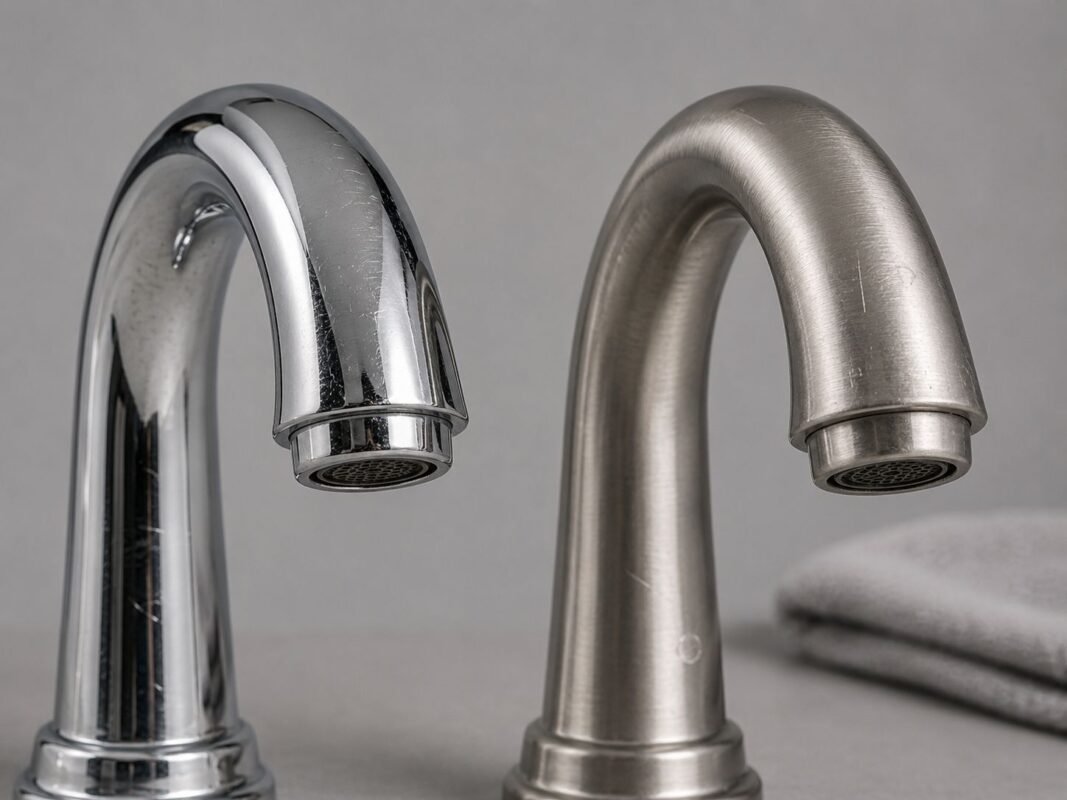
The finish should therefore be only one part of the durability comparison. The body material, cartridge, seals, hoses, plating quality, warranty, water chemistry, and maintenance routine may have an equal or greater effect on the faucet’s actual service life.
Chrome vs Stainless Steel Faucets at a Glance
| Comparison Factor | Polished Chrome Faucet | Brushed Stainless Steel Faucet |
|---|---|---|
| What the name usually means | A reflective plated finish over brass, zinc alloy, stainless steel, or another substrate | May mean a solid stainless steel body or only a stainless-style finish |
| Appearance | Bright, reflective, and mirror-like | Softer, less reflective, and more understated |
| Fingerprints | Usually more visible | Usually less noticeable on brushed surfaces |
| Manchas de água | Dried droplets and mineral residue are easier to see | Light spotting may be less visually obvious |
| Scratch appearance | Scratches can disrupt the reflective plated surface | Fine scratches may blend into the directional grain |
| Corrosion resistance | Depends heavily on plating quality and the underlying material | Depends on the stainless grade, fabrication quality, and environment |
| Cleaning needs | May need more frequent wiping to maintain a spotless shine | May look cleaner between routine wipe-downs |
| Typical price range | Widely available from entry-level to premium | Solid stainless steel models may have a higher initial price |
| Best suited for | Bright bathrooms, traditional spaces, and rooms with chrome accessories | Busy kitchens, contemporary interiors, and rooms with stainless appliances |
| Main buying caution | Check the body material and plating quality | Confirm whether “stainless steel” describes the body or only the finish |
Important: The finish alone does not determine faucet quality, service life, or drinking-water safety. Always compare the body material, cartridge, waterway components, certifications, warranty, and replacement-parts availability.
If you are also weighing finish durability against style, take a look at my guide on understanding faucet materials and finishes for a deeper dive.
What Shortens Lifespan in Real Homes
In a lightly used guest bathroom, a quality chrome faucet can retain its appearance for many years. In a busy kitchen, brushed stainless steel may require less frequent polishing because fingerprints and light water spots are less visible.
Neither finish guarantees a longer faucet lifespan. Premature failure is more often associated with poor-quality cartridges, weak castings, leaking hoses, damaged plating, unsuitable cleaners, or mineral buildup than with the finish color alone.
Choose the finish based on the room’s workload and appearance requirements, but compare construction quality and warranty coverage before making the final decision.
Chrome vs Stainless Steel Faucet Maintenance and Water Conditions
The Cleaning Routine Each Finish Actually Demands
Polished chrome generally requires more frequent wiping if you want it to maintain a spotless, mirror-like appearance. Brushed stainless steel may look cleaner between wipe-downs because its grain makes fingerprints and light spotting less visible.
The basic care routine is similar for both finishes: use warm water, mild soap, and a soft microfiber cloth, then rinse and dry the surface. Avoid abrasive pads, metal brushes, and strong chemicals unless the faucet manufacturer specifically approves them. Do not leave concentrated cleaner or mineral-removal products on the surface longer than directed.
Hard Water, Humidity, and Busy Households
Water quality changes the maintenance burden. According to the Serviço Geológico dos EUA, water hardness is primarily caused by dissolved calcium and magnesium. Water containing 121–180 mg/L of hardness as calcium carbonate is generally classified as hard, while water above 180 mg/L is classified as very hard. When droplets evaporate on a faucet, the dissolved minerals can remain on the surface as visible residue or scale.
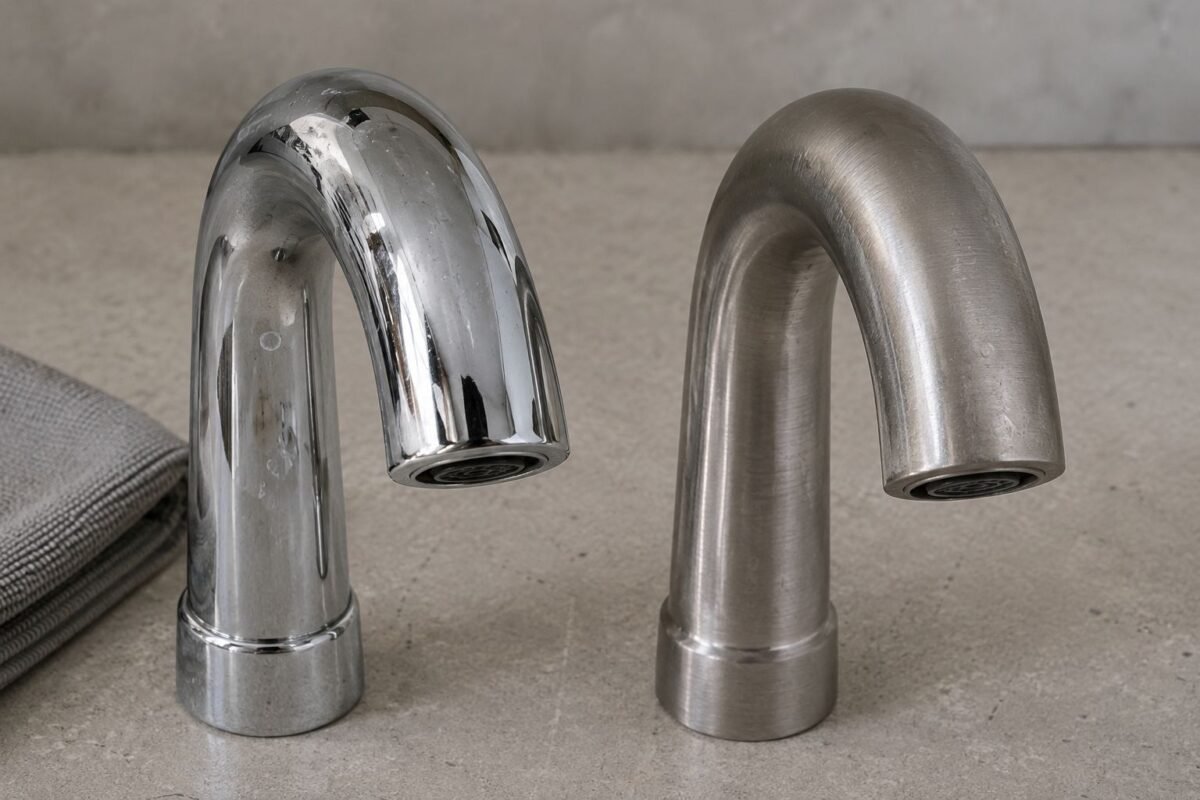
Both chrome and stainless steel can collect these mineral deposits. Brushed stainless steel often makes light spotting less noticeable, while polished chrome reveals dried residue more clearly under direct lighting. The finish primarily changes how visible the deposits are—not whether hard-water minerals are present.
In coastal locations, do not rely on the words “stainless steel” alone. Check the stainless grade and the manufacturer’s corrosion testing, because chloride-rich environments can be more demanding than ordinary indoor conditions.
Chrome vs Stainless Steel Faucets: Cost, Decor Match, and Final Choice
Matching Faucets With Appliances and Decor
Compare the faucet with the sink, appliances, cabinet hardware, lighting, and nearby accessories rather than viewing the finish in isolation. Chrome works well with reflective hardware and bright traditional or contemporary spaces. Brushed stainless steel coordinates more naturally with stainless appliances, matte hardware, and softer modern interiors.
Exact matching is not always necessary, but the finishes should share a similar visual temperature and level of reflectivity. Repeating each finish elsewhere in the room can also make a mixed-metal design feel intentional.
When comparing products from A-TORNEIRA or another faucet supplier, check both the listed finish and the underlying body material. The cartridge, waterway materials, applicable certifications, warranty terms, installation requirements, and replacement-parts support should be evaluated alongside the exterior appearance.
If the room has strong design constraints, choosing the right bathroom faucet matters just as much as picking the finish. For bathrooms where a cleaner wall-mounted look fits the layout, check out wall mount faucet options as well.
Budget Today vs Long-Term Value
Chrome faucets are widely available across entry-level and premium price ranges, while solid stainless steel models may carry a higher initial price because of their material and manufacturing requirements. However, the finish alone does not determine value.
Compare the faucet body, cartridge, supply hoses, spray-head construction, certifications, replacement-parts availability, and warranty before deciding whether the price difference is justified. A well-made chrome faucet can provide better long-term value than a poorly constructed stainless steel model, and the reverse can also be true.
If you are leaning toward stainless steel for the kitchen, browsing the pull-down kitchen faucet range is a good next step after deciding on a finish.
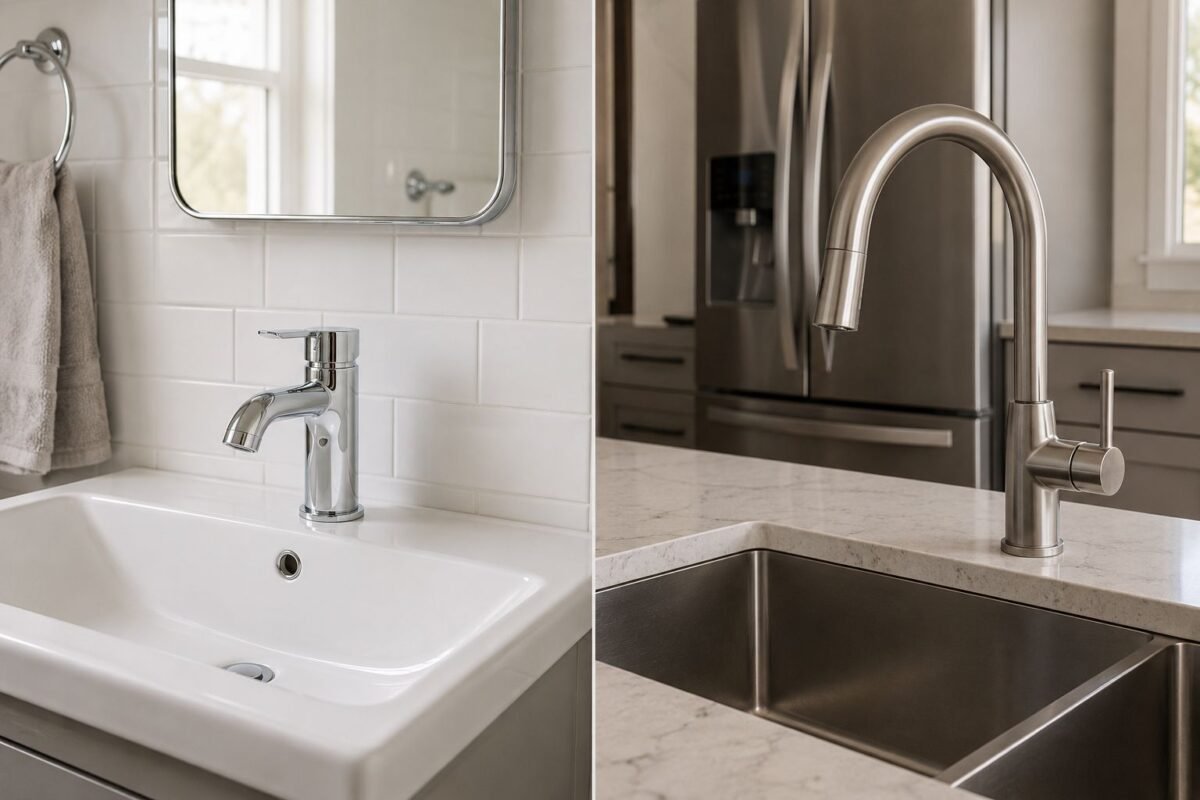
Consider two different rooms in the same home. A polished chrome faucet can be a practical choice for a lightly used powder room where brightness and a lower initial price matter most. A brushed stainless steel pull-down faucet may be more convenient in a busy kitchen where fingerprints, cooking splashes, and frequent handling are everyday concerns.
Neither choice is automatically better. The correct finish depends on the room’s use, the surrounding decor, the faucet’s construction, and the amount of visible maintenance the homeowner is willing to accept.
Chrome vs Stainless Steel Faucets: Which One Should You Choose?
Choose polished chrome when you want a bright, mirror-like finish, broad style compatibility, and access to more entry-level options. It is particularly practical in bathrooms and rooms that already use chrome accessories.
Choose brushed stainless steel when you want to coordinate with stainless appliances or make fingerprints and light water spotting less visually obvious. If the faucet is advertised as solid stainless steel, verify which components use stainless steel and whether the grade is documented.
Neither finish is the universal winner. For appearance, chrome wins on reflectivity, while brushed stainless steel generally wins on hiding everyday marks. For durability and drinking-water safety, the complete faucet construction, applicable certifications, coating quality, cartridge, warranty, water conditions, and maintenance routine matter more than the finish name alone.