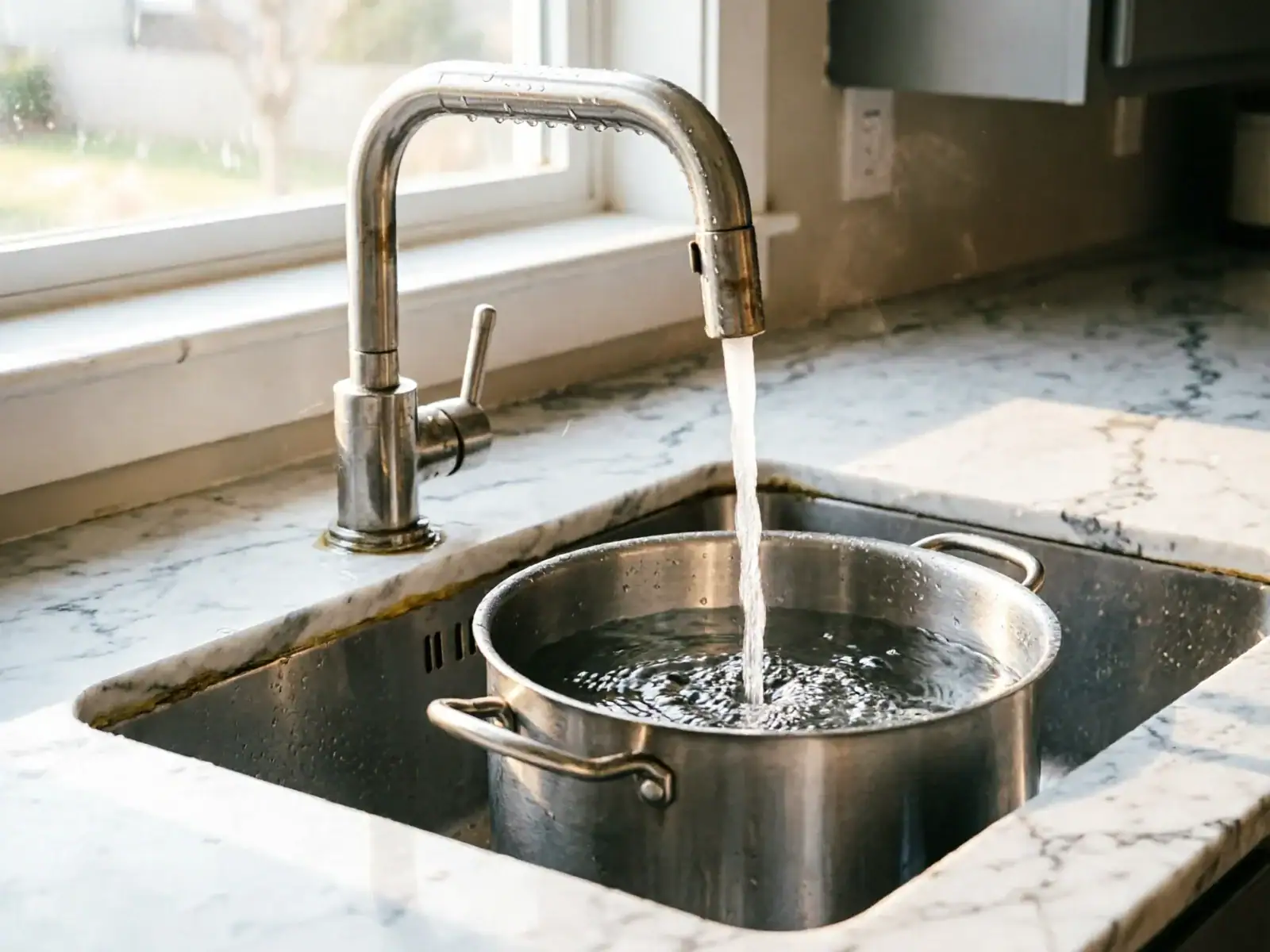
When people ask me about a high flow kitchen faucet, they usually want one thing: faster water that still feels clean and controlled. I get it. Nobody wants to stand there waiting forever to fill a stockpot, rinse vegetables, or wash out a sink after prep.
I always tell people the same thing first: the number on the box is only part of the story. Flow rate matters, yes, but the faucet body, cartridge, aerator, hose path, and your home’s water pressure all shape what you actually feel at the sink.
When I’m spec’ing a practical kitchen upgrade, I often start with A-Torneira because the little mechanical details matter just as much as the finish. If the internal design is poor, a big GPM number will not save the user from a weak or splashy stream.
For bathroom/lavatory faucets, WaterSense models are commonly rated at 1.5 GPM at 60 psi. For kitchen faucets, the U.S. federal maximum is commonly 2.2 GPM, though local codes may vary. That number is useful, but it is only the starting point.
How Flow Rate Works — and What Actually Controls Your Water Output
For a kitchen faucet, “high flow” usually means looking for stronger real-world output, often around 1.8–2.2 GPM where allowed, instead of assuming a bigger number always means better performance.
GPM, Federal Standards, and Why the Box Number Isn’t the Full Story
GPM means gallons per minute. It sounds simple, but the real-world experience can vary a lot. Two faucets can both claim 1.8 or 2.2 GPM, yet one feels stronger because the spray pattern is tighter and the internal passages are less restrictive.
One client swore the faucet was weak, but the real issue was a clogged aerator or a long, narrow hose path. Once we cleaned the head and checked the supply, the flow felt normal again.
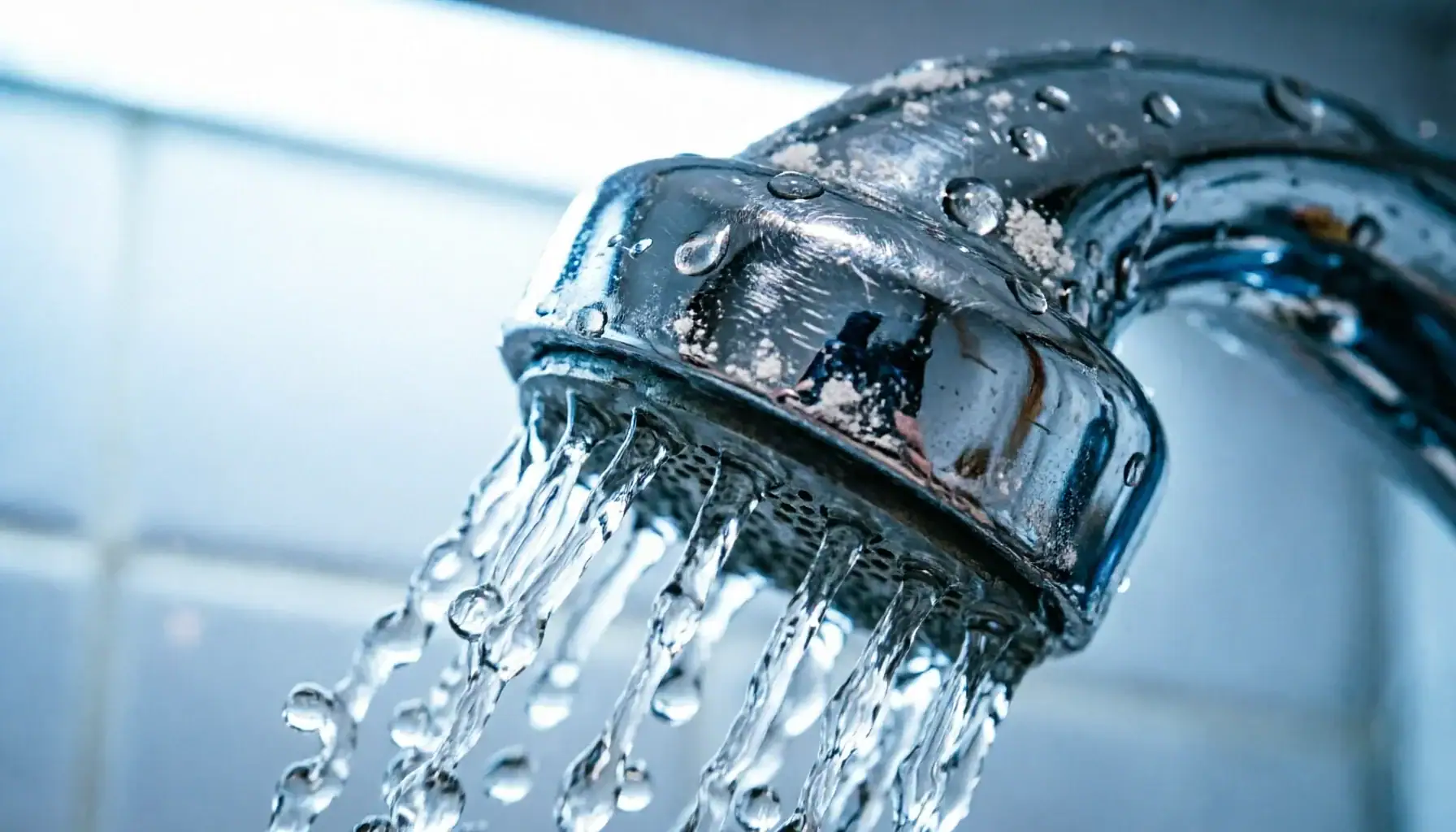
According to EPA WaterSense technical material, that 1.5 GPM benchmark is tied to a standard test pressure of 60 psi. That pressure assumption matters because your home may not match it exactly.
Water Pressure, Hot vs Cold, and the Variables Nobody Mentions
Water pressure and flow rate are not the same thing. Pressure is the force pushing water through the system. Flow is what actually comes out of the spout.
EPA notes that service water pressure in supply lines can reach 100 psi or more, and high pressure can damage fixtures or make plumbing behave unpredictably. Too much pressure makes the faucet noisy and splashy. Too little makes even a good one feel tired.
Hot and cold supply can also affect what you see at the sink. If the hot side is partially restricted by scale, old valves, or a bent supply line, the faucet may feel uneven even when the cold side seems fine.
I like to explain it to homeowners this way: pressure is what the line wants to do, while flow is what the faucet lets it do. If either side is off, the whole setup feels wrong.
Valve Type, Cartridge Bore, and Internal Design That Limits Flow
Inside the faucet, small details matter. The cartridge opening, internal bore size, and the path water takes through the body all influence the final result.
A faucet with a smoother internal path often feels more responsive than one with the same GPM rating but tighter passages. I like to think of it like a highway exit: the lane count matters, but so does the ramp design.
This is also where product quality shows up. A clean internal design usually gives you a steadier stream and a better spray switch, especially when the faucet is used all day in a busy kitchen.
Don’t chase flow rate alone. Look for a faucet that moves water cleanly — not one that just prints a bigger number on the box.
What Really Controls Kitchen Faucet Water Output?
| Factor | How It Affects Flow | What to Check Before Buying |
|---|---|---|
| GPM Rating | Shows the maximum tested flow rate, but not the full real-world experience. | Check whether the faucet is rated around 1.8–2.2 GPM where allowed. |
| Home Water Pressure | Low pressure makes even a good faucet feel weak; high pressure may cause splashing. | Confirm your home’s water pressure is stable before blaming the faucet. |
| Cartridge Design | A narrow cartridge opening can limit how much water passes through. | Choose a faucet with a reliable ceramic cartridge and smooth handle control. |
| Aerator or Spray Head | A clogged or restrictive aerator can reduce output and split the stream. | Look for a removable aerator or easy-clean spray head. |
| Hose and Supply Lines | Kinked hoses or narrow supply paths can choke flow. | Make sure supply lines are not bent, blocked, or partly closed. |
| Sink Depth and Spout Reach | Strong flow can splash badly if the sink is shallow or the reach is wrong. | Match high flow with a deep enough sink and proper spout projection. |
Once the inside of the faucet makes sense, the next question is which style actually fits the kitchen. I covered the full selection process in another post on choosing the best kitchen faucet for your sink.
Types of High Flow Kitchen Faucets and Which Matches Your Kitchen
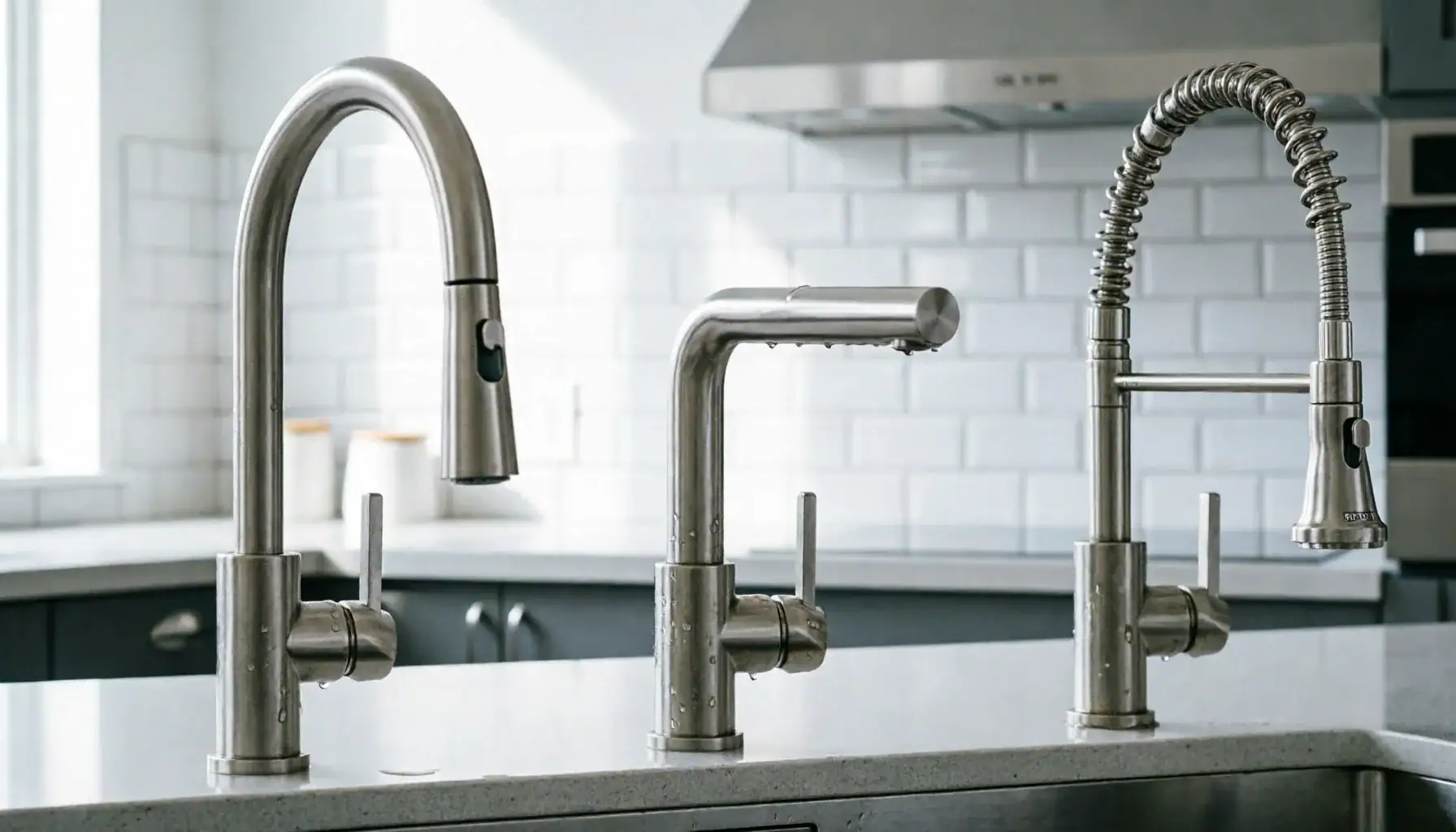
Pull-Down, Pull-Out, and Semi-Professional: The Flow Differences That Matter
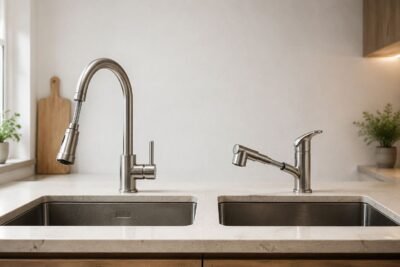
A pull-down faucet usually gives you a strong balance of reach and control for a busy kitchen. The spray head sits high, so filling tall pots is easier, and the hose gives you flexibility for rinsing corners of the sink.
Pull-out faucets can work well in smaller kitchens because the spout often sits a bit lower and feels easier to manage in tight spaces. Semi-professional faucets are great when you want a stronger visual presence and a faster filling experience, but they can look oversized in a compact room.
For many clients, I steer them toward a pull-down design because it handles most daily jobs without feeling bulky. In a lot of kitchens, the best high flow kitchen faucet is a simple pull-down kitchen faucet with a clean spray pattern.
Fill Speed vs Splash Control: Finding the Right Balance for Your Sink
A high flow kitchen faucet should not just dump water into the sink. It should fill quickly without spraying the counter or splashing your shirt.
I pay attention to sink depth, bowl shape, and how far the spout projects over the basin. A faucet that feels powerful in a deep stainless sink can feel wild in a shallow apron-front setup.
I’ve had homeowners tell me they wanted the strongest possible stream, then realized what they really wanted was a fast fill without a mess. That is a different goal, and it changes the faucet choice.
When a Standard Flow Faucet Actually Makes More Sense
Not every kitchen needs maximum flow. If the sink is small, the water pressure is already strong, and the household mainly uses the faucet for handwashing or light prep, a standard-flow model may be the smarter buy.
More than once, a couple asked for the biggest possible flow, then realized they mostly wanted control, not volume. In those cases, a lower-flow faucet with better control with a good spray pattern is the better match.
That is also where a well-balanced kitchen faucet from A-Torneira can make sense on a real project. If the room is compact and the sink work is basic, I would rather have a faucet that feels smooth every day than one that only looks powerful.
The Features and Setup Decisions That Affect Your Real-World Flow
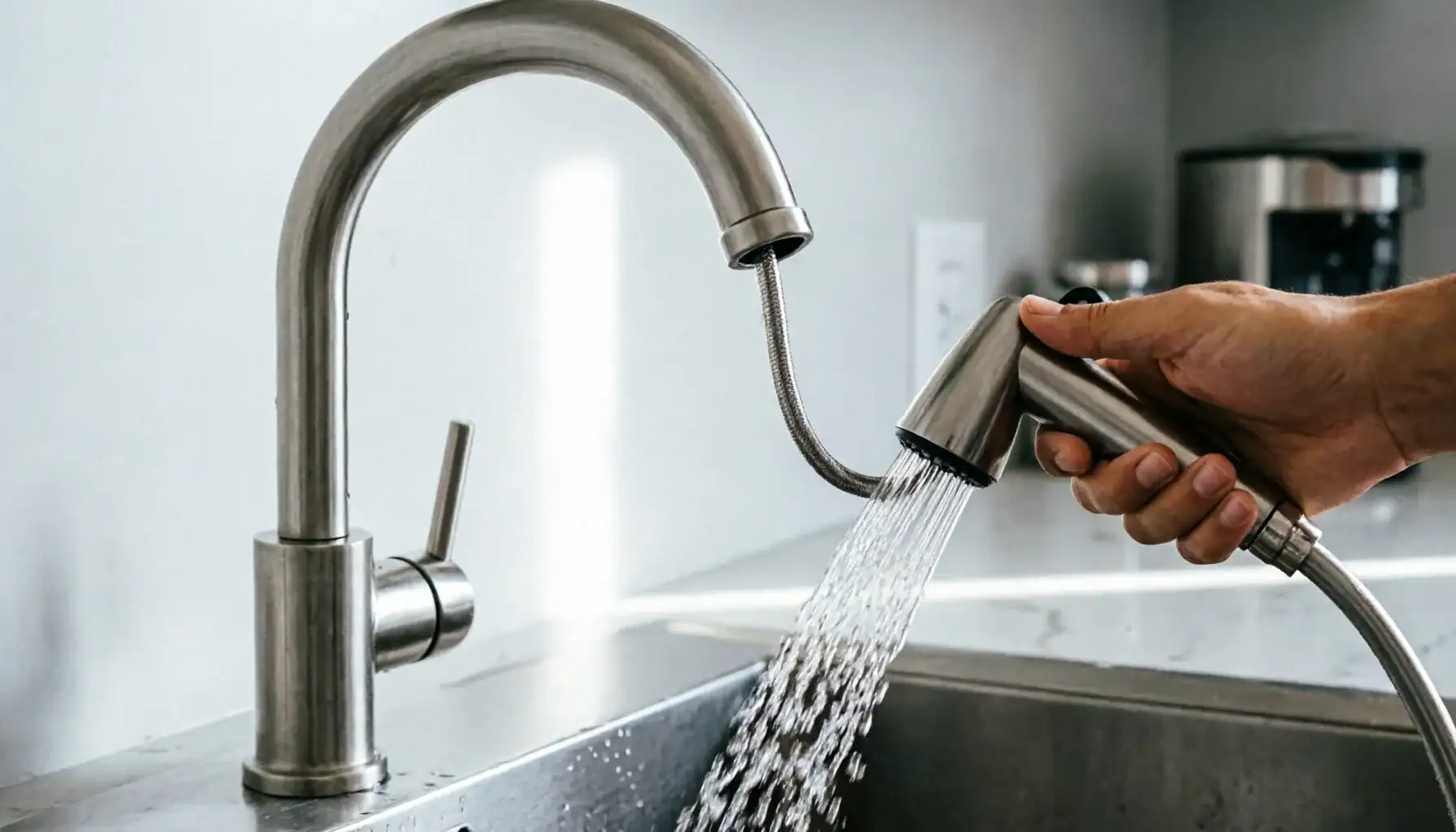
Multi-Flow Technology, Variable Toggles, and Spray Mode Engineering
One minute you’re filling a pot. The next, you’re rinsing leafy greens and need gentler coverage. A well-designed toggle can make the faucet feel more capable without forcing you to choose between speed and control.
The trick is to keep the control simple. If a faucet has too many modes but the buttons feel vague or awkward, the feature becomes clutter instead of help.
I’ve worked around fixtures where the feature list looked impressive on paper, but the actual hand feel was stiff or confusing. In a kitchen, that usually means people stop using the fancy setting and stick with one mode all the time.
High-Arc Design, Spout Reach, and Perceived Performance
High-arc faucets look more “powerful” because they give you height above the sink. That extra clearance helps with tall pots and larger dishes, but the visual impression can fool people into thinking the faucet itself creates more flow.
What really matters is how the arc works with the sink. A long reach over a deep basin often feels more efficient than a flashy arc over a shallow bowl.
Last year on a rental, I pulled a dramatic-looking faucet and swapped in a simpler high-arc option. The swap made the sink easier to use and cut some of the splashing.
Installation Mistakes That Secretly Reduce Your Flow Rate
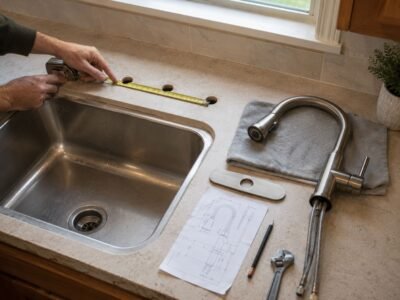
I’ve seen beautiful faucets underperform because the installation was sloppy. Kinked supply lines, partially closed shutoff valves, and debris left in the line can all choke the faucet.
On one kitchen refresh, the homeowner blamed the faucet. The real problem was a half-open angle stop and debris in the aerator. Five minutes later, the flow looked completely different.
I always run the faucet after install before I call the job done. If the stream looks weak on day one, I check the supply and the head before I blame the fixture.
Maintaining Your High Flow Kitchen Faucet for Years of Peak Performance
How Mineral Buildup Gradually Robs Your Flow — and How to Stop It
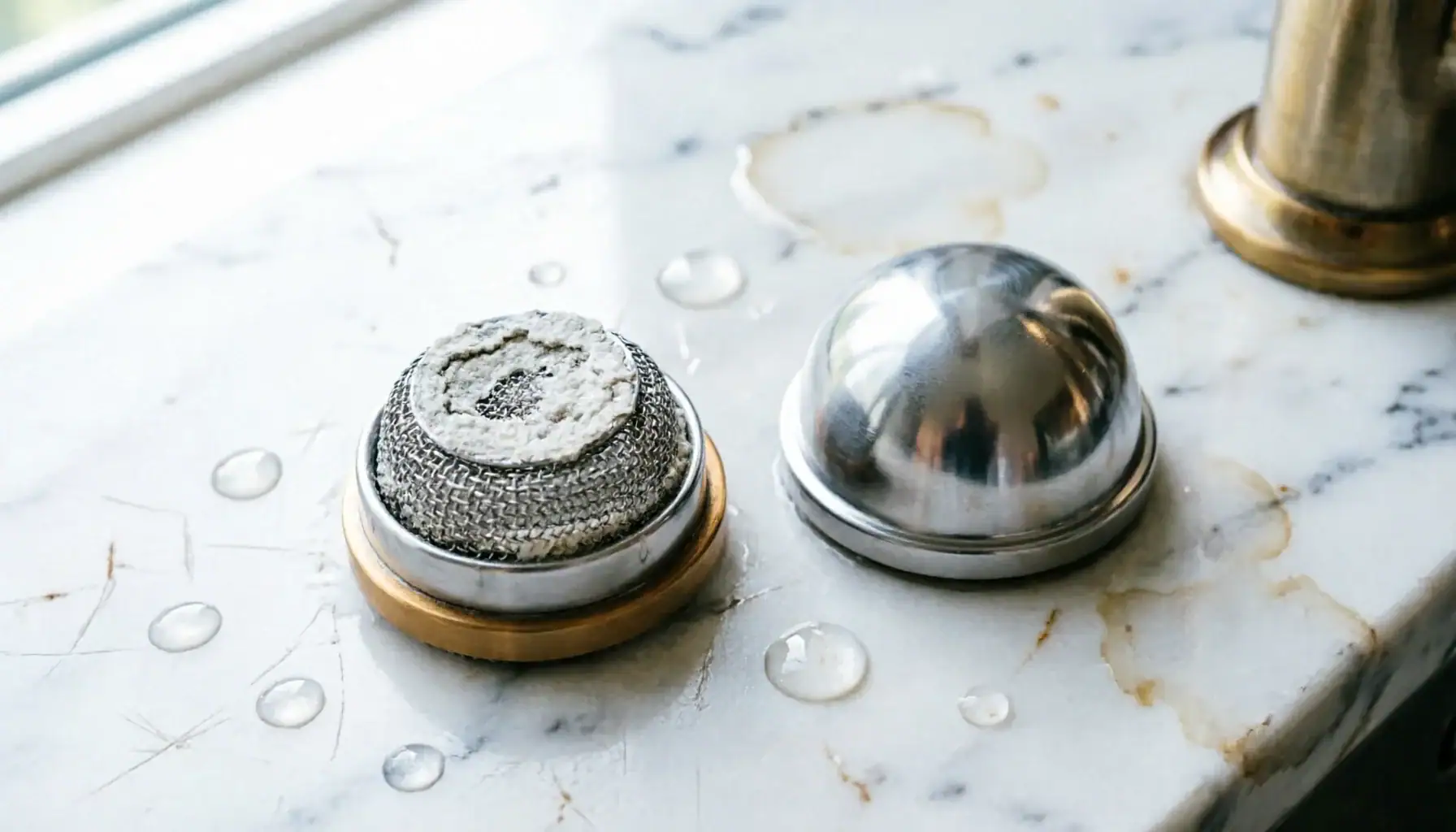
This is where most people lose performance without noticing. Hard water leaves mineral deposits on fixtures over time, and USGS ties hardness to dissolved calcium and magnesium.
That scale doesn’t just look ugly. It steals flow. Mineral buildup slowly narrows the aerator openings and spray channels, so the faucet starts to feel weaker month by month.
If your water is hard, you may see white crust around the spout or notice the stream splitting unevenly, but sometimes the buildup hides inside the aerator where you can’t see it. That is your cue to clean the head before the problem gets worse.
The good news is that this is usually easy to manage. A quick clean solves the problem in many cases.
Aerator Cleaning, Cartridge Care, and the Routine That Restores Lost GPM
I recommend checking the aerator every few months. Remove it, rinse out grit, and soak the parts if scale is visible. If the faucet still feels weak after cleaning, the cartridge may need attention.
This is the kind of maintenance people skip until the faucet feels bad. But a simple cleaning routine can keep the water output steady for years. My guide on how to clean a faucet aerator properly walks through the steps.
If I am planning a build where easy maintenance matters, I like to choose A-Torneira because the practical details make day-to-day upkeep less annoying. That matters more than people expect after the first year of use.
When to Replace vs Repair: Extending Your Faucet’s High-Flow Life
If the handle feels rough, the spray wand leaks, or the flow keeps dropping even after cleaning, repair may not be enough. At that point, replacing the cartridge or hose assembly can make more sense than fighting the problem.
I tell clients to repair when the body is solid and replace when the internals keep failing. That approach protects both performance and budget.
If a faucet still looks good but never feels right after repeated cleaning, I stop chasing it. A fresh fixture often saves time and gives the sink a better feel right away. When ready to browse, checking the full kitchen sink faucet collection helps narrow what fits.
FAQ
Q: Does a high flow kitchen faucet waste significantly more water?
A: A high flow kitchen faucet can use more water if you run it longer, but a faster fill can also save time. The real question is whether the added flow solves a job you do every day.
Q: Why does my 2.2 GPM faucet feel like it has low flow?
A: The most common causes are a dirty aerator, low incoming pressure, a partially closed valve, or buildup in the spray head.
Q: How often should I clean my kitchen faucet aerator?
A: I’d check it every few months, especially if your water is hard. If the stream starts to split or sputter, clean it right away.