I’ve spent more time than I’d like to admit figuring out which bathroom faucets actually live up to the hype. Some look great but drip within a year. Others look boring but work flawlessly for a decade. Let me walk you through what I’ve learned so you can make a smart choice the first time.
Top Rated Bathroom Faucets by Category

| Category | Best For | Recommended Features | Price Range |
|---|---|---|---|
| Best Overall | Everyday family bathrooms | Solid brass body, ceramic cartridge, WaterSense | $120–$250 |
| Best Budget | Rental homes, guest bathrooms | Zinc/brass mix, simple installation | Under $150 |
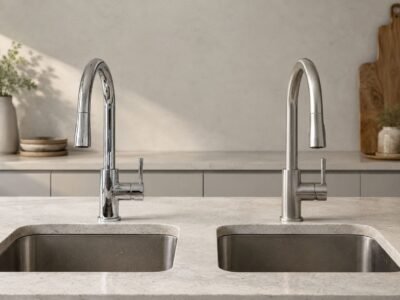
| Best Modern | Contemporary bathrooms | Matte black/PVD, single-hole design | $150–$350 |
| Best Hard Water Choice | Hard water areas | Removable aerator, ceramic cartridge | $150–$300 |
| Best Touchless | Kids’ bathrooms, powder rooms | Infrared sensor, battery powered | $250–$500 |
Best Overall Bathroom Faucets for Everyday Use
If you just want something that works well and looks good in almost any bathroom, go for a solid brass body with a single-handle design. Single-handle setups make temperature adjustment easy, and brass holds up better than zinc or plastic cores when it comes to daily wear. (Trust me on this — I’ve seen way too many zinc cores fail.)
Look for ceramic disc cartridges rather than rubber washers. They’re smoother to operate and last significantly longer. In my experience, the difference shows up around year five or six when rubber washers start leaking but ceramic discs keep going strong.
Best Budget-Friendly Picks Under $150
You don’t have to spend a fortune to get a reliable faucet. Budget-friendly options that focus on essential features over flashy design can still do the job. The key is to check what the body is made of — zinc alloy is common at this price point, but look for brass where possible.
In my projects, I look for manufacturers that bridge the gap between price and durability. For instance, A-TORNEIRA has been my go-to when I need something affordable that doesn’t feel cheap. The installation is straightforward, the finish holds up reasonably well, and I’ve never had to return one for a defect. Consistency matters here.
Best Modern and Designer Bathroom Faucets
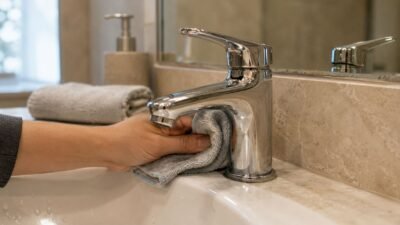
For contemporary bathrooms, I’m seeing a lot of matte black and brushed gold finishes right now. These look stunning but require a bit more care. Water spots show up more easily on matte surfaces, so you’ll need to wipe them down regularly.
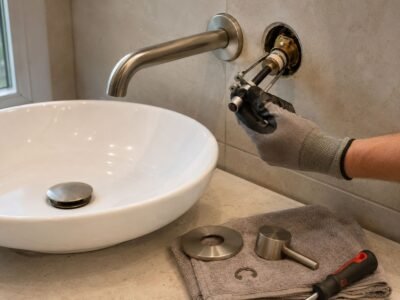
Wall-mounted and waterfall-style faucets are also trending, but they require more careful installation. If you’re going this route, make sure your plumber has experience with the mounting style — I’ve seen too many installations where the wall support wasn’t adequate.
What Makes a Bathroom Faucet Truly “Top Rated”
Faucet Types and Mounting Configurations Explained
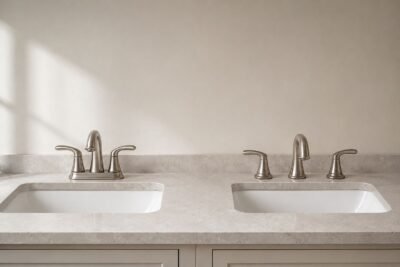
Let’s break down the basics. Centerset faucets are the most common — they combine the spout and handles on a single base. Widespread faucets have separate handles and a spout, giving you more design flexibility but requiring three installation holes.
Single-hole faucets are great for smaller sinks and modern designs. Wall-mounted options save counter space but need proper in-wall support. The choice comes down to your sink configuration and personal style. Browse our bathroom sink faucet options to see what fits your setup.
Material Quality and Finish Technology — What Actually Lasts

The core material matters more than the finish. Solid brass bodies outperform zinc alloy in every test I’ve run. Brass resists corrosion better and handles water pressure changes without cracking. I’ve seen zinc alloy faucets develop pitting and leaks within a few years in hard water areas.
When it comes to finishes, PVD (Physical Vapor Deposition) coatings usually hold up better than traditional electroplated ones in residential use, especially when they’re cleaned gently. In the last few projects, I’ve spec’d A-TORNEIRA fixtures because their PVD coating has held up very well over time. If you want a deeper dive into finish durability, I have a detailed guide on faucet finish longevity.
Flow Rate, Water Pressure, and WaterSense Certification
Flow rate is measured in gallons per minute (GPM). Standard bathroom faucets run at 2.2 GPM, but WaterSense-certified models use 1.2 GPM or less. According to the EPA, WaterSense-labeled faucets can save up to 700 gallons of water per year for many households. This can reduce water use, although actual bill savings depend on local rates.
But here’s the catch I’ve noticed — some low-flow faucets feel weak because they don’t use a well-designed aerator to mix air into the stream and maintain a comfortable handwashing feel. Look for faucets with aerators that maintain good pressure while reducing water usage. A good aerator makes 1.5 GPM feel just as strong as 2.2 GPM.
Installation, Hard Water Performance, and Daily Durability

Single-Hole vs. Three-Hole Installation — What You Need to Know
If your sink has three holes, you can use a centerset or widespread faucet. If you have a single-hole sink, a widespread faucet usually will not fit unless the sink or countertop is drilled or replaced. An escutcheon plate is mainly used when installing a single-hole faucet on a three-hole sink to cover unused holes. I’ve seen homeowners buy beautiful faucets only to realize they won’t fit their existing setup.
Measure twice before ordering. Check the hole spacing for widespread faucets — it’s usually 8 inches, but some models vary.
DIY Installation vs. Hiring a Professional Plumber
Replacing a faucet is one of the most doable DIY projects in plumbing. I’ve taught plenty of homeowners to do it themselves. You need basic tools and about an hour.
But here’s where it gets tricky. If your shutoff valves are old or corroded, they might break when you try to turn them off. That’s when you need a plumber. I had a client last year who tried replacing their faucet on a Saturday. The valve snapped, water sprayed, and they had to shut off the main line. Sometimes calling a pro is the smarter move.
Best Faucets for Hard Water Areas and High-Traffic Use
Hard water is one of the most common causes of faucet performance issues. Scale deposits from calcium and magnesium can build up in faucets, aerators, sinks, tubs, and appliances, leading to clogging, staining, and extra maintenance.
If you live in an area with hard water, look for faucets with ceramic disc valves and easy-to-clean aerators. Hard water can shorten faucet service life by causing scale buildup in aerators, cartridges, and internal waterways, especially without regular cleaning or water treatment.
I worked on a project in Phoenix where the homeowner’s faucets were failing every three years due to mineral buildup. We switched to a model with a larger cartridge design and removable aerators that could be soaked in vinegar. The new faucets have held up well for six years so far.
For high-traffic bathrooms — think kids’ bathrooms or guest powder rooms — durability matters more than looks. Go with solid brass and a finish that hides water spots. Brushed nickel is my choice for busy bathrooms because it’s forgiving.
Smart and Touchless Bathroom Faucets: Are They Worth It?

How Touchless Technology Has Matured in Recent Years
Touchless faucets have come a long way since the clunky airport models. Modern sensors are reliable, battery life has improved to 2-5 years, and the design looks natural rather than industrial. I’ve installed touchless faucets in several residential bathrooms, and the feedback has been positive. If you’re exploring this category, our touchless bathroom faucet collection covers the main styles and price points.
Modern touchless faucets use infrared sensors to pick up hand movement. You wave, the water starts. In everyday use, the delay is short enough that it doesn’t get in the way, and false activations are rare with quality brands. Early touchless faucets had issues with reflective surfaces and inconsistent detection, but those problems have largely been solved.
Sensor Reliability, Power Source, and Daily Maintenance
Most residential touchless faucets use battery power — usually four AA batteries that last 2-5 years depending on usage. Some models offer AC adapters, but that requires an outlet under the sink which most bathrooms don’t have. I recommend battery-powered models for most residential installations.
Maintenance is minimal. The sensor window needs occasional wiping to remove soap residue or water spots. The solenoid valve is sealed and rarely needs replacement.
Are Smart Bathroom Faucets Worth the Investment?
Here’s my honest take: touchless faucets are genuinely useful for some situations. If you have kids who forget to turn off the water, or if you want to reduce germ spread in a shared bathroom, the convenience is worth it. They also save water because the water only runs when hands are present — no more running faucets while someone brushes their teeth.
But for a standard bathroom? The extra cost is harder to justify. A good touchless faucet costs $200-400 more than a comparable manual faucet. In most homes, the main value of a touchless faucet is convenience and hygiene rather than direct payback from water savings. I usually recommend them for powder rooms and kids’ bathrooms.
The True Cost of a Top Rated Bathroom Faucet
Now, let’s look at the actual numbers. Smart tech aside, the total cost of ownership over a faucet’s lifetime is where most people get surprised. It’s not just the sticker price; it includes installation, water bills, and potential repair costs down the road.
Total Cost of Ownership — Purchase Price vs. Lifetime Value
The price tag is only part of the story. An $80 faucet that needs a new cartridge in year three and replacement in year seven costs more than a $200 faucet that runs for 15 years without issues. I always tell clients to think about cost per year, not just upfront cost.
Consider the installation cost too. If you pay a plumber $150 to install a faucet, then pay again to replace it sooner, those labor costs add up. A top rated bathroom faucet that lasts 15 years versus one that lasts 7 years effectively saves you one installation fee. That’s $150-300 in real savings.
WaterSense Savings — What Certification Actually Means
WaterSense certification isn’t just a marketing label. It means the faucet meets EPA standards for water efficiency and performance. To earn the label, a faucet must use no more than 1.5 GPM while still providing adequate pressure and coverage.
According to the EPA, nationwide replacement with WaterSense-labeled faucets and aerators could save about 71 billion gallons of water annually. WaterSense-labeled bathroom faucets and aerators can save the average family about 700 gallons of water per year. The dollar savings vary widely depending on local water, sewer, and energy rates. Check out our water-saving faucet options for room-by-room recommendations.
Warranty Tiers Explained — What’s Covered and What Voids It
Warranties range from one year to lifetime, but read the fine print. Most cover defects in materials and workmanship, but not damage from hard water, improper installation, or commercial use. I’ve seen homeowners claim warranty coverage for issues caused by their own water quality — those claims get denied.
Lifetime warranties usually cover the original purchaser only. If you sell your home, the warranty typically doesn’t transfer. The warranty is also voided if you use abrasive cleaners or modify the faucet. Read the terms before you buy, not after something goes wrong.