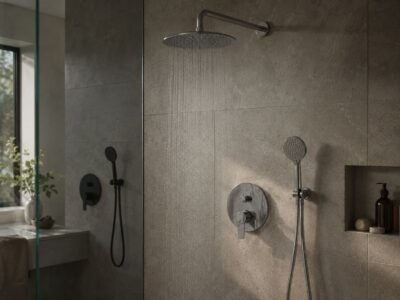
A better shower does not start with the showerhead alone. It starts with the shower valve, trim, cartridge, and spray outlet working together. The showerhead affects flow rate and spray feel, while the valve controls temperature stability, handle response, and long-term reliability. EPA notes that a WaterSense-labeled showerhead can help the average family save about 2,700 gallons of water per year, but comfort also depends on what is happening behind the wall. This guide explains how to choose a shower faucet setup that feels steady, safe, and practical for everyday use.
Why the Shower Valve Matters as Much as the Showerhead
The Faucet Body vs. the Showerhead: Understanding the Difference
Many people start with the showerhead because it is visible and easy to replace. A new head can change the spray feel quickly, but it cannot fix every shower problem. The rough-in valve behind the wall controls how hot and cold water mix, while the trim and handle control how easily you adjust the shower. If the valve cartridge is worn, undersized, or poorly matched to the trim, even a good showerhead may still feel weak, uneven, or hard to control.
I have seen this problem many times in older bathrooms: the homeowner replaces the showerhead, but the shower still feels weak or uneven. In many cases, the issue is not the spray head. It is a worn cartridge, an old pressure-balancing valve, or a valve body that no longer delivers a steady mix of hot and cold water. Once that part is corrected, the same showerhead can feel noticeably better.
That is why I advise clients to look past the aesthetics of a showroom display. A gorgeous exterior cannot compensate for a sub-par valve body.
If your renovation extends beyond the shower enclosure to a complete premium overhaul, aligning your shower standard with a hotel-grade bathroom faucet guide ensures a cohesive, resort-quality performance throughout the space.

How the Valve Controls Your Entire Shower Experience
The shower valve is the control center of the system. It mixes hot and cold water, responds to pressure changes in the home, and determines how stable the water temperature feels during use. A basic pressure-balancing valve helps reduce sudden temperature swings when another fixture is used. A thermostatic valve controls temperature more precisely and is often the better choice for busy households, children, older users, or primary bathrooms where comfort matters more.
According to ASSE’s temperature control guidance, pressure-balancing and thermostatic valves both reduce thermal shock in shower systems. I have seen a shower go from comfortable to icy because another fixture kicked on across the hall. A thermostatic setup kept the water steady in a busy house where everyone showered at the same time.
If you are choosing between a basic trim upgrade and a better valve, I usually tell people to spend on the valve first. The trim is what you see. The valve is what you feel every morning.
When to Replace the Faucet vs. Just the Showerhead
Here is the simple rule I use. If the shower feels weak but the temperature is stable and the handle works smoothly, a showerhead swap may be enough. If the shower drifts hot and cold, drips, or feels gritty when you turn the handle, the shower faucet needs attention.
I ran into that in a 1990s townhouse in Chicago. The owner wanted a modern look, but the trim was not the real problem. The cartridge was sticking, and the old valve body had enough wear that it kept fighting every new part I put on top of it. That was where I stopped treating it like a cosmetic job and treated it like a plumbing job.
For a smaller bathroom update, I would look for a trim kit that feels solid in the hand, has a clean finish, and works with a reliable valve system without forcing a full wall tear-out. This is where a practical mid-range option from A-TORNEIRA can make sense: simple enough for everyday bathrooms, but more considered than a basic cosmetic trim swap.
Use this quick guide to decide whether you only need a simple showerhead replacement or a deeper shower faucet upgrade.
| Problem You Notice | Likely Cause | Best Upgrade |
|---|---|---|
| Weak spray but stable temperature | Old, clogged, or low-quality showerhead | Replace the showerhead |
| Temperature swings hot and cold | Old or weak shower valve | Upgrade to a pressure-balancing or thermostatic valve |
| Handle feels stiff, gritty, or loose | Worn cartridge or mineral buildup | Replace the cartridge or inspect the valve trim |
| Dripping after shutoff | Cartridge, seal, or valve wear | Replace the cartridge or check the valve body |
| New trim does not fit the old setup | Rough-in valve compatibility issue | Choose compatible trim or replace the rough-in valve |
| Want both fixed head and handheld shower | Need more flexibility for daily use | Choose a combination shower system |
| Want body sprays or a shower panel | Higher water demand and more outlets | Check water pressure, flow rate, and hot water capacity first |
If the issue is only spray feel, start with the showerhead. If the problem involves temperature, leaking, handle movement, or trim compatibility, the valve or cartridge deserves closer attention.
Types of Shower Faucet Setups and Spray Options
Single-Handle vs. Dual-Handle: Choosing Your Control Style
Single-handle shower controls are the easiest choice for most homes. One handle controls temperature and often flow, which makes the shower simple for guests, children, and everyday use. Many modern single-handle systems also pair with pressure-balancing or thermostatic valves for better anti-scald protection.
Dual-handle systems can still work in traditional bathrooms, especially where the design calls for separate hot and cold controls. However, they should still be paired with the right anti-scald valve or temperature-control device. The goal is not just a classic look, but safe and predictable water control.
When I spec a bathroom with limited space and a straightforward user, I usually favor the setup that keeps the controls easy to learn. That matters more than trying to impress anyone with extra knobs. If you are also updating the sink area, browsing bathroom sink faucet options can help you match the look across the whole room
Spray Patterns: Rainfall, Massage, and Multi-Function
Spray pattern choice sounds small until you live with the wrong one. A rainfall pattern feels wider and softer, but it works best when the shower has enough pressure and the head is installed at a comfortable height. A massage setting gives a tighter, stronger stream, which some people like for rinsing hair or waking up in the morning. A multi-function showerhead is useful when several people share the same bathroom, but only if the settings are easy to switch with wet hands.
Most people end up using two or three patterns. What matters is whether they feel meaningfully different and whether the control is easy enough to use with wet hands.
In a small guest bathroom, I would avoid an oversized shower panel or too many visible controls. A compact shower setup with one clean control, a balanced spray pattern, and a finish that matches the rest of the room usually works better. The best shower is not the one with the most features. It is the one that fits the space and the people using it.

Combination and Panel Systems: From Basic to Spa-Like
Combination systems give you a fixed showerhead and a hand shower, which is practical for families. A handheld shower is useful for rinsing hair, cleaning the enclosure, helping children, or washing pets. A fixed head keeps the daily shower simple.
Panel systems go further with body sprays or multiple outlets, but they need the right plumbing support. Before choosing one, check the available water pressure, flow rate, wall space, and hot water capacity. If the plumbing cannot support multiple outlets, a panel system may look impressive but feel disappointing in daily use.
I always ask the same question: do you want a better shower, or do you want more stuff in the shower? Those are not always the same thing.
Key Features That Define a Quality Shower Faucet Upgrade
Cartridge Quality: Why the Small Internal Part Matters
The cartridge is one of the smallest parts of a shower faucet system, but it has a large effect on daily use. A good cartridge helps the handle move smoothly, shuts the water off cleanly, and keeps temperature adjustment predictable. In a pressure-balancing or thermostatic shower valve, the cartridge also plays a role in temperature stability and anti-scald performance.
In hard-water areas, mineral buildup creates friction that scores low-grade cartridges, leading to a gritty handle motion and premature leaks. This is why in our engineering at A-TORNEIRA, we standardize commercial-grade ceramic cartridges designed to self-lubricate, ensuring the handle moves fluidly even after 500,000 cycles under fluctuating water pressures.
A good cartridge should make the shower feel controlled, not sticky. If the handle moves cleanly and the water shuts off cleanly, the whole room feels better.
Pressure-Balancing vs. Thermostatic Valves: Temperature Stability Explained
A pressure-balancing valve is usually enough for standard family bathrooms. It reacts to pressure changes, such as when someone turns on a sink or flushes a toilet, and helps prevent sudden hot or cold shocks. A thermostatic valve is more precise because it targets a set temperature and adjusts the hot-cold mix more accurately. It is a better choice for primary bathrooms, homes with children or older users, and showers with multiple outlets.
If you live in a house where someone is always running a sink or washing machine, temperature control matters a lot. If you live alone and just want a simple setup, pressure-balancing may be enough.
I like to match the valve to the household, not to the catalog photo. A fancy valve that never gets used properly is still the wrong valve.
Material and Finish: Brass, PVD, and What Actually Lasts
Material matters because bathrooms are hard on hardware. Steam, hard water, soap residue, and daily touching all wear down a shower faucet over time. A solid brass valve body usually gives more long-term confidence than lightweight plastic or thin metal parts. For visible trim, PVD-coated finishes often resist scratching, tarnishing, and fading better than basic plated finishes, although cleaning habits still matter.
I also pay attention to how the finish looks after cleaning. A finish that looks amazing on day one but turns cloudy after a few wipe-downs is not a good finish in my book. Matte black can look sharp, brushed finishes hide fingerprints well, and polished chrome can still work if the rest of the room is simple.
If I am choosing a fixture for a space that needs to feel calm and durable, I do not chase the flashiest surface. I chase the one that still looks honest after a year of real use. For a deeper look at which finishes survive daily wear, see this best faucet finishes for long-term use guide.

Planning and Installing Your New Shower Faucet
Checking Your Existing Plumbing Before You Buy
Before buying a new shower faucet, check what is already behind the wall. The most important question is whether the new trim is compatible with the existing rough-in valve. You should also check valve type, pipe connection, wall depth, water pressure, and access to the valve body. A beautiful trim kit can become an expensive problem if it does not match the plumbing already installed.
This is where the upgrade either stays simple or turns into a bigger job. If the wall can stay closed and the valve matches what you have, the project moves quickly.
That planning step saves more stress than any finish choice ever will. If your bathroom also has a tub that needs updating, wall mount tub faucets are a good option to keep the whole bathroom looking cohesive.
Budget Tiers: What You Get at $100, $250, and $500
I usually separate shower faucet budgets into three levels, not including labor. Around $100, you are often looking at a basic trim kit or simple showerhead-and-trim refresh. Around $250, you can usually expect better handle feel, a more durable finish, and a more complete trim package. Around $500 and above, you may find better valve options, hand shower combinations, thermostatic controls, or more complete shower systems. The key is to compare what is actually included: trim only, valve included, showerhead included, or a full shower system.
That does not mean the most expensive option is the best for every room. It means the budget should match the job. A guest bath usually does not need the same system as the primary bath. A rental unit does not need the same finish strategy as a forever home.
For homeowners who want a dependable middle-tier upgrade, A-TORNEIRA can be positioned as a practical option between a basic trim replacement and a full luxury shower system. The best fit is a bathroom where the user wants a cleaner look, smoother control, and reliable daily performance without overbuilding the shower.
DIY vs. Professional Installation: Knowing When to Call a Plumber
A showerhead replacement is usually a simple DIY job. A trim kit replacement may also be manageable if it matches the existing valve and the screws, escutcheon, and handle fit correctly. Replacing the valve body is different. If you need to open the wall, cut pipe, solder, crimp, or change the rough-in valve, it is usually safer to call a plumber. A small mistake behind the wall can lead to leaks, tile damage, or a much larger repair.
I am comfortable doing simple replacements, but I still slow down when the wall is old or the fittings are crusted over. That is where a small project can turn into a broken tile or a leak you did not plan for.
The best shower faucet upgrade is not always the most expensive one. Start by checking the existing valve, then choose the right control style, cartridge quality, finish, and spray setup for the way the bathroom is actually used. If the valve is stable, a simple trim or showerhead update may be enough. If the temperature swings, the handle feels rough, or the valve is outdated, put your budget behind the parts you feel every day.