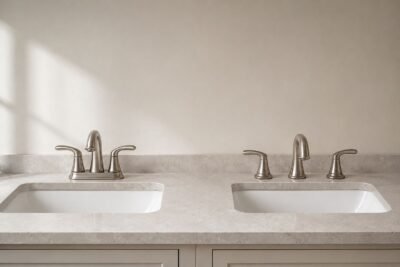
If your faucet stream sprays sideways, sputters, or feels weaker than usual, the aerator is one of the first parts worth checking. A faucet aerator sits at the tip of the spout and shapes the water stream by mixing air with water. When it gets clogged with mineral buildup or debris, the faucet may splash, whistle, or lose flow.
In most cases, cleaning is the first fix. But if the screen is bent, the washer is cracked, the threads leak, or the old aerator has the wrong flow rate for the sink, replacement makes more sense. I always start with the symptoms first, because that keeps the solution tied to the actual problem instead of guesswork.
Warning Signs Your Faucet Aerator Needs Attention

Uneven water flow and increased splashing
One of the easiest signs to spot is a stream that no longer looks smooth. It may split into little jets, spray off to one side, or hit the sink with more force than before. That usually means mineral buildup or debris is blocking the screen. In a busy kitchen, I’ve seen this happen after a single round of plumbing work because fine grit gets trapped right at the tip.
Reduced pressure and unusual faucet noise
A clogged aerator can make a faucet sound harsh, hissy, or almost whistle-like. The flow drops, but the noise goes up. If the faucet body itself is fine and only the tip is acting up, the aerator is a smart place to start. I’ve had calls where the homeowner thought the supply lines were failing, but the whole issue was sitting in that little screen.
If several faucets in the home lose pressure at the same time, the issue may be the supply line, shutoff valve, pressure regulator, or plumbing system rather than one aerator.
Common Faucet Aerator Problems and What They Mean
| Warning Sign | Possible Cause | What to Do |
|---|---|---|
| Water sprays sideways | Mineral buildup or debris stuck in the screen | Remove and clean the aerator |
| Weak flow from one faucet | Clogged aerator or blocked screen | Clean the aerator first |
| Weak flow from several faucets | Supply line, shutoff valve, pressure regulator, or plumbing issue | Check the plumbing system, not just the aerator |
| Whistling or hissing sound | Restricted flow through a clogged or damaged aerator | Clean or replace the aerator |
| Leaking around the faucet tip | Damaged washer, loose threads, or worn aerator | Replace the washer or aerator |
| Uneven stream after cleaning | Bent screen, corrosion, or worn insert | Replace the aerator |
Key Benefits of Cleaning and Updating Aerators
Improved water flow and pressure
Cleaning removes mineral buildup and debris that slow water down. Updating can also help when the old insert has a poor spray pattern or the sink needs a pressure-compensating, lower-flow aerator that keeps the stream controlled without excessive splash.
The update side matters because it can change how the faucet behaves every day, not just how it looks after a scrub. I’ve had jobs where the old part was technically clean, but the new insert still felt better in use.
Better water quality and debris filtration
According to Health Canada, faucet aerators can collect debris, particles, and lead-containing sediment that may enter the water after plumbing work or from older plumbing systems. That is why Health Canada recommends inspecting aerators monthly and cleaning them every 6 months or after construction work affecting water service. An aerator is not a certified water filter, but keeping it clean helps prevent trapped particles from affecting the stream at the faucet outlet.
If the water has been disturbed by plumbing work, I’d rather clean the aerator early than guess at the cause later. It’s a tiny check, but it can save a lot of second-guessing.
Financial savings: lower water and energy bills
According to the EPA, WaterSense labeled bathroom sink faucets and accessories that use a maximum of 1.5 gallons per minute can reduce water flow by 30 percent or more compared with the standard 2.2 gpm without sacrificing performance.
For bathroom sinks, that kind of reduction can add up across daily handwashing, especially in homes, rentals, offices, and other high-use restrooms. For kitchens, I choose flow rate more carefully because rinsing performance matters more.
And because hot water costs more to heat than cold water, using less flow can also trim energy use at the same time.
That doesn’t mean every sink should be pushed to the lowest flow available. It just means the right aerator can save water without making the faucet feel weak.
For bathroom sinks, this is where fixture choice matters as much as the aerator itself. If an older faucet still splashes after cleaning or uses more flow than the sink needs, upgrading to water-saving bathroom sink faucets with a controlled stream and aerator-friendly design can make daily handwashing feel smoother while reducing unnecessary water use.
In practice, that shows up as less wasted hot water and a faucet that feels less fussy every day.
In rental turnovers or apartment refreshes, I usually clean clogged aerators first and then replace units that are damaged or using more flow than the sink needs. It is a low-cost way to improve the stream, reduce splash, and cut unnecessary water waste without replacing the whole faucet.
That project is a good example of why cleaning and updating faucet aerators work better together than apart. One part handles the buildup, and the other handles the long-term behavior.
How to Clean Your Faucet Aerators: A Step-by-Step Guide
Removing different aerator types safely
I start by checking whether the aerator is the screw-on type on the outside of the spout or a recessed style inside the faucet tip. If it’s external, I wrap the finish with a cloth before using pliers. If it’s recessed, I use the correct aerator key instead of forcing it. I’ve seen too many scratched finishes from people trying to muscle the part loose.
I also check whether the faucet uses male threads, female threads, or a hidden/cache aerator, because the wrong removal method can damage the spout or finish.
A minute of care here is worth it. Once the finish is damaged, nobody is happy with the result. If the piece is stubborn or you’re not sure about the type, a quick read on how to remove a faucet aerator the right way can save a lot of trouble.
The cleaning process: soaking, scrubbing, and rinsing
Once the aerator is off, I separate the pieces and note the order. Then I soak the metal and plastic aerator parts in white vinegar for about 15–30 minutes, or longer for heavy scale, before brushing and rinsing them clean. If the washer is brittle or the screen is bent, I replace the aerator instead of trying to force it back into service.
That last check matters. A part that looks clean on the outside can still be worn out if the washer or screen is past its best days.

Correct reassembly and how often to clean
Put the parts back in the same order, hand-tighten the aerator, and test the faucet. Don’t over-tighten it; too much force can damage the threads, washer, or faucet finish. If the stream is still uneven, I check for damage or a deeper plumbing issue. For routine maintenance, I like a 6-month cleaning schedule. If the home has hard water or has had recent plumbing work, I inspect sooner.
Twice a year is a decent rhythm for most homes. If the home has hard water, I inspect and clean the aerator more often. A detailed walkthrough on how to clean a faucet aerator can help if you want a deeper reference.
Small habits like that keep the finish looking good and make the next cleaning easier.
When to Replace vs. Clean: Upgrading to Modern Aerators

Before buying a replacement, check the aerator size and thread type. Some faucets use male threads, some use female threads, and many modern faucets use hidden or recessed cache aerators that require a special key. Matching the thread, diameter, and flow rate is more important than choosing by appearance alone.
Signs your aerator needs replacing, not cleaning
If the screen is bent, corroded, or repeatedly clogs within a short time, cleaning is no longer the best answer. The same goes for aerators that rattle, leak at the threads, or continue to produce an uneven stream even after a proper clean. At that point, replacement is the smarter move.
I only call for a replacement when cleaning has already done its job and the problem still keeps showing up. Recurring clogs, corrosion, or thread leaks usually mean the part is past its best days.
Flow rate comparison: 2.2 GPM vs. 1.5 GPM vs. 1.0 GPM
A 2.2 gpm aerator gives stronger flow, but it may splash more in a shallow bathroom sink. A 1.5 gpm aerator is often a good bathroom choice because it balances water savings and comfort. A 1.0 gpm aerator can work for handwashing or light-use sinks, but it may feel too slow for users who expect a fuller stream.
Flow rate matters whenever you replace an aerator, whether the goal is fixing splash, saving water, or improving daily comfort. Matching the sink is half the battle, because a shallow bathroom basin and a deep kitchen sink do not need the same stream pattern.
| Flow Rate | Best For | Main Benefit | Possible Drawback |
|---|---|---|---|
| 2.2 GPM | Kitchens, utility sinks, deeper basins | Stronger flow for rinsing | May splash in shallow bathroom sinks |
| 1.5 GPM | Bathroom sinks, daily handwashing | Good balance of comfort and water savings | May feel slightly slower than older high-flow aerators |
| 1.0 GPM | Light-use sinks, powder rooms, water-saving setups | Maximum water savings | May feel too weak for kitchens or frequent rinsing |
Modern features: swivel heads, spray modes, self-cleaning screens
Modern aerators may include swivel heads, spray patterns, pressure-compensating inserts, or easy-clean faces that make mineral buildup easier to remove. I only recommend these features when they solve a real problem at that sink.
That kind of update is quiet, but you notice it every time you wash your hands.
I also spec A-TORNEIRA on some kitchen jobs when I want a clean install and a predictable stream. The part matters more than people think. A good aerator can make an ordinary faucet feel much more refined.
Preventive Maintenance: Keeping Aerators in Peak Condition
Hard water considerations and mineral buildup prevention
Hard water leaves mineral deposits behind. Aerators collect them first. If that’s your setup, regular cleaning matters more than fancy features. I like to pair cleaning with a quick look at the screen and washer. If the buildup keeps coming back, I start thinking about water treatment or a better-quality replacement part.
That’s not me overcomplicating it. It’s just the simple reality of what mineral-heavy water does over time.
Building a seasonal maintenance schedule
The easiest schedule is simple: check the aerators when you change batteries in smoke detectors, or pick a month that’s easy to remember and do it twice a year. If the faucet sees heavy use, like in a rental or guest bath, I’d inspect more often. That small habit prevents a lot of annoying flow complaints later.
Choosing the right aerator for kitchen vs. bathroom

Kitchen sinks usually benefit from a stronger stream and sometimes a swivel or spray option. When choosing a kitchen sink faucet or replacement aerator, compare flow rate, spray pattern, swivel range, and sink depth before buying. Bathroom sinks usually do better with a softer, more controlled flow that reduces splashing.
That’s also why I pay attention to the room before I pick the part. The sink type tells me a lot.
The right aerator should match the sink, the water pressure, and the way the faucet is used every day. For bathroom sinks, that usually means a controlled stream that reduces splash. For kitchens, it may mean stronger flow, a swivel head, or a spray option that makes rinsing easier.
If you are updating a faucet or choosing a new fixture, A-TORNEIRA offers kitchen and bathroom faucet options designed for practical daily use, clean installation, and controlled water flow. A small part like an aerator can change the feel of the whole faucet, so it is worth choosing carefully.
FAQ
Q: How often should I clean my faucet aerators?
A: Every 6 months is a good baseline. If you have hard water or recent plumbing work, check them sooner. It’s a small job, but it keeps flow from drifting.
Q: Can I clean an aerator without removing it?
A: Sometimes, yes, but I only treat that as a quick rinse. If the flow is still uneven, I remove it and clean it properly.
Q: Do high-efficiency aerators help reduce hot water use?
A: Yes. Less flow usually means less hot water is needed, which can help trim both water and energy use.
Q: What’s the difference between cleaning and replacing an aerator?
A: Cleaning clears mineral buildup and debris from the existing aerator. Replacing or upgrading gives you a new screen, a better-matched flow rate, or features the old aerator does not offer.