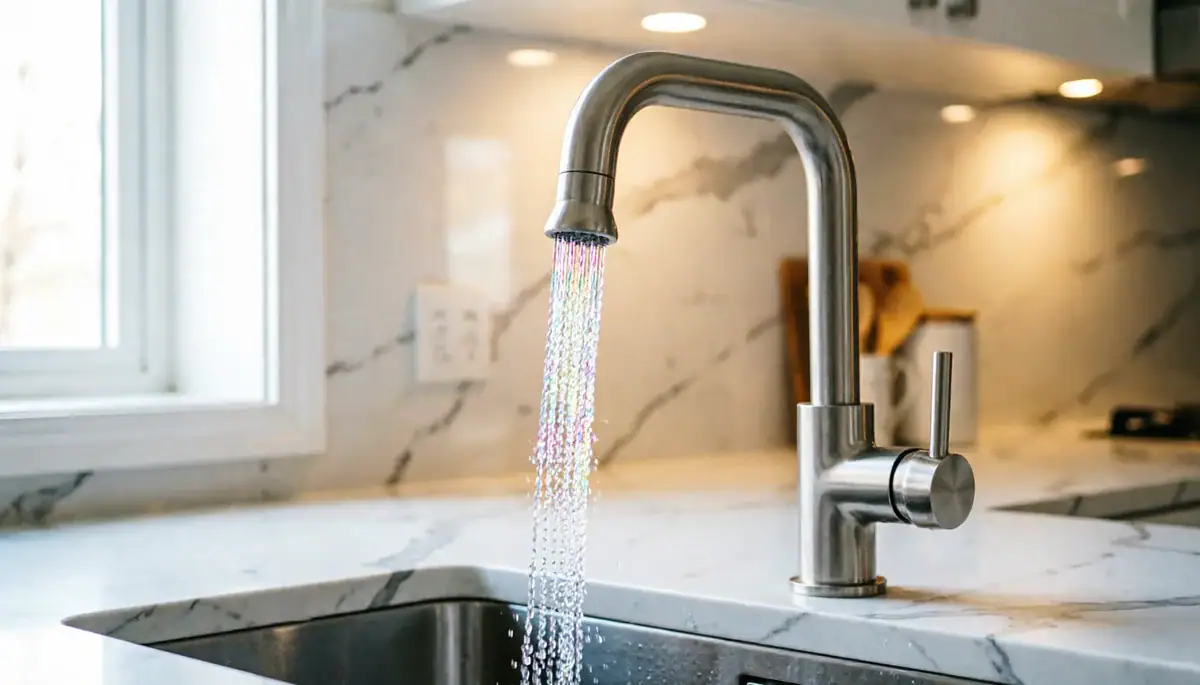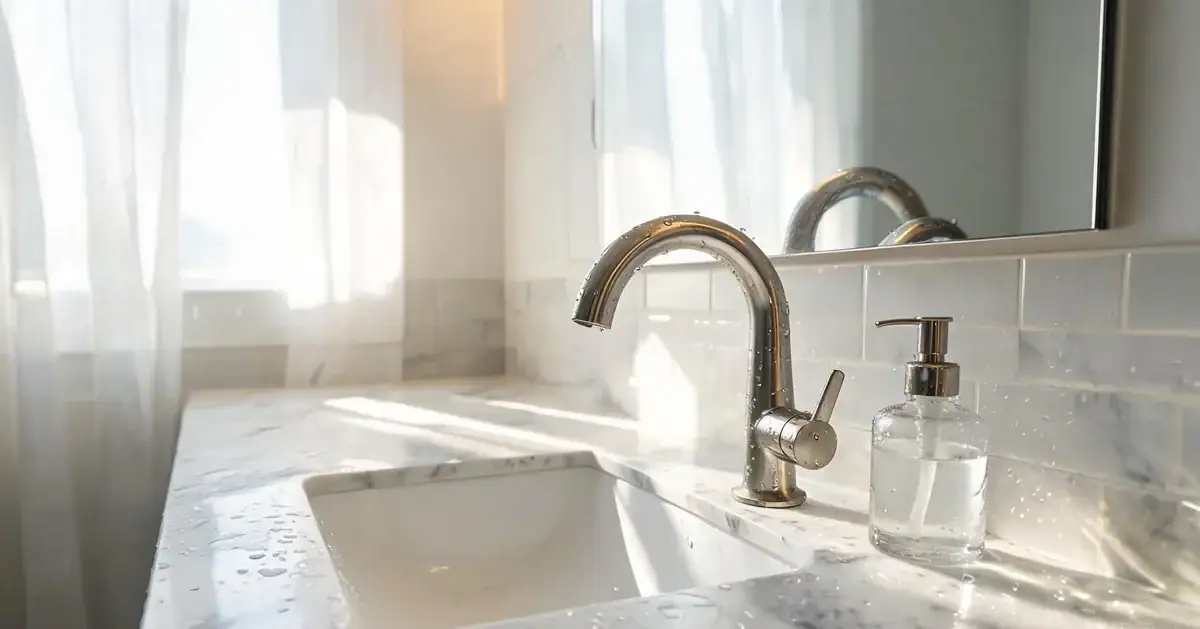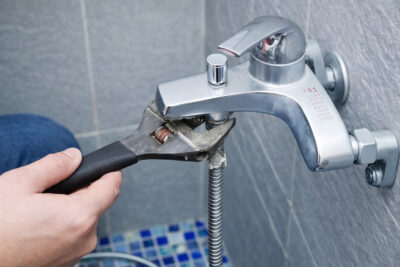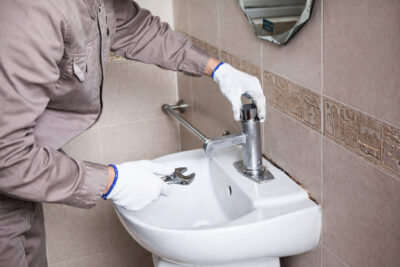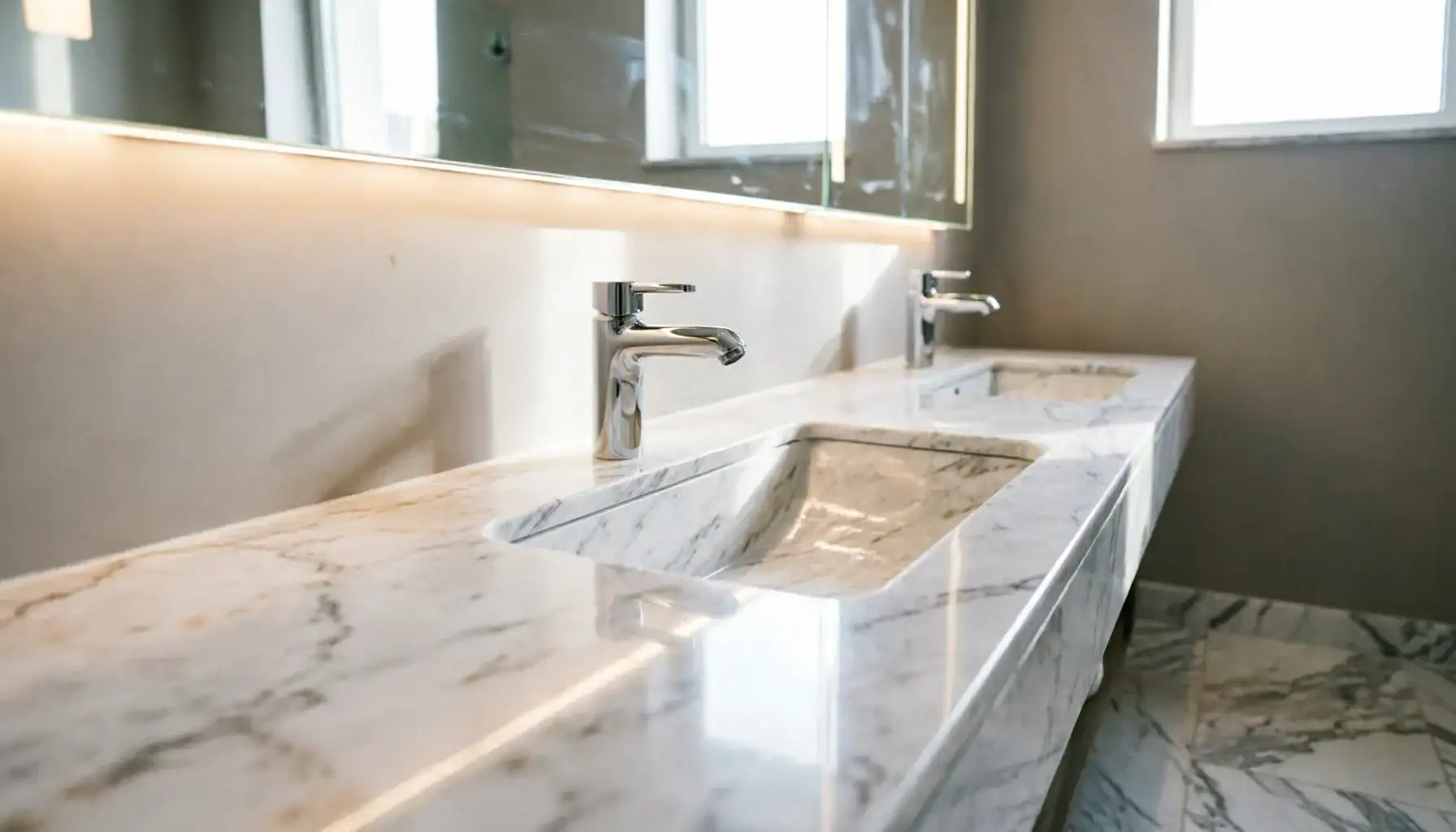
If you’re sourcing bathroom faucets for a hotel project, you already know this isn’t the same as picking fixtures for a home. A hotel bathroom faucet procurement guide needs to account for daily abuse, aggressive cleaning chemicals, and the reality that a single bad choice can cost you thousands in maintenance and guest complaints. I’ve walked through enough hotel renovation sites to see what separates a smart procurement decision from an expensive one.
Let’s break it down into what actually matters.
Why Hotel Bathroom Faucet Procurement Needs a Dedicated Plan
Hotel vs. Residential Faucet Requirements
A faucet in a hotel setting may see far more cycles than a residential fixture, especially in public restrooms and high-turnover properties. A residential faucet may only see a fraction of that daily use. That difference isn’t just about wear and tear. Hotels use industrial-strength cleaners daily. Housekeeping teams move fast, and they don’t treat fixtures gently. The finish on a residential faucet might look beautiful for five years, but in a hotel, it can start corroding within 18 months if you pick the wrong one.
I’ve also seen projects where the architect specified residential-grade fixtures because they looked great in the catalog. Six months after opening, the general manager was calling me about chrome peeling and handles sticking. Ideally, the faucet should last through one full renovation cycle, typically around 7–10 years.
Bathroom quality is closely tied to guest-room satisfaction and review perception. Guests won’t mention the plumbing directly. What shows up in reviews are words like “dated bathrooms” and “poorly maintained.” When a faucet drips or a handle feels cheap, they notice. Hotel fixture procurement isn’t just about buying hardware — it’s about protecting your brand reputation.
The Hidden Cost of a Wrong Faucet Decision
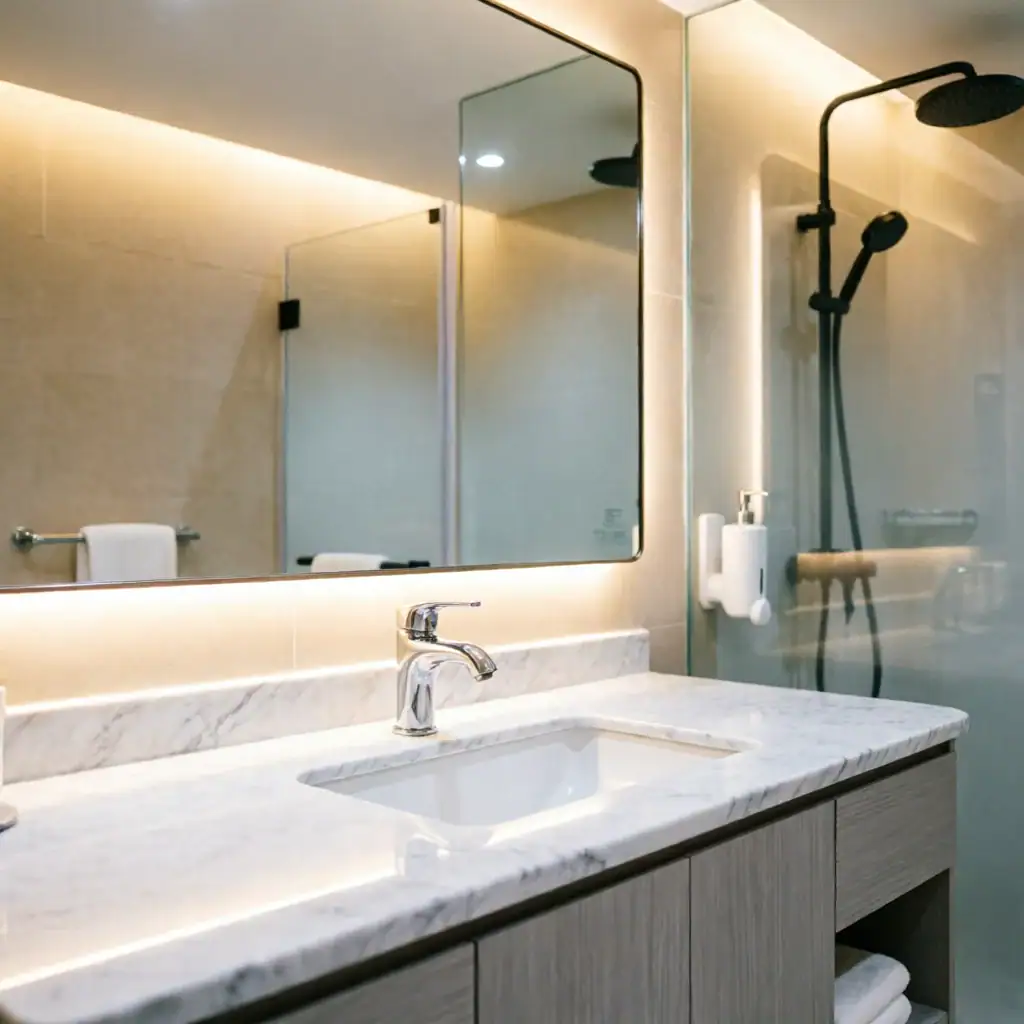
The upfront price is never the real cost. I’ve tracked replacement jobs where the faucet itself was $80, but the labor, room downtime, and lost revenue pushed the true cost past $400 per unit. When you’re managing 200 rooms, that math turns expensive fast.
Finish mismatch is another expensive headache. If you need to replace faucets in year three and the supplier changed their plating formula, you now have two different shades of brushed nickel on the same floor. Guests see it. Housekeeping reports it. Your brand consistency takes a hit.
Water waste adds up too. Older or poorly specified aerators can push flow rates past 2.2 gallons per minute. Modern commercial-grade aerators with pressure compensation can cut that by 30% without guests noticing a difference. EPA notes that WaterSense labeled bathroom faucets and aerators can save the average family about 700 gallons per year; in hotels, savings depend on occupancy, use frequency, and flow-rate baseline. Multiply that across a full hotel and the utility bill speaks for itself.
How to Specify the Right Faucet for Each Room Type and Project
Body Material and Corrosion Resistance
Brass is the standard for a reason. It handles corrosion well, machines cleanly, and lasts. But not all brass is equal. For coastal or high-humidity properties, I always specify DZR brass (dezincification-resistant). Standard brass can lose zinc over time in wet environments, which weakens the body and leads to cracks. If you want to prevent bathroom fixture corrosion before it starts, the right body material is your first line of defense.
Zinc alloy is cheaper, but I avoid it for guest-facing areas. It’s brittle, corrodes faster, and doesn’t hold threads well under repeated use. Stainless steel is a solid alternative for modern designs, but make sure it’s 304-grade or higher. Lower grades will rust around the aerator threads where water sits.
When I need reliable commercial-grade faucets for demanding projects, I often turn to suppliers like A-TORNEIRA. Their DZR brass construction and consistent PVD finish quality have held up well on job sites where cheaper fixtures failed within the first year.
PVD vs. Traditional Finishes: What Hotel Buyers Need to Know
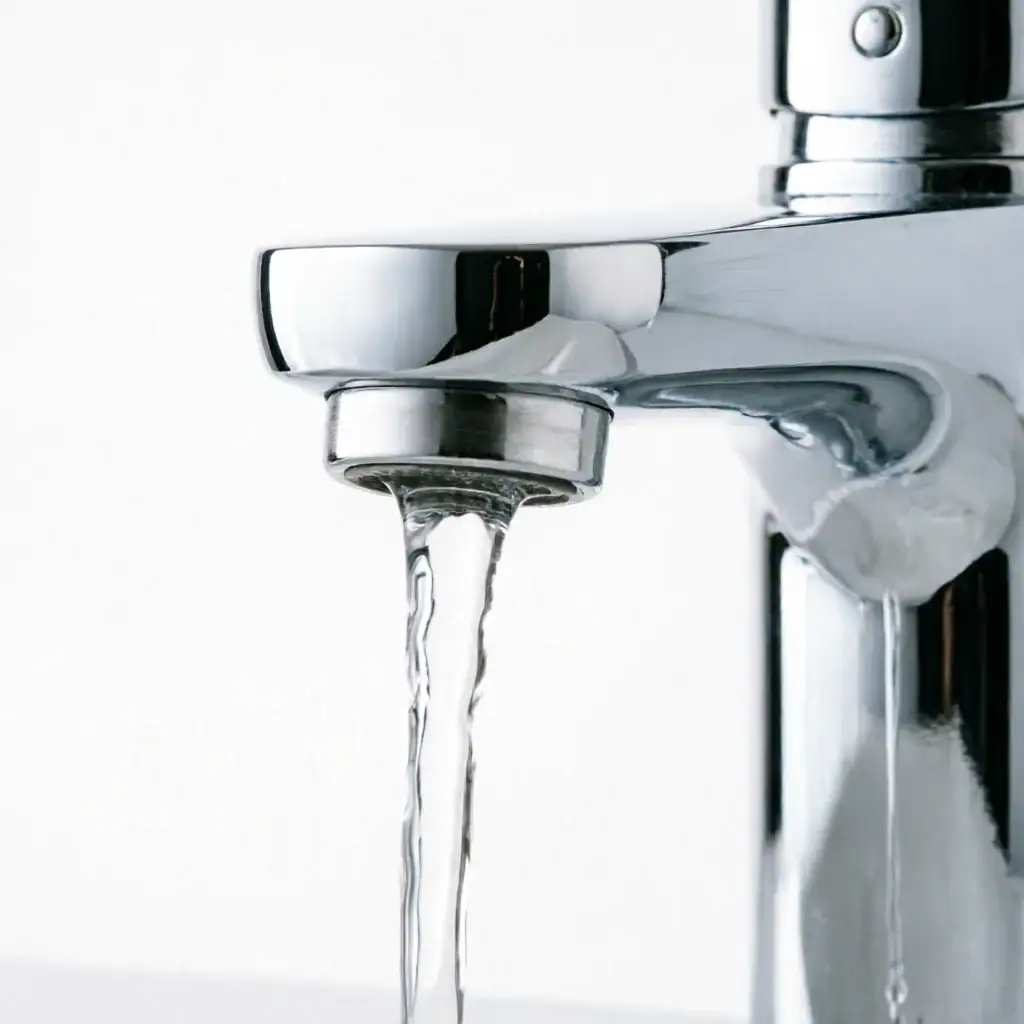
Physical Vapor Deposition (PVD) is the finish technology you want for hotel environments. PVD finishes often outperform standard electroplated finishes in hotel environments, but buyers should not rely on the term ‘PVD’ alone. Ask for neutral salt spray test reports, the test standard used, the tested hours, and the acceptance criteria.
What does that mean in real life? If you’re operating a hotel in Miami or any coastal city, PVD should be strongly considered for coastal, high-humidity, or heavy-cleaning environments. The sea air eats standard finishes alive. Even in inland cities, the daily chemical cleaning in hotels is enough to degrade electroplated surfaces over time.
Brushed brass, satin nickel, and matte black PVD finishes are the most practical choices for high-traffic properties. Chrome looks great in a showroom, but it shows every water spot and fingerprint. Housekeeping spends more time polishing chrome than any other finish. I’ve timed the difference — chrome takes about 45 seconds per fixture while PVD satin nickel takes about 10. That’s real labor cost.
Cartridges, Aerators, and the Parts That Determine Lifespan
The cartridge is the heart of the faucet — understanding faucet structure starts here, especially for high-use environments. Residential-grade ceramic discs are typically rated for 70,000 cycles. For hotels, I won’t accept anything below 500,000 cycles. That’s roughly 10 years of daily use. The difference in unit price between a standard cartridge and a commercial-grade one is maybe $15. The difference in replacement cost is $400.
Aerators matter more than most people think. Pressure-compensating aerators (PCA) maintain a consistent flow rate even when building pressure fluctuates between floors. Without pressure-compensating aerators, flow can vary noticeably between floors or plumbing zones. According to the U.S. Department of Energy, low-flow aerators can reduce water heating costs significantly in commercial buildings.
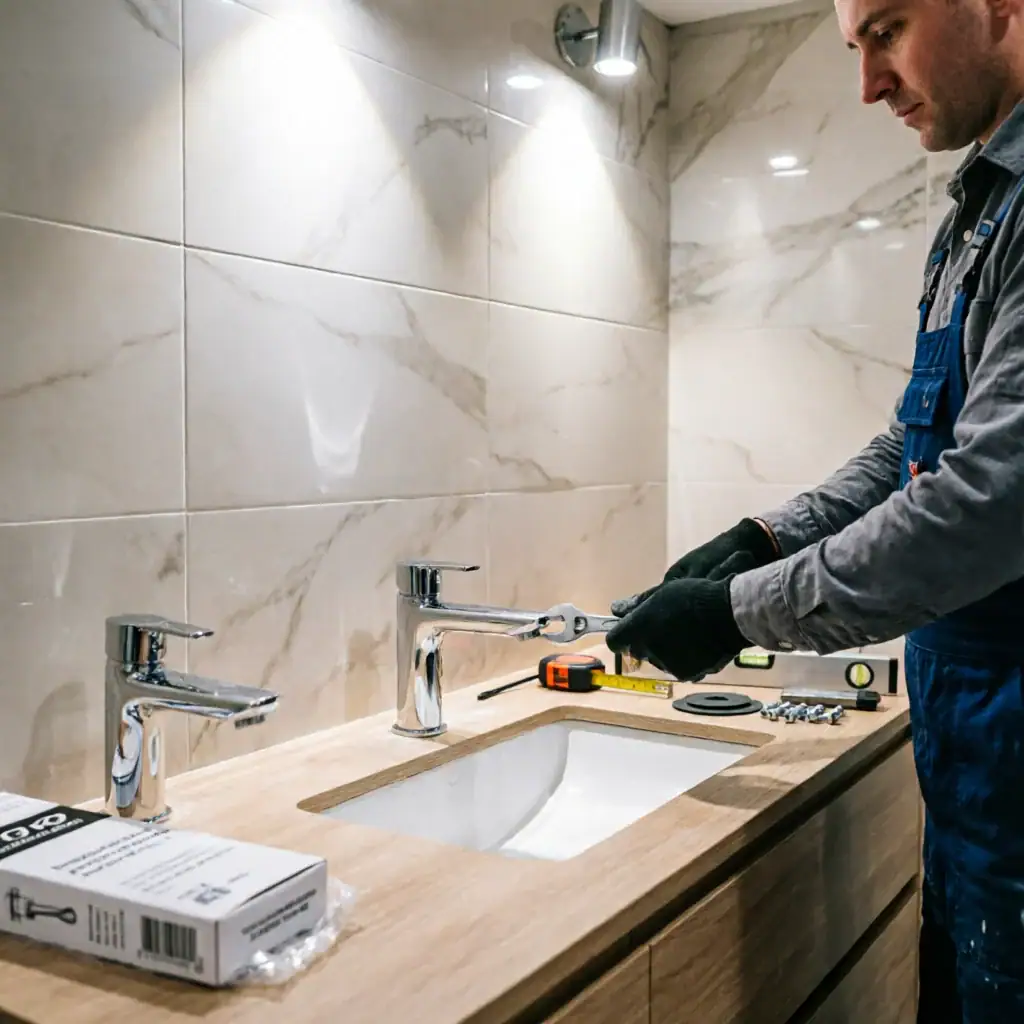
Modular “Top-Fix” designs are a game-changer for maintenance. Instead of removing the entire faucet from under the sink, you can replace the cartridge from above the counter in about 15 minutes. The room stays operational. I’ve done swaps during checkout hours without taking the room out of service.
Faucet Type Selection by Hotel Zone
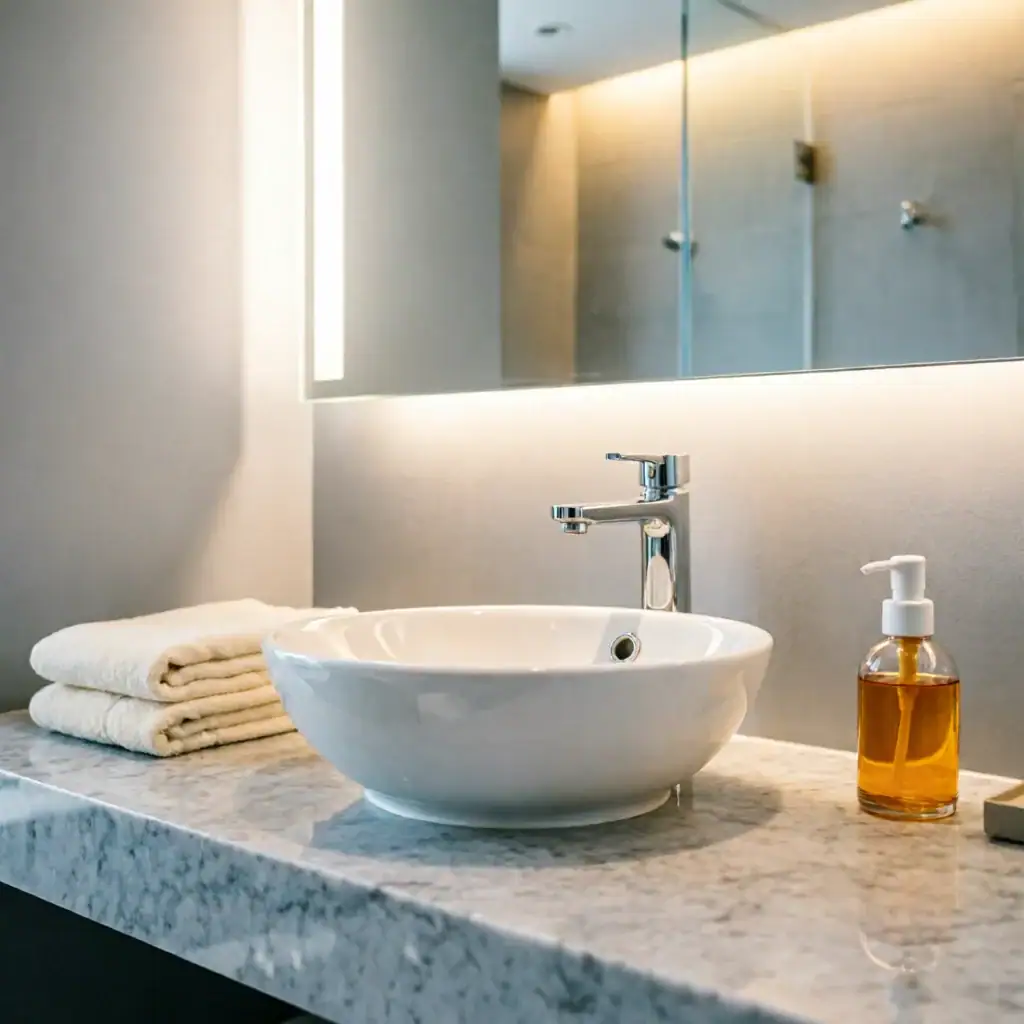
When outfitting guest rooms with commercial bathroom faucets, consistency matters most — every fixture in the room should feel unified. Guestroom vanities are the most visible touchpoint, so finish coordination should extend to towel bars, robe hooks, and shower trim.
I prefer single-hole or widespread faucet designs for luxury properties and centerset for mid-scale hotels. The real trick is getting the finish to match across everything in the bathroom. Towel bars, robe hooks, and shower trim should all match. Same finish, same feel.
Public restrooms need touchless or sensor-activated faucets. Hygiene expectations have changed permanently, and guests expect hands-free operation in shared spaces. Sensor faucets also cut water usage because they shut off automatically when the user walks away. No more taps left running by distracted guests.
For ADA-compliant rooms, faucet controls must be operable with one hand, without tight grasping, pinching, or twisting, and with no more than 5 lbf of force. The operating force must be 5 pounds or less. That sounds simple, but some decorative handles with sharp edges or tight grips don’t pass. I always test the handle with a wet hand before approving a spec. If I can’t turn it easily with a wet palm, it fails.
How to Schedule Hotel Bathroom Faucet Procurement, Delivery, and Installation
Lead Time Expectations and Custom Finish Schedules
Standard inventory faucets ship in 4 to 6 weeks. Custom PVD finishes like brushed brass or gunmetal can take 8 to 12 weeks. If you’re working on a renovation with a hard opening date, you need those lead times locked in before you break ground.
I learned this the hard way on a project in Phoenix. The client ordered custom finishes 6 weeks before the scheduled install. The supplier quoted 10 weeks. We had to switch to standard chrome for the first 40 rooms and schedule a second installation later. It cost extra labor and created finish inconsistency that guests noticed.
Minimum order quantities (MOQ) for custom colors are another planning factor. Most manufacturers require 50 to 100 units for a custom PVD run. If your project is smaller, you might need to stick with standard finishes or partner with a supplier who keeps custom colors in stock.
A-TORNEIRA has been a reliable option for me when custom finishes are needed on tighter timelines. They maintain stock on popular commercial colors, which eliminates the custom-batch wait entirely.
Phasing Procurement for Large-Scale Hotel Renovations
For properties with 200 rooms or more, you’ll rarely renovate everything at once. Phased delivery lets you align faucet shipments with the construction schedule. You don’t want 500 boxes of faucets sitting in a storage room for three months. They get damaged, misplaced, or confused with other materials.
Just-in-time delivery works best for large projects. I coordinate delivery so the boxes arrive 48 hours before the installation team needs them. This requires close communication with the supplier and the general contractor. The supplier needs to know your exact room schedule. The contractor needs to know when the plumbing rough-in is complete so installation can start immediately.
Storage is another hidden cost. On-site storage for hundreds of faucet boxes takes up space that could be used for other materials. Some suppliers offer staging warehouses near the job site. You ship to their warehouse, and they deliver room-by-room as needed. It’s worth asking about.
Common Hotel Bathroom Faucet Procurement Mistakes
The biggest mistake I see is using residential-grade fixtures in commercial settings. They look the same in the box. They might even cost the same. But they won’t survive the daily cycle count, chemical exposure, and guest abuse that hotel fixtures face. I’ve replaced residential faucets that failed in under 18 months. The replacement cost was easily two to four times the original purchase price.
Another common error is skipping the sample phase. Always order one complete unit and install it in a test room. Run it for a week. Have housekeeping clean it with their standard chemicals. Check if the finish holds up, if the handle is comfortable, and if the aerator performs under your building’s water pressure. A $200 sample can save you from a $20,000 mistake.
Ignoring batch consistency is the third major pitfall. When you sign the contract, include a clause requiring the supplier to match the exact finish standard across all deliveries. If you need replacement units in year five, the finish should be identical. I always request a physical finish sample sealed in a signed envelope. If the replacement doesn’t match the sample, the supplier replaces it at their cost.
Not securing spare parts upfront is another expensive oversight. Cartridges, aerators, and handle inserts should be available for at least 10 years. If the supplier discontinues the model, you could be forced to replace every faucet in a room just because one handle broke. I always negotiate a spare parts package as part of the initial order. Commercial faucet warranty terms matter here — make sure your contract covers parts availability, not just manufacturing defects.
Hope this helps you navigate your next hotel bathroom faucet procurement project. If you have questions about specific finishes or need help with a supplier evaluation, feel free to ask. For project-specific finish selection or specification support, consult a supplier with proven hotel procurement experience.