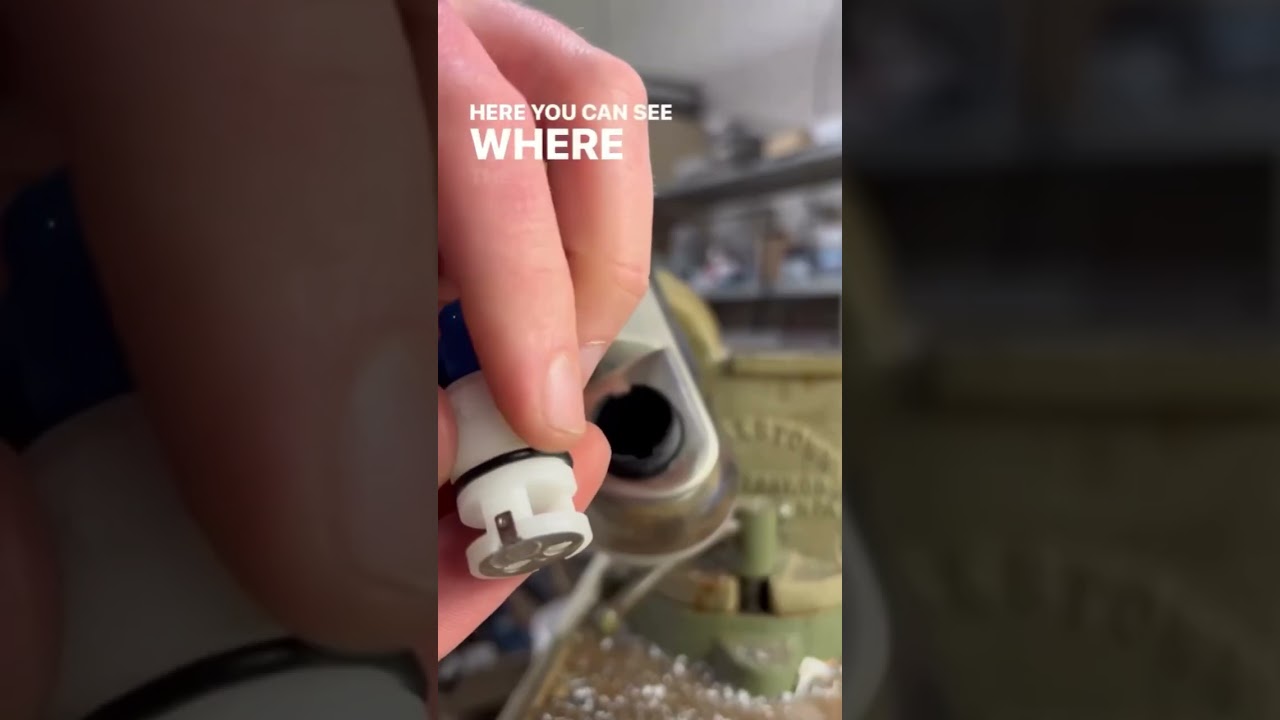
Before starting the article, I found a YouTube video that shares a similar perspective to mine. Hope it helps!
I’ve been around faucets long enough to know a “tiny” drip is rarely just a tiny drip.
It wastes water. It leaves mineral stains. It often gets worse when someone overtightens the handle to make it stop.
Here’s a reality check: The U.S. EPA reports that a faucet dripping once a second can waste over 3,000 gallons a year. Plus, leaks in the average household can waste nearly 10,000 gallons annually.
When I diagnose a leaky faucet, I don’t start by buying parts.
I start with the leak location, because it usually tells me which seal or connection has stopped doing its job.
Let’s break it down into the three primary zones where you’ll spot water.
Diagnosing the Problem: Where is the Leak Coming From?

Water Dripping from the Spout
If the spout drips after the handle is fully off, the faucet isn’t sealing internally.
On a two-handle compression faucet, that often means the washer or the valve seat isn’t sealing cleanly.
On most modern “washerless” faucets (cartridge / ceramic disc / ball-type mechanisms), it usually points to the cartridge assembly or debris caught where the valve should shut.
One quick field test I use: wipe the spout dry, shut the water off, then watch the first 60 seconds.
If the drip starts immediately, think worn sealing surfaces.
If it starts later, pressure and temperature swings can also be involved.

Leaking Around the Base of the Faucet
Base leaks are the ones that fool people the most.
A lot of the time, the faucet isn’t leaking from the base at all.
Water can drip from wet hands, splash off a sink, hit the handle area, and run down the body until it pools at the base.

The other common pattern is a slow leak above the deck (around the handle or spout swivel) that follows gravity and exits at the base seam.
What I do: dry everything, then wrap a tissue around the handle area and the spout swivel.
Turn the faucet on and move the handle.
If the tissue gets wet up top, the “base leak” is just the final stop.
Leaks Under the Sink (Supply Line Issues)
If the cabinet floor is wet, I check the plumbing connections before I touch the faucet internals.
Most under-sink leaks come from supply connections, shutoff valves, or a stressed braided hose.
I’ll dry the valves and fittings, run water, then use a flashlight to look for slow beads forming.
If there’s a braided hose, I also look for fine misting.
A pinhole spray can soak a cabinet fast and still be hard to see.
If the shutoff, supply hose, and fittings are all aging together, sometimes a clean replacement is more reliable than chasing one small leak after another. If you’re at that point, you can browse our kitchen sink faucets collection and pick a setup that matches your sink and plumbing layout.

The 5 Most Common Causes of a Leaky Faucet

Worn-Out O-Rings
O-rings do a lot of sealing work in modern faucets—especially around handles, spout swivel joints, and cartridge housings.
They can fail from movement, but they also fail from aging.
In real life, that shows up as a leak when you move the handle, rotate the spout, or pull out a spray head.
I run into this a lot on pull-down setups, because there are more moving seals and connection points than a basic spout. If you’re upgrading for smoother operation (and easier everyday use), take a look at our pull-down kitchen faucet options.
Corroded Valve Seats
Valve seats are the sealing surface that a washer presses against in compression faucets.
If that seat develops scale, roughness, or pitting, the washer can’t seal evenly.
If you’re seeing green/white crust, rust staining, or obvious pitting, the leak is often only part of the story. I explained the common corrosion triggers (water chemistry, dissimilar metals, and maintenance habits) here: What Causes Bathroom Faucets to Corrode?
This is why I don’t assume “new washer = fixed.”
If a faucet keeps dripping after a washer swap, I start inspecting the seat immediately.
Damaged or Worn Washers
Washers are still one of the most common causes in older two-handle faucets.
They’re designed to compress and seal, and eventually they deform, harden, or tear.
The mistake I see all the time is over-tightening the handle to stop a drip.
It may slow the drip temporarily, but it usually accelerates wear and can damage the sealing surfaces.
Problems with the Cartridge (for Washerless Designs)
In the faucet world, “washerless” usually means the shutoff job is handled by a cartridge-style valve system.
That includes classic ball-type single-handle designs, cartridge faucets, and ceramic disc cartridges.
When the cartridge system is worn or contaminated, you might see spout dripping, temperature instability, or a handle that feels rough.
A surprising number of cartridge leaks are caused by debris.
I’ve opened cartridges that looked “failed,” but were really just prevented from closing by grit.
If you do end up replacing a cartridge or an internal seal, the first step is usually removing the handle—without stripping the set screw or scratching the finish. I wrote a quick, tool-by-tool walkthrough here: How to remove faucet handle?
High Water Pressure in the Home
High pressure doesn’t magically create a leak, but it makes every weak seal leak faster.
If multiple faucets in the home start dripping around the same time, I stop blaming the faucets and start looking at the incoming pressure.
A failed or missing PRV (pressure reducing valve) is a frequent root cause in those cases.
Identifying Your Faucet Type Before Fixing
If you’re not sure what you’re looking at once the handle comes off, I put together a simple visual guide that breaks down the faucet body, spout, cartridge area, and seals. It’ll make the next steps a lot less guessy: Understanding Faucet Structure: A Practical Guide.

Compression Faucets (Two-handle)
If your faucet has two handles and needs multiple turns to shut off, it’s usually compression.
These rely on washers sealing against a seat.
They’re very repairable, but the exact parts (washer size, stem, seat type) matter.
Ball Faucets (Single-handle)
Ball faucets are an early, classic style of single-handle washerless design.
They often have a “looser” feel than modern ceramic disc cartridges, and internally they use a ball mechanism with several small seals and springs.
I still see them in service, and they can be fixed, but they’re part-heavy.
Disc Faucets (Ceramic cylinder)
Disc faucets typically use a ceramic disc cartridge system.
They often feel smooth and precise, and they don’t usually “wear out” the way washers do.
When they leak, I look for worn seals around the cartridge housing, debris, or damage from forcing the handle.
Cartridge Faucets (Single or Double Handle)
This is the most common modern category.
Many current faucets are “cartridge faucets,” and a large share of them are ceramic-disc cartridges even if the outside styling varies a lot.
If it’s a modern faucet and you can remove a single cartridge unit as the control core, you’re usually in the right neighborhood.
How to Prevent Future Leaks and Extend Faucet Life
Managing Hard Water and Mineral Buildup
Hard water is like slow sandpaper.
Mineral buildup can create rough sealing surfaces, increase friction in moving parts, and trap debris where valves need to close cleanly.
My routine is simple:
- Clean aerators regularly.
- Wipe away early crust to stop it from hardening.
- Flush the line after plumbing work to keep grit out of the valve.

Regular Replacement of Seals and Gaskets
Seals are consumables, especially in high-use kitchens and rentals.
If a faucet is used heavily, I’d rather replace O-rings and gaskets early than wait for a drip to turn into cabinet damage.
And if you’ve fixed a leak once, take 30 seconds to check under the sink occasionally.
Catching a slow seep early is one of the easiest “pro moves” there is.
In bathrooms, I’ve found that choosing a faucet with a solid cartridge and easy-to-source seals saves a lot of trouble long-term. If you’re planning a refresh, our Bathroom sink faucets category makes it easy to compare styles and mounting types before you commit.