Choosing between chrome and brushed nickel is less about finding one universally better finish and more about balancing appearance, maintenance, price, and finish quality. Chrome is brighter, cooler-toned, widely available, and often less expensive. Brushed nickel has a warmer, softer appearance and usually hides fingerprints and water spots more effectively. This guide compares how the two finishes look, how they are made, how they perform, and where each one works best.
Chrome vs Brushed Nickel: Quick Comparison
| Factor | Chrome | Brushed Nickel |
|---|---|---|
| Appearance | Bright, cool, and reflective | Warm, soft, and satin-like |
| Fingerprints | More noticeable | Less noticeable |
| Water spots | More noticeable | Better concealed |
| Cleaning | Easy to wipe, but needs frequent drying | Hides marks better between cleanings |
| Price | Often lower | Often higher |
| Best for | Modern spaces and broad finish compatibility | Warm interiors and lower visual maintenance |
Chrome vs Brushed Nickel: Appearance, Manufacturing & Why They Differ
What Chrome and Brushed Nickel Look Like in Real Spaces
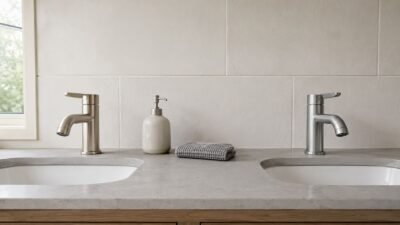
Chrome is the bright, mirror-like silver finish commonly used in residential and commercial bathrooms. Under natural light, it reflects everything around it — the tile, the window, even your hand as you reach for the handle. It makes a small bathroom feel larger because it bounces light off every surface.
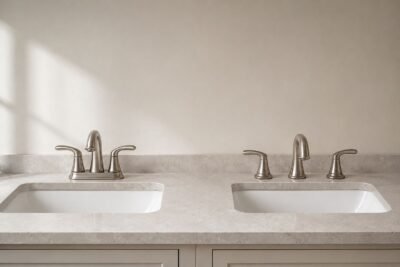
Brushed nickel has a satin-like, muted sheen. It doesn’t reflect details the way chrome does. Instead, it reads as a soft warm silver — almost champagne-toned under warm bulbs, slightly gray under cooler LEDs. This warmth makes it a favorite for traditional, transitional, and farmhouse bathrooms where chrome would feel too cold.
The difference is not only visual. The smoother chrome surface and the directional texture of brushed nickel also affect how clearly fingerprints, water spots, and light scratches appear during daily use.
Electroplating, Brushing, and PVD Explained
Chrome faucets are usually finished with decorative electroplating rather than being made from solid chromium. After the faucet body is cleaned and polished, manufacturers may apply one or more underlayers—commonly copper and nickel—before adding a thin chromium top layer. The underlayers help smooth the surface and improve corrosion resistance, while the chromium provides the cool, highly reflective appearance and added resistance to wear and tarnishing.
“Brushed nickel” describes a color and surface appearance rather than one universal manufacturing method. Depending on the manufacturer, the finish may involve nickel plating followed by directional brushing, a protective clear coat, or a PVD-applied nickel-toned surface. PVD is therefore not the opposite of brushing; it is one possible coating technology used to create a durable decorative finish. Buyers should check the product specification and finish warranty because two faucets labeled “brushed nickel” may use different coating systems.

Why Surface Texture Controls Fingerprints and Water Spots
Fingerprint and water-spot visibility is largely an optical issue, although the marks themselves are physical residues. Polished chrome reflects light in a uniform, mirror-like way, so skin oils and mineral rings interrupt the reflection and become easy to see. The directional texture of brushed nickel scatters light, making similar marks less noticeable. Brushed nickel does not prevent fingerprints or mineral deposits from forming—it simply conceals them better between cleanings.
Surface texture is not the only factor that affects fingerprint performance. In a 2018 laboratory study published in Applied Surface Science, researchers applied an anti-fingerprint coating to chrome-plated brass and reduced the finished surface energy to approximately 10.5 mN/m. The treated samples also maintained good abrasion resistance when tested under a 1,000 g steel-wool load. The findings show that coating chemistry and surface energy can influence how readily oils adhere and how easily marks are removed, so two chrome faucets may perform differently even when they look similar.

Durability & Maintenance: Chrome Faucet vs Brushed Nickel by Room
Scratch, Tarnish, and Corrosion Resistance Compared
It is misleading to judge faucet durability only by saying that chromium is harder than nickel. A faucet finish is a multilayer coating system, and its real scratch and corrosion resistance depends on the substrate, surface preparation, coating method, thickness, protective topcoat, and care instructions.
In everyday use, polished chrome tends to make hairline scratches more visible because they interrupt its mirror-like reflection. Brushed nickel may visually disguise light scuffs within its directional texture, but it is not scratch-proof.
Laboratory research supports the potential durability benefits of properly engineered PVD systems. In a study published in the Journal of Materials Processing Technology, researchers deposited several multilayer PVD coatings onto CuZn40Pb2 brass and tested them in a 1 M hydrochloric acid solution. The coated samples showed significantly greater corrosion resistance than the uncoated brass, with multilayer Ti/ZrN and Ti/CrN systems producing the strongest results. However, this does not mean every PVD faucet finish performs equally well: coating composition, layer structure, surface preparation, and manufacturing quality all affect the final result.
Chrome vs Brushed Nickel in Kitchens and Bathrooms
Brushed nickel is often easier to live with in bathrooms because it makes toothpaste splashes, fingerprints, and dried water spots less obvious between cleanings. Chrome can still perform well in a bathroom, but its reflective surface usually needs more frequent drying to remain spotless. When planning a bathroom update, explore our bathroom sink faucets in both chrome and brushed nickel to compare how each finish works with different sink styles, countertops, and layouts.
In kitchens, either finish can work well. Chrome offers a smooth, bright appearance and is easy to wipe clean, while brushed nickel better disguises fingerprints from frequent handling. The better choice depends more on finish quality, cleaning habits, surrounding appliances, and design preferences than on the room alone. Browse our kitchen sink faucets to compare chrome and brushed nickel options across different spout heights, handle configurations, and spray functions.
Kitchen faucets generally see longer daily use than bathroom sink faucets. EPA estimates approximately seven minutes of residential kitchen-faucet use per person per day, compared with about three minutes for private lavatory faucets. That higher use can mean more frequent handling and cleaning, although actual wear varies by household and product quality.

Best Cleaners and What to Avoid
For both finishes, begin with warm water, mild dish soap, and a clean soft cloth. Rinse away all soap residue and dry the faucet rather than allowing water to evaporate on the surface. Avoid abrasive powders, scouring pads, bleach, ammonia, solvents, and strong acidic descalers unless the faucet manufacturer specifically approves them. Some brands permit a diluted 1:1 vinegar-and-water solution for limited contact time, while others restrict acidic cleaners, so always check the product’s care instructions before treating mineral deposits.

Price, Maintenance, and Long-Term Value
Initial Price: Chrome vs Brushed Nickel
Chrome is often the lower-priced option within the same faucet collection because it is widely produced and commonly stocked. However, the price difference varies significantly by brand, model, retailer, and coating method.
Brushed nickel may carry a higher price when additional brushing, clear coating, color-control, or PVD processing is involved. To make a fair comparison, check the price of the same faucet model in both finishes rather than relying on a universal percentage.
Maintenance and Replacement Costs Over Time
Chrome usually needs more frequent wiping to maintain a spotless, mirror-like appearance, while brushed nickel often looks presentable for longer because it conceals minor marks. The routine cleaning cost of either finish is minimal. Long-term value depends more on finish quality, warranty coverage, water conditions, coating technology, and the availability of replacement parts.
The real cost hit usually comes from replacement. Before comparing long-term value, review both the mechanical warranty and the finish warranty. Peeling, pitting, staining, or discoloration may be covered differently from cartridge or valve defects, and coverage varies considerably between manufacturers. As explained in our guide to the best faucet finishes for long-term durability, a well-engineered PVD finish may provide stronger resistance to scratching, corrosion, and tarnishing than a basic decorative coating. However, the warranty and manufacturer’s test data are more useful than the finish name alone.
When Finishes Need Replacing or Refinishing
Durable faucet refinishing is rarely practical as a DIY project because proper stripping, polishing, electroplating, or PVD application requires specialized equipment. Professional replating may be possible for valuable or vintage fixtures, but it often costs more than replacing a mass-market faucet. If the finish begins to peel, pit, or discolor, check the manufacturer’s warranty before purchasing a replacement.
Finish failure near handles and faucet bases is not proof that chrome or brushed nickel is universally inferior. It may result from poor coating quality, harsh cleaning chemicals, standing water, mineral buildup, damaged protective layers, or corrosion developing beneath the finish. Our guide to what causes bathroom faucet corrosion explains how moisture, water chemistry, cleaning products, and coating defects can contribute to peeling, pitting, and discoloration. Compare warranty terms and product specifications rather than judging an entire finish category from one failed fixture.
Commercial Applications & Multi-Room Finish Coordination
Chrome vs Brushed Nickel for Hotels and Commercial Projects
Commercial projects should not select a faucet finish based on appearance alone. Specifiers need to consider cleaning protocols, water chemistry, traffic levels, replacement-part availability, finish warranties, lead times, and consistency across product lines.
Brushed finishes can make fingerprints and dried water spots less visible, which may reduce the amount of polishing needed to maintain a presentable appearance. Polished chrome, however, is widely available, easy to coordinate, and offered across many commercial-grade faucet collections. Neither finish is universally preferred by hotels; the better option depends on the property’s maintenance standards and procurement requirements.
Coordinating Faucet Finishes Across Your Entire Home
Using chrome in the kitchen and brushed nickel in the bathrooms is one practical option, especially when the kitchen includes chrome or stainless-colored appliances and the bathrooms use warmer materials. However, using one finish throughout the home can also create a more consistent look. The decision should be based on sightlines, surrounding hardware, and the overall color palette.
What matters is that the finishes work together on the same floor or sightline. If you can see the chrome kitchen faucet from the hallway where brushed nickel door hardware lives, that contrast needs to feel intentional — not accidental. That’s the sort of detail people notice even if they can’t explain why it feels off.
Spec Sheets and Finish Consistency
“Brushed nickel” is not a standardized color across the entire faucet industry. One manufacturer’s version may look warm and champagne-toned, while another may appear cooler, grayer, or more matte. Differences can result from color formulation, sheen level, brushing direction, coating technology, and production variation. For a multi-fixture project, request physical finish samples and, where possible, order faucets, shower trim, drains, and accessories from the same collection.
For projects involving multiple fixtures, confirm finish codes rather than relying only on the words “brushed nickel.” Products from different manufacturers—or even different collections from the same manufacturer—may not match exactly.
Final Verdict: Chrome or Brushed Nickel?
Neither finish wins in every situation. Choose chrome if you want a bright, cool-toned finish that is widely available, easy to coordinate, and often more affordable. Choose brushed nickel if you prefer a warmer appearance and want fingerprints and water spots to remain less visible between cleanings. Before buying, compare the finish technology, warranty, and physical sample—not just the color name shown online.
When comparing A-TORNEIRA faucet finishes, start with the room in which the faucet will be installed, then compare the available chrome and brushed nickel models by size, configuration, function, and finish warranty.