Brushed nickel and stainless steel can look similar, but they are not always the same type of specification. Brushed nickel usually describes a surface finish, while “stainless steel” may describe either the faucet’s actual body material or simply a stainless-colored finish applied over another metal. Before comparing appearance or durability, check the product sheet for the body material, finish process, stainless-steel grade, and drinking-water certifications. This guide explains how those differences affect color, maintenance, hard-water performance, durability, and long-term value.
Quick answer: Choose brushed nickel if you prefer a warmer appearance and want a finish that visually hides light fingerprints and water spots. Choose a genuine solid stainless-steel faucet if you want a cooler modern look and an exterior metal surface without a plated color layer. In either case, verify the body material, coating process, certifications, warranty, and care instructions—the finish name alone does not determine quality.
| Factor | Brushed Nickel | Genuine Solid Stainless Steel |
|---|---|---|
| What the term usually describes | A surface finish | A body material, when clearly specified |
| General color | Warm silver with yellow undertones | Cooler gray or blue-gray |
| Fingerprints and light spots | Often less visible | May be more noticeable |
| Surface wear | Depends on plating or coating system | No plated color layer if left mechanically finished |
| Hard water | Can hide light spots but still develops deposits | Still develops mineral deposits |
| Main specification to verify | Substrate, coating process and warranty | Whether it is truly solid and which grade is used |
| Typical design fit | Warm, transitional and traditional interiors | Modern, industrial and commercial-inspired interiors |
Materials and Finishes: What Brushed Nickel and Stainless Steel Actually Mean
The biggest mistake is assuming these labels describe two colors applied to the same type of faucet construction. In practice, brushed nickel usually describes the visible finish, while stainless steel may describe either the underlying material or only the appearance. The body material and finishing process therefore vary by product, so the specification sheet matters more than the finish name alone. For a closer look at the materials beneath the finish, see our brass vs. stainless steel faucet buyer’s guide.
How Brushed Nickel Is Made — Electroplating, PVD, and Base Metals
Brushed nickel usually refers to a warm-toned satin finish rather than a faucet made from solid nickel. The faucet body may be brass, zinc alloy, stainless steel, or another material, depending on the product. The appearance can be created through electroplating, mechanical brushing, protective topcoats, or a PVD coating system. Because manufacturers use different layer structures and finishing methods, the words “brushed nickel” alone do not tell you what the faucet body is made from.
Some premium brushed-nickel finishes use Physical Vapor Deposition, or PVD, as part of a multilayer coating system. PVD is a vacuum-deposition process that creates a thin surface layer. A nickel-colored PVD finish is not necessarily made from pure nickel; manufacturers may use different coating compounds, underlayers, and preparation methods to achieve the final color. PVD systems are generally designed to improve wear and tarnish resistance, but performance still varies by manufacturer, substrate preparation, coating structure, and care instructions.

High-contact areas, such as the handle base and the area around the spout, are usually the first places to show finish wear if the coating is thin, damaged, or repeatedly exposed to incompatible cleaners. For high-use kitchens, compare the finish warranty and cleaning instructions rather than relying only on the finish name.
Stainless Steel Grades: Why 304 and 316 Matter
Stainless steel is an iron-based alloy containing enough chromium to form a thin, protective passive layer on the surface. However, do not assume that every faucet labeled “stainless” is made from solid stainless steel. Some product names describe only the color or finish. Look for wording such as “solid 304 stainless-steel body” or a detailed material specification if the underlying construction matters to you.
Among genuine solid stainless-steel faucets, 304 is a common residential grade and is generally suitable for normal indoor kitchen and bathroom use. Grade 316 contains molybdenum and typically provides better resistance to pitting in chloride-rich or salt-exposed environments. However, grade alone does not determine faucet service life; fabrication quality, welds, surface finish, cartridge quality, water chemistry, installation, and maintenance also matter.
Warm vs Cool: The Visual Difference That Affects Your Space
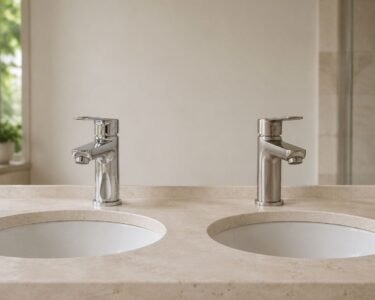
Hold a brushed nickel faucet next to a stainless steel one under neutral lighting. The brushed nickel has a warmer tone — you’ll spot faint golden or yellowish undertones. Stainless steel reads cooler, with blue-grey hints that feel more industrial.
This matters more than you’d think. I once helped a client who installed brushed nickel fixtures against stark white subway tile and cool LED lighting. The warmth of the nickel softened the room just enough to keep it from feeling like a hospital. Stainless steel, on the other hand, pairs beautifully with grey cabinetry and concrete countertops — it leans into the modern, crisp aesthetic rather than fighting it.

Durability and Real-World Performance: Brushed Nickel vs Stainless Steel Faucet
Looks get you to pick a faucet. Durability decides whether you still like the choice a few years later.
Scratch Resistance and Surface Recovery
Both brushed stainless steel and brushed nickel can hide light scuffs because their directional texture diffuses reflections. Solid stainless steel does not have a decorative plating layer that can be worn through, but that does not mean every scratch should be repaired with an abrasive pad. Abrasive refinishing can alter the factory grain, damage a protective coating, or affect the warranty. Follow the manufacturer’s refinishing instructions before attempting any repair.
Brushed nickel may visually conceal minor marks, but its durability depends on the coating system. If an electroplated or coated finish is scratched through to the substrate, a simple DIY polishing process usually cannot restore the original color and layer structure.
Corrosion and Hard Water: What Actually Happens Over Time
Hard water mainly affects a faucet by leaving calcium and magnesium deposits on the surface and around the aerator, handle bases, and joints. These deposits can dull the finish and make routine cleaning more difficult, but hard water does not automatically mean that brushed nickel will corrode or that stainless steel will remain maintenance-free.
Water-spot visibility depends on the faucet’s color, sheen, surface texture, protective coating, and how often it is dried. Brushed nickel often hides light spotting better, while some stainless-steel finishes may make dried droplets more noticeable. However, both finishes can develop mineral buildup if water is allowed to evaporate repeatedly on the surface.
If your glassware regularly dries with white residue, choose a faucet with clear care instructions and wipe it dry after use. Pay particular attention to the aerator and the seams around the handles, where deposits usually accumulate first. For additional maintenance steps, see our guide on how to prevent bathroom faucet corrosion.

Cost, Maintenance, and Total Value: Which Faucet Finish Actually Pays Off
Upfront price is only one part of long-term value. A lower-priced faucet may ultimately cost more if its finish, cartridge, hoses, or replacement parts do not hold up under the intended conditions.
Upfront Price vs Long-Term Ownership Cost
Price cannot be predicted reliably from the finish name alone. Brushed nickel may be less expensive in some product lines, while it may be a premium upgrade in others. The faucet’s body material, cartridge, spray mechanism, finish process, certification, warranty, and brand usually have a greater effect on price than color alone.
A solid stainless-steel body can reduce the risk of a decorative coating wearing through, but it does not guarantee that the entire faucet will last longer. The cartridge, seals, hoses, spray head, water quality, installation, and availability of replacement parts are equally important. For long-term value, compare the complete construction, warranty coverage, and replacement-part support rather than focusing only on the exterior finish.
Brushed nickel and stainless steel are only two of the available options. For a broader comparison, see our guide to the best faucet finishes and how they hold up over time.
Daily Cleaning: Which Finish Saves You Time
Brushed nickel often hides fingerprints and light water spotting better than brighter or cooler-toned finishes, which can make it look cleaner between wipe-downs. However, mineral deposits should still be removed regularly, especially around the aerator and handle bases.
For routine cleaning, start with warm water, mild liquid dish soap, and a soft microfiber cloth. Rinse the surface and dry it immediately. Avoid abrasive pads, steel wool, bleach, ammonia, strong solvents, and concentrated limescale removers unless the faucet manufacturer specifically approves them. Do not recommend vinegar as a universal faucet cleaner. If a manufacturer permits diluted vinegar for a particular stainless-steel model, limit the contact time, rinse thoroughly, and dry the surface afterward.
Health and Safety: What Lead-Free Labels Mean for Your Faucet Water
This is the section most buyer guides skip, and it’s the one that matters most if you drink from your faucet — which, let’s be honest, you do.
Lead-Free Standards and Certifications to Look For
Under current U.S. lead-free plumbing requirements, “lead free” does not mean that a plumbing product contains absolutely no lead. It generally means that the weighted average lead content across the product’s wetted surfaces does not exceed 0.25%, with a separate 0.2% limit for solder and flux.
NSF/ANSI/CAN 61 evaluates whether substances can leach from drinking-water components at levels that may affect health. NSF/ANSI/CAN 372 addresses the lead content of the product’s water-contact materials. When comparing faucets, check the certification for the exact model number in an accredited certification body’s public database rather than relying only on a logo, product title, or seller description.
A solid stainless-steel waterway may reduce the faucet’s reliance on brass components, but the word “stainless” alone does not prove that the entire water path is stainless steel. Cartridges, connectors, supply lines, valves, and other internal parts still need to be evaluated as part of the complete certified product.
What NSF/ANSI 61 and Proposition 65 Mean
NSF/ANSI/CAN 61 and California Proposition 65 serve different purposes. NSF/ANSI/CAN 61 is a product health-effects standard for drinking-water system components. Proposition 65 is a California right-to-know warning law covering exposures to listed chemicals. A Proposition 65 warning is not a faucet certification and does not, by itself, determine whether a product is safe or unsafe.
When shopping, prioritize verifiable certification for the exact faucet model. Depending on the product and market, relevant listings may include NSF/ANSI/CAN 61 and NSF/ANSI/CAN 372, along with applicable plumbing performance certifications.
Brushed Nickel vs Stainless Steel Faucet for Commercial and Hospitality Use
If you’re buying for a hotel, restaurant, or rental property, the decision changes. You’re no longer just asking “what looks good” — you’re asking “what survives heavy daily use and still looks decent at month six.”
Why Stainless Steel Dominates Commercial Kitchens
Stainless steel is widely used in commercial kitchens because properly specified stainless equipment can provide durable, corrosion-resistant, and cleanable surfaces. However, stainless steel as a material does not automatically make a faucet NSF certified. Certification applies to the complete product, including its materials, design, construction, cleanability, and intended use.
Procurement teams should verify the faucet’s potable-water certifications, applicable commercial-equipment listings, stainless-steel grade, replacement-part availability, and approved cleaning chemicals. Chlorine-based or highly aggressive cleaners can still discolor or pit stainless steel, particularly when they remain on the surface or collect in seams.
Brushed Nickel’s Role in Hospitality Bathroom Design
Brushed nickel has its place in commercial settings too, but it’s typically in the bathroom rather than the kitchen. Boutique hotels and higher-end properties often choose brushed nickel for guest bathroom fixtures because the warmer tone reads as luxurious without being flashy.
The catch is maintenance. In a commercial bathroom with high turnover, the housekeeping team needs to be trained on nickel-safe cleaning products. Abrasive cleaners or bleach-based sprays will eat through standard plating fast. That’s why properties that commit to brushed nickel tend to invest in PVD-coated fixtures — they cost more upfront but survive the cleaning schedule.
A practical hospitality specification may use solid stainless-steel fixtures in back-of-house service areas and PVD brushed-nickel fixtures in guest-facing bathrooms. This approach prioritizes cleaning tolerance and durability in work areas while preserving a warmer visual style in guest spaces.

For larger projects, start by separating kitchen, bathroom, guest-facing, and back-of-house applications. You can then compare our kitchen faucet collection and bathroom sink faucets by body material, finish process, certification, and expected cleaning conditions.
Which Should You Choose: Brushed Nickel or Stainless Steel?
Choose brushed nickel if you prefer a warmer appearance and want a finish that visually hides light fingerprints and water spots. It works particularly well with cream, beige, wood, and other warm interior materials. Before buying, confirm the faucet’s underlying body material, coating process, finish warranty, and approved cleaning methods.
Choose a genuine solid stainless-steel faucet if you want a cooler modern appearance and prefer a visible metal surface without a decorative color plating layer. Confirm that “stainless steel” describes the actual faucet body rather than only the finish, and check the specified grade when corrosion resistance is important.
Neither option is automatically better in every situation. Cartridge quality, waterway construction, certifications, replacement-part availability, installation, and maintenance can affect long-term performance just as much as the exterior finish.
FAQ
Q: Does brushed nickel rust or corrode over time?
A: Brushed nickel does not normally “rust” in the strict sense unless an iron-containing substrate is exposed. However, the finish can discolor, pit, tarnish, or wear through if it is damaged or cleaned with incompatible chemicals. Once the coating is breached, the underlying brass, zinc alloy, steel, or other substrate may corrode differently.
Q: What is the difference between brushed-nickel electroplating and a PVD finish?
A: Electroplating deposits a metallic layer from a liquid solution, while PVD deposits a thin coating in a vacuum chamber. A nickel-colored PVD coating is not necessarily pure nickel. PVD systems are generally designed for improved wear and tarnish resistance, but durability depends on the complete coating system and manufacturer.
Q: Which finish handles hard water better?
A: Neither finish is automatically maintenance-free in hard water. Brushed nickel may hide light spotting better, while some stainless-steel surfaces may be easier to inspect and wipe clean. Mineral buildup is influenced more by surface texture, protective coating, water hardness, wiping frequency, and manufacturer-approved cleaning methods than by the finish name alone.