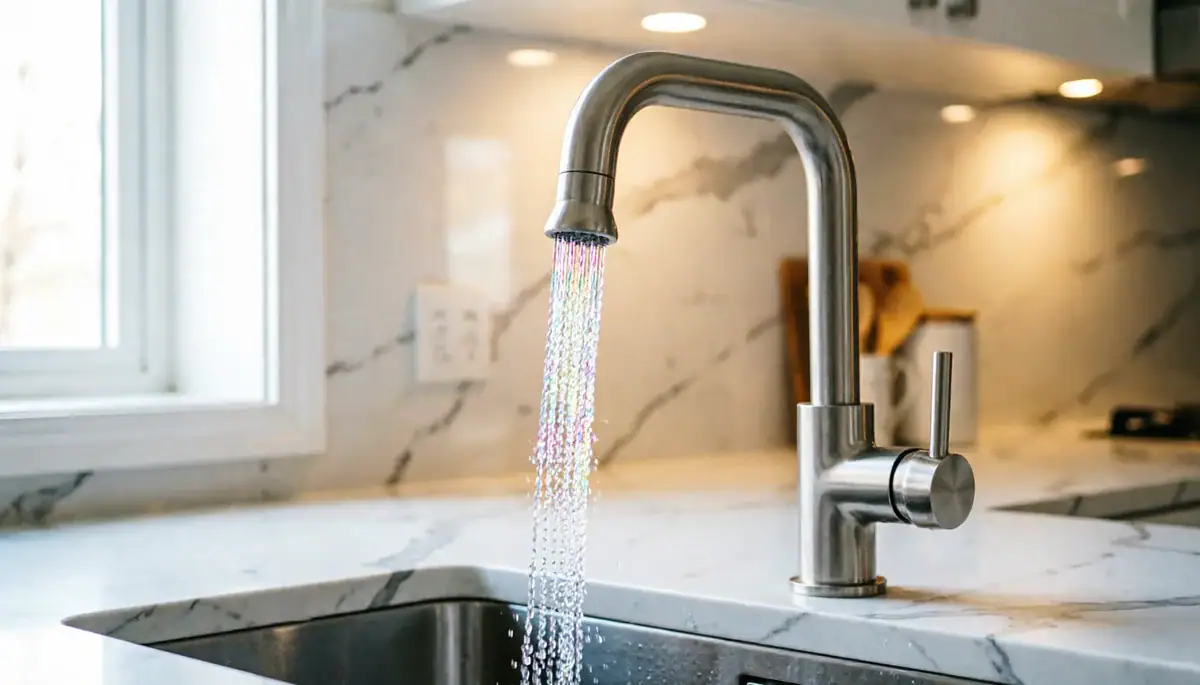
This guide takes a room-by-room approach. Instead of wandering through a hardware store confused, you’ll audit your home first. Then you’ll buy with purpose. Let’s dive into how to pick the right water-saving faucet for every space — and how water conservation starts right at your tap.
Understanding GPM — The One Number That Defines Your Faucet’s Efficiency
What GPM Means (and Why 2.2 Is a Red Flag)
GPM stands for Gallons Per Minute. It’s the single most important number when you shop for a faucet. Think of it as your faucet’s MPG rating.
Most homes still have the old standard — 2.2 GPM. Run that bathroom faucet for 10 minutes a day, and you’re using 22 gallons. A water-saving faucet at 1.5 GPM uses only 15 gallons for the same time. That’s a 32% cut with zero change in your daily habits.
Here’s what the EPA says: a WaterSense bathroom faucet tops out at 1.5 GPM. For kitchen faucets, the federal maximum is 2.2 GPM, while many efficient models are rated at 1.5–1.8 GPM. WaterSense does not currently label kitchen faucets. For bathroom faucets, anything above 1.5 GPM is usually worth checking. EPA estimates that replacing old, inefficient bathroom faucets and aerators with WaterSense labeled models can save the average family about 700 gallons per year.
Based on just 10 minutes of daily faucet use, swapping one bathroom faucet from 2.2 GPM to 1.5 GPM saves about 7 gallons per day — that’s over 2,500 gallons per year. Multiply that by three bathrooms, and you’re looking at serious savings.
Test Your Faucet in 60 Seconds
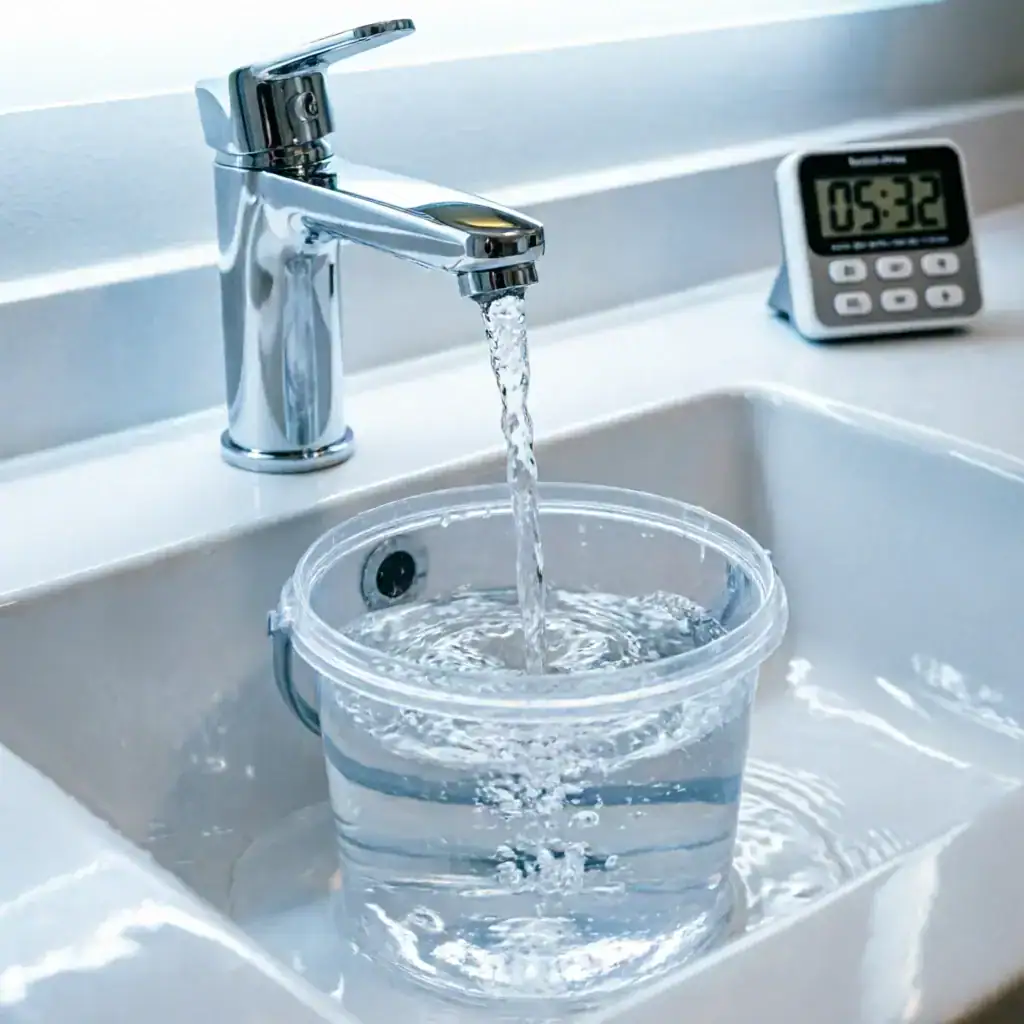
You don’t need a plumber to find your GPM. You need a measuring cup and timer.
Turn your faucet on full. Time how long it takes to fill a 1-gallon container (a standard bucket works). Then use this formula: (60 ÷ seconds to fill) = GPM. If it takes 27 seconds to fill the bucket, that’s about 2.2 GPM — the old standard. If it takes 40 seconds, you’re at 1.5 GPM — right where WaterSense wants you.
Once you know your number, check where you stand. Under 1.5 GPM? Great — that faucet is already pulling its weight. Between 1.5 and 2.2? An aerator swap gets you to the sweet spot without replacing anything. Over 2.2? That faucet is costing you real money, and it’s time for a full upgrade.
The fastest fix is swapping the aerator. In homes with older high-flow faucets, a low-flow aerator can produce noticeable savings, especially when several faucets are upgraded at once.
Types of Water-Saving Faucets for Every Room
Bathroom Faucets — High Traffic, High Reward
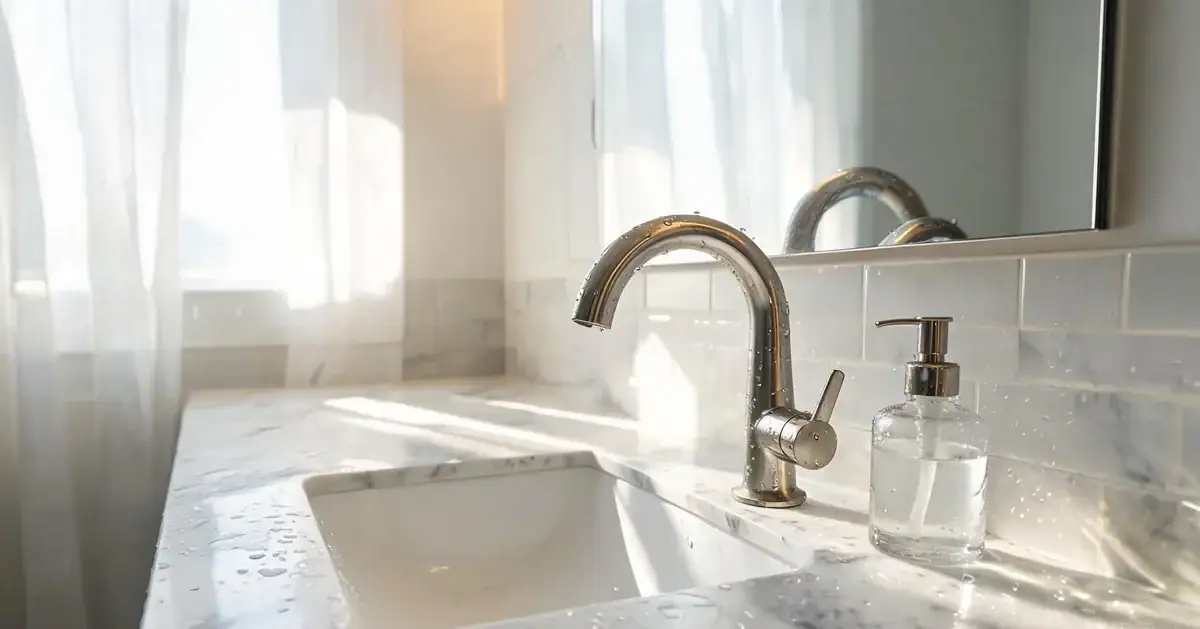
Bathroom faucets are the easiest win. Bathroom and kitchen sink faucets together account for a meaningful share of indoor water use. The sweet spot is 0.5 to 1.5 GPM.
Style matters here too. A single-hole faucet often has a more compact cartridge design. A widespread faucet uses three separate mounting holes for the spout and handles, but the flow rate is determined by the aerator, flow restrictor, and product rating—not the installation style. In practice, the difference is minimal. What matters is the GPM rating inside.
Touchless bathroom faucets can help reduce waste in high-traffic bathrooms. I installed one in a guest bathroom last year, and the homeowner reported that the faucet was no longer left running while the kids brushed their teeth. The auto-off feature eliminates the “forgot to turn it off” waste. This is especially useful in kids’ bathrooms and guest bathrooms. If you’re looking for a touchless option that balances performance and water efficiency, A-TORNEIRA makes a solid line designed for everyday homes.
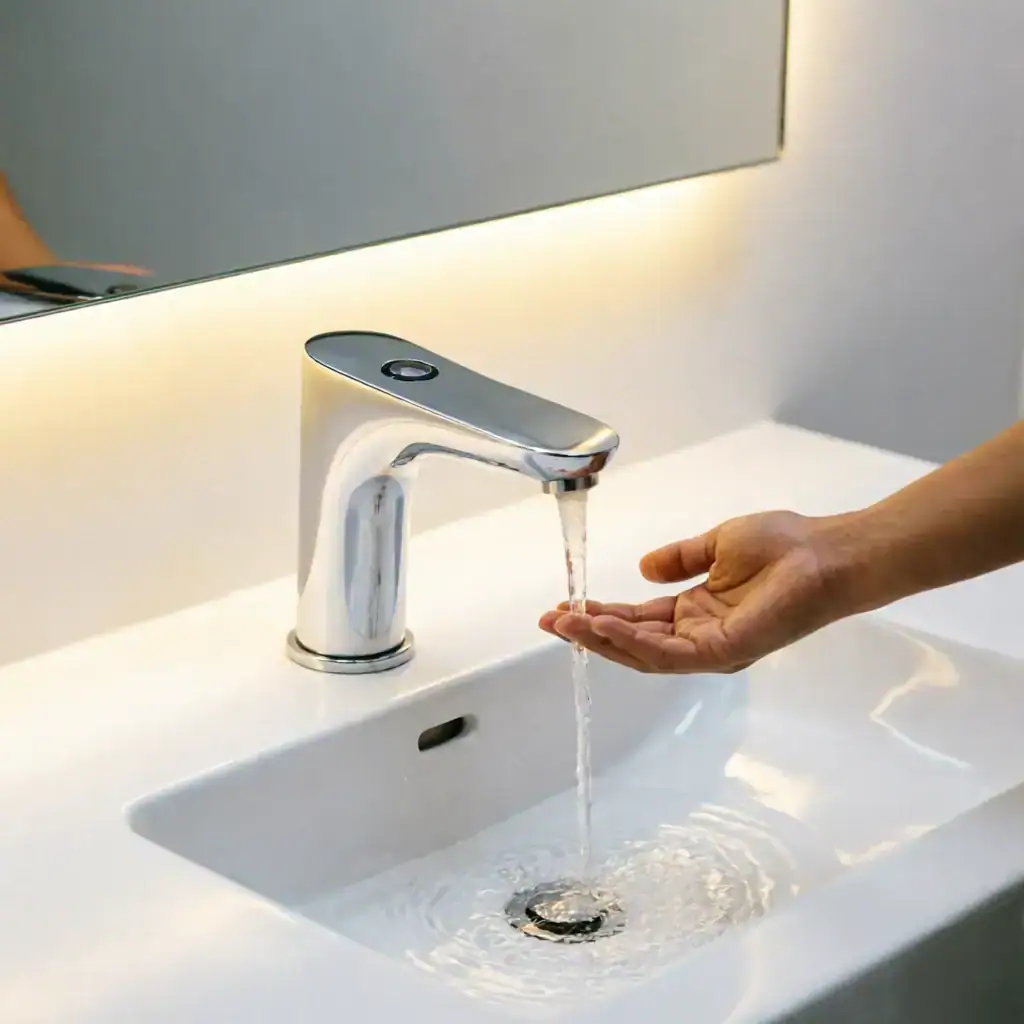
Vessel sink faucets sit taller and need a longer spout. That doesn’t change the GPM, but it does mean you need to check the reach. A short spout on a tall vessel sink creates splash.
Kitchen Faucets — Power Meets Efficiency
Kitchens are trickier. For a low-flow kitchen faucet, you still need enough flow to fill pots and rinse produce. The sweet spot is 1.5 to 2.0 GPM. Below that, filling a large stock pot takes too long. Above that, you’re wasting water on every rinse.
The best kitchen water-saving faucets use dual-spray modes. An aerated stream handles daily tasks at 1.5 GPM. A boost spray mode kicks in for heavy-duty jobs like scrubbing pans. You get the power when you need it, not when you don’t.
Pull-down faucets are the most popular style right now. The spray head pulls down into the sink and often includes a toggle between aerated and spray modes. For water savings, pull-down and pull-out styles work equally well.
Single handle faucets let you adjust temperature with one motion. The faster you find the right temp, the less hot water runs down the drain. I always steer clients toward single handle for kitchen use.
Touch kitchen faucets are a game-changer when your hands are covered in flour or raw chicken. A tap on the spout or handle turns the water on and off. No cross-contamination, no running water while you fumble for the handle. A-TORNEIRA makes a touch kitchen faucet with a solid ceramic disc cartridge that handles the constant on-off cycle without dripping.
Here’s a myth I hear constantly: “I need to pre-rinse my dishes under running water before loading the dishwasher.” Stop doing this. Scrape food into the trash. A water-efficient kitchen faucet makes this habit easier to break because the lower flow reminds you that every second counts.
The Aerator Upgrade — $5 Fix, $50 Annual Savings
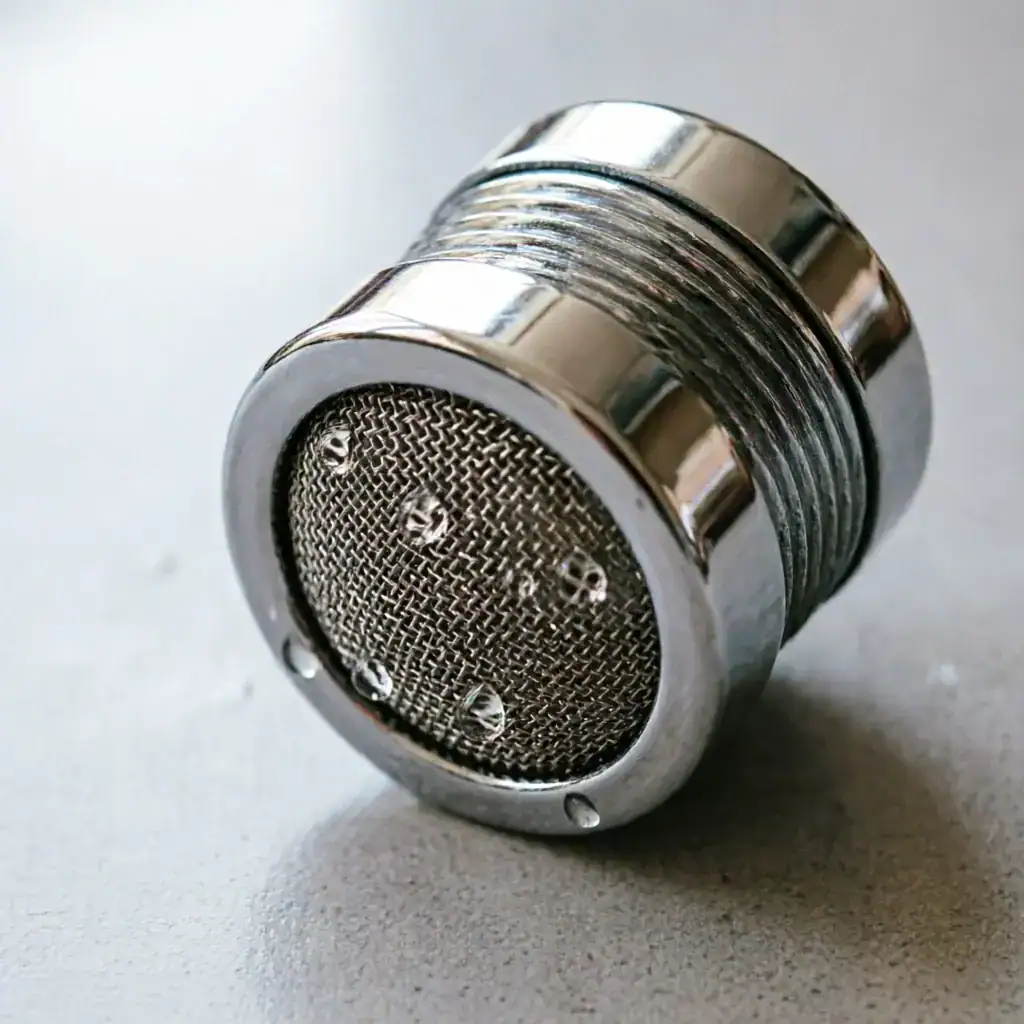
Before you go buying a new faucet, check the little screen on the tip. Sometimes that aerator is the only thing standing between you and a lower water bill. This applies to bathroom faucets just as much as kitchen ones.
An aerator is a small screen on the tip of your faucet. It mixes air into the water stream, creating a fuller feel while cutting actual flow by up to 40%. A good aerator can drop a 2.2 GPM faucet to 1.5 GPM with no noticeable change in performance.
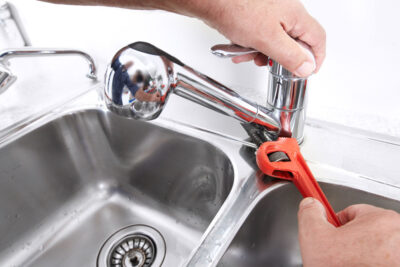
When to replace the whole faucet? If the body is leaking or the cartridge is worn. When to just swap the aerator? If the faucet works fine but uses too much water.
Picking the right aerator is simple. Check the thread size on your current faucet — male or female threads. Then pick a GPM rating. Most homeowners do well with 1.5 GPM for bathrooms and 1.8 GPM for kitchens. Our guide on how to remove a faucet aerator shows you how. Installing a new aerator takes about two minutes: unscrew the old one, wrap plumber’s tape on the new one, and screw it in.
Last summer, I helped a family in Arizona swap aerators on four faucets. Their total cost was under $20. Their next water bill dropped by $18. That’s a one-month payback.
Key Features That Actually Save You Money
WaterSense Certification — The Minimum Standard
WaterSense is the EPA’s program for water-efficient products. It’s like Energy Star, but for water. A WaterSense faucet is guaranteed to be at least 20% more efficient than standard models and is independently tested for performance.
The label means you’re not guessing. The EPA has already tested that faucet to make sure it works well at a lower GPM. I always look for the WaterSense label before I recommend any faucet to a client.
Build Quality That Pays for Itself
A cheap faucet that leaks is not a water-saving faucet. It’s a broken faucet. Build quality matters more than most people think.
Solid brass bodies generally offer better corrosion resistance and longer service life than low-cost zinc alloy bodies, especially in hard-water areas. The upfront cost difference is $30-50. The lifespan difference is 15 years.
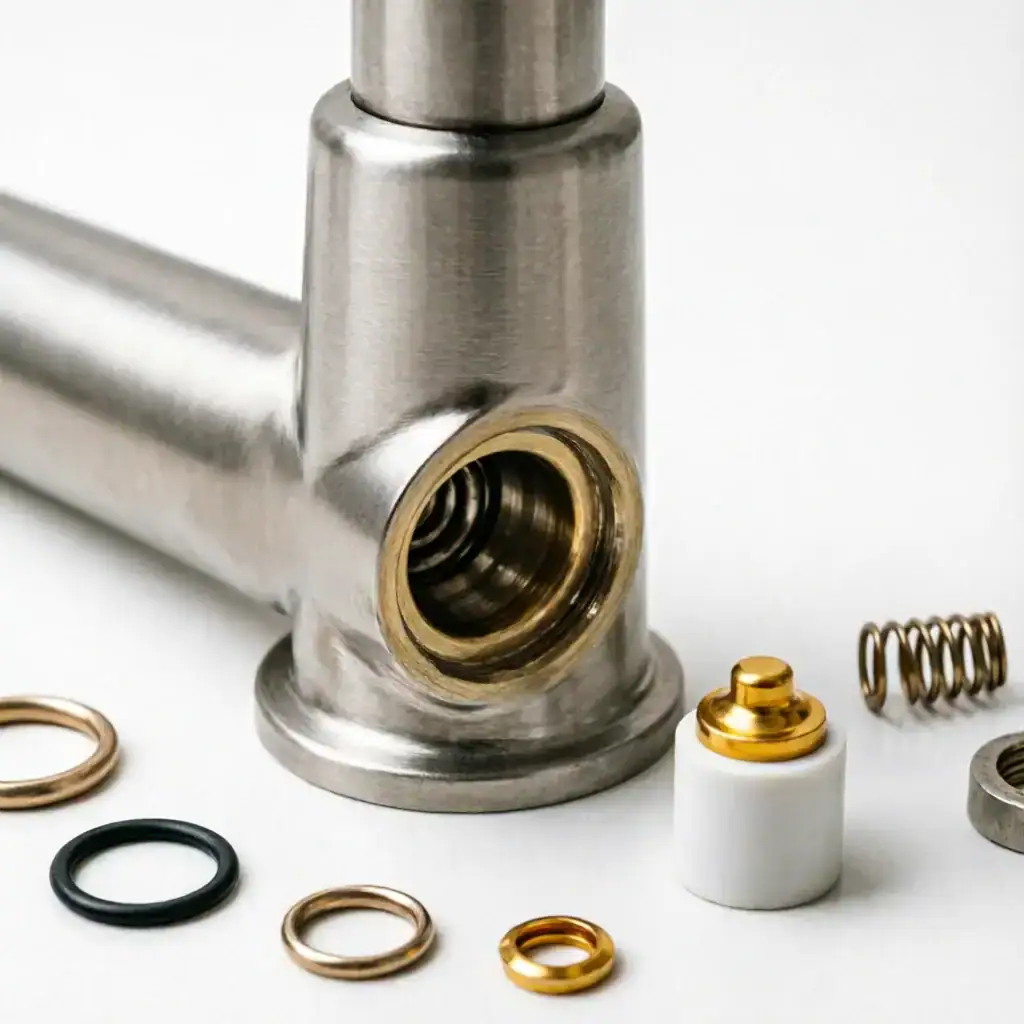
Ceramic disc valves are the gold standard. Two smooth ceramic discs slide against each other to control flow. No rubber washers to wear out. No dripping. A good ceramic disc valve handles 500,000+ on-off cycles — about 15 years of normal use. When it needs attention, how to replace a faucet cartridge is a straightforward DIY job.
Cost vs. Payback — The Real Numbers
Budget water-saving faucets run $50-100. They’re basic, WaterSense-certified, and get the job done. Mid-range models at $100-200 add better finishes, ceramic disc valves, and longer warranties. Either way, the payback is fast.
According to Consumer Reports, a water-efficient faucet pays for itself in 6-18 months through combined water and energy savings. Less hot water usage means your water heater runs less. That’s where the real money hides.
The math is simple: a typical household saves 2,000 gallons per faucet per year. Multiply that by your local water rate. In most U.S. cities, that’s $36-96 per year per faucet — a noticeable drop on your monthly utility bill. If you have three faucets, that’s $108-288 in annual savings.
Smart Water-Saving Faucet Technology — Beyond the Basics
Now, if you’re the kind of person who likes to see every drop of water accounted for, there’s another level worth exploring.
Smart Faucets Are No Longer Sci-Fi
Smart faucets have arrived in the mainstream. They offer temperature presets, usage tracking, and even leak detection. Some models send alerts to your phone if the faucet has been running longer than usual.
Touch-free activation is the biggest water saver. When you wave your hand or move away, the faucet shuts off. No more leaving the water running while you scrub soap or rinse dishes. According to the EPA’s WaterSense program, turning off the tap while brushing teeth can save 8 gallons per day per person. Smart faucets automate that fix and take water conservation beyond just the faucet itself.
Smart water monitors attach to your main water line and track usage in real time. They pair well with water-saving faucets because lower flow rates make leaks easier to spot.
The Water Pressure Factor
High water pressure is the silent enemy of water efficiency. If your home runs at 80 PSI or higher, even a low-flow faucet will push more water than it’s rated for. The sweet spot is 50-60 PSI. That’s enough pressure for a strong shower but low enough to let your water-saving faucet do its job.
You can check your pressure with a $10 gauge from any hardware store. Screw it onto an outdoor spigot. If it’s over 80, consider installing a pressure reducing valve. It costs $50-100 and protects every faucet in your home.
Know your GPM. Match the faucet type to each room. Look for WaterSense certification. Track your savings on the next water bill. A-TORNEIRA carries a full range of water-saving faucets designed for every room, from touchless bathroom models to dual-spray kitchen fixtures.
Frequently Asked Questions
Q: Are water-saving faucets really worth the investment?
A: Yes. Payback period is 6-18 months. After that, pure savings. The average family saves 2,000-5,000 gallons per faucet per year.
Q: Will a low-flow faucet affect my water pressure?
A: Modern water-saving faucets use aeration to keep the pressure feeling strong. You won’t notice the difference. Your water bill will.
Q: Is WaterSense certification important?
A: Yes. It’s the EPA’s guarantee that the faucet is at least 20% more efficient and performance-tested. Without it, you’re guessing.
Q: Can I install a water-saving faucet in a rental?
A: Usually yes, with landlord permission. Match the existing hole configuration so you don’t need to drill or modify. The easier route: just swap in a low-flow aerator. It takes two minutes, costs under $10, and is fully reversible — you can put the old one back anytime.
Q: What is the difference between “low-flow” and “WaterSense”?
A: “Low-flow” is just a label with no standard. “WaterSense” is EPA-certified and independently tested. Always choose WaterSense.