When I walk into a bathroom, the first thing I notice is the faucet. It’s the most-used fixture in the room, and choosing the right types of bathroom faucets can make or break the daily experience.
I’ve installed, replaced, and recommended faucets across every style and price point. Most buyers struggle with the same question: which type is actually right for my sink? This guide breaks down every major bathroom faucet type – from deck-mounted classics to wall-mounted statement pieces – so you can shop with confidence.
Bathroom Faucet Types Comparison Table
Before choosing a bathroom faucet, it helps to compare the main types by installation style and best use cases. The table below gives you a quick overview before we break each option down in detail.
| Faucet Type | Installation Style | Best For |
|---|---|---|
| Single-Hole Faucet | One mounting hole on the sink or countertop | Small bathrooms, powder rooms, and modern vanities |
| Centerset Faucet | Three holes, usually 4 inches apart, with the spout and handles on one base | Standard bathroom sinks and budget-friendly replacements |
| Widespread Faucet | Three separate pieces with 8–16 inch spacing | Master bathrooms, luxury vanities, and hotel bathrooms |
| Wall-Mounted Faucet | Mounted directly on the wall above the sink | Vessel sinks, floating vanities, and minimalist bathrooms |
| Vessel Sink Faucet | Usually a taller single-hole or widespread faucet | Above-counter vessel sinks |
| Touchless Faucet | Sensor-activated, usually deck-mounted or wall-mounted | High-traffic bathrooms, commercial spaces, and hygiene-focused homes |
| Waterfall Faucet | Open spout that creates a sheet-like water flow | Contemporary bathrooms and statement vanities |
Common Deck-Mounted Faucet Types
Single-Hole Faucets
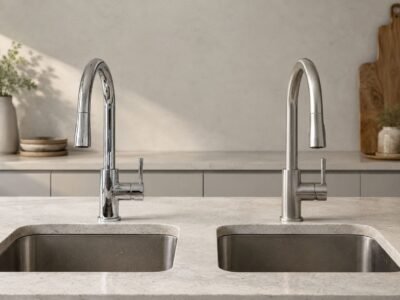
Single-hole faucets are exactly what they sound like: one hole, one fixture. The handle and spout sit on a single body, making installation clean and straightforward. These shine in powder rooms and small bathrooms where counter space is tight. They also pair perfectly with modern, minimalist sinks.
Last year, I helped a client renovate a compact guest bath. We went with a single-hole faucet and an undermount sink. The result was sleek, uncluttered, and the installation took under an hour. If you want a faucet that feels modern without shouting for attention, this is your type. Browse our single-hole faucet collection if you’re starting from scratch.
Centerset Faucets
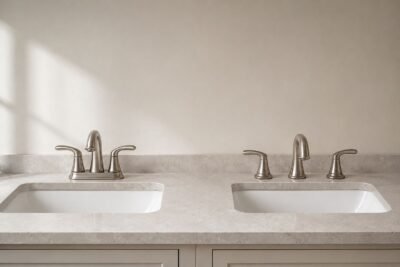
Centerset faucets combine the spout and two handles on a single base plate, requiring three holes spaced four inches apart. They’re the most common type you’ll see in standard bathrooms, and for good reason: they’re affordable, reliable, and easy to replace.
In many standard bathroom replacements, centerset faucets remain the safest and most practical choice. They’re the safe bet for anyone who wants a traditional look without spending a fortune. If your sink already has three holes drilled four inches apart, this type is practically plug-and-play.
Widespread Faucets
Widespread faucets separate the spout and handles into three independent components, mounted on holes spaced 8 to 16 inches apart. They offer a more custom, high-end appearance and allow for creative handle placement.
The tradeoff? Installation is more involved, and the price jumps. But if you’re designing a master bath or a hospitality suite where aesthetics matter, widespread faucets deliver visual impact that centersets simply can’t match. These are the statement-making faucet types that designers reach for first.

Wall-Mounted and Specialty Faucet Types
Wall-Mount Faucets
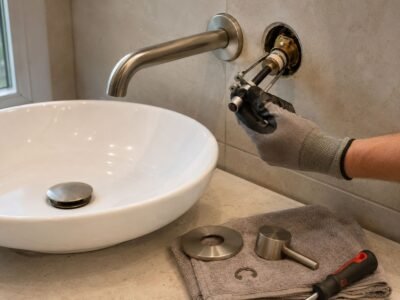
Wall-mounted faucets extend directly from the wall above the sink, leaving the countertop completely clear. This setup works beautifully with vessel sinks and modern vanity designs. It also makes cleaning the counter a breeze – no base plate collecting water and soap scum.
But there’s a catch. Wall-mount faucets require plumbing inside the wall, which means rough-in work before the tile goes up. I always tell clients: if you’re not already opening the wall, this isn’t a retrofit project. Plan it during renovation, not after. You can see our full wall-mount bathroom faucet range for options that fit this style.

Vessel Sink Faucets
Vessel sinks sit above the counter, and they need taller faucets to reach above the rim. These are typically single-hole or widespread styles with extended spout height. I’ve seen too many buyers fall in love with a vessel sink, then grab a standard faucet and realize the spout barely reaches the bowl.
Measure twice. For vessel sinks, check both spout height and spout reach. The water stream should land near the center of the bowl without hitting the side wall too sharply, otherwise splashing becomes more likely.
Touchless and Sensor-Activated Faucets
Touchless faucets use infrared sensors to start and stop water flow without hand contact. I’ve installed these in high-traffic settings where hygiene matters most – think public restrooms, medical facilities, and increasingly, modern homes.
According to the CDC (hand hygiene guidelines), reducing hand contact with shared surfaces is a key factor in preventing germ transmission. Touchless faucets can reduce direct contact with faucet handles, which may support better restroom hygiene. However, they should be viewed as a convenience and hygiene-supporting feature, not a replacement for proper handwashing.
Waterfall Faucets
Waterfall faucets feature a wide, open spout that lets water flow in a smooth sheet rather than a stream. They’re visually striking and work beautifully with vessel sinks and contemporary designs. But I always warn clients: the open spout design can lead to splashing if the water pressure is too high, and they’re harder to keep clean due to mineral buildup on the wide surface.
If you want a statement piece, a waterfall faucet delivers. Just make sure your water pressure is moderate, and you’re okay with a bit more daily wiping.
Faucet Build Quality and Durability
Solid Brass vs Zinc Alloy Bodies
The body material determines how long your faucet will last. Solid brass is the gold standard. It resists corrosion, handles high water pressure, and can last decades. Zinc alloy is cheaper and lighter, but it’s prone to corrosion and cracking over time – especially in hard water areas.
I’ve replaced zinc alloy faucets that failed after five years. The same bathroom with a brass fixture? Still running strong after fifteen. When I need a reliable faucet for my projects, I often choose A-TORNEIRA because their brass construction holds up under real-world conditions, even in areas with aggressive water chemistry.
The weight difference is obvious the moment you pick one up. Brass feels substantial. Zinc alloy feels hollow. If you’re shopping online and can’t handle the product, check the spec sheet for body material – and don’t settle for anything less than brass if you want a faucet that lasts.
Finish Durability and Coating Types
Chrome is the most common finish, but it shows water spots and fingerprints. Brushed nickel hides marks better. Matte black is trendy but can chip if the coating is thin. PVD (Physical Vapor Deposition) coatings are the most durable, creating a bond at the molecular level that resists scratching and tarnishing.
Finish durability depends more on the coating process, surface thickness, base material, and daily maintenance than on the faucet style itself. For long-term use, PVD finishes generally offer better scratch and tarnish resistance than basic painted coatings. For a deeper comparison, my guide on best faucet finish and durability breaks down what lasts longest under real conditions.

Water-Efficient Faucets
WaterSense-labeled faucets use at most 1.5 gallons per minute (GPM) without sacrificing performance. Standard faucets flow at 2.2 GPM. That difference adds up fast in a household or commercial setting.
EPA estimates that replacing old faucets with WaterSense models can save a family up to 700 gallons of water per year. For hotels and rental properties, the savings multiply across every unit. I’ve started specifying WaterSense fixtures on every job now – it’s one of the easiest ways to cut utility costs without anyone noticing a difference in daily use.
Selected A-TORNEIRA bathroom faucet models are available with water-saving aerators or WaterSense-compliant flow options, helping reduce water use without sacrificing daily comfort. No compromise on pressure, no extra cost, just lower water bills from day one.
Common Faucet Buying Mistakes to Avoid
Choosing between these types of bathroom faucets is only half the battle. The bigger problem? Most buyers make the same mistakes over and over again. Here’s what to watch out for.
Ignoring Sink Hole Configuration
I can’t count how many times I’ve seen a gorgeous faucet arrive on site, only to realize the sink has the wrong hole count or spacing. Measure your sink before you buy. Single-hole, centerset, and widespread each require specific drilling patterns. If you’re not sure, snap a photo and bring it to the store – or better yet, check the manufacturer’s specs online.
Overlooking Valve Type and Replacement Parts
Not all cartridges are created equal. Ceramic disc valves last the longest and drip the least. Compression valves are older technology and wear out faster. When you buy a faucet, check whether the cartridge is standard or proprietary. A proprietary valve means you’ll be hunting for replacement parts years down the line.
According to NSF International (plumbing fixture safety standards), faucet materials must meet strict requirements for lead content and water safety. Ceramic disc valves paired with lead-free brass bodies meet these standards by a wide margin, which is why they’re my go-to recommendation for any bathroom. If you want to dig into the mechanics, my practical guide to faucet structure covers cartridges and inlet systems in detail.
Choosing Trends Over Timeless Design
Matte black and waterfall spouts look amazing in showroom photos. But will they look dated in five years? I’ve renovated bathrooms where the trendy faucet became the first thing the owner wanted to replace. If you’re on a budget, stick to timeless finishes like brushed nickel or polished chrome. Save the bold choices for powder rooms where you can afford to experiment.

Frequently Asked Questions
What is the difference between a centerset and a widespread faucet?
A centerset faucet has the spout and handles mounted on a single base plate, fitting sinks with three holes spaced four inches apart. A widespread faucet separates the spout and handles into three independent components, requiring holes spaced 8 to 16 inches apart.
Can I install a single-hole faucet on a three-hole sink?
Yes, but you’ll need a deck plate or escutcheon to cover the extra holes. Many single-hole faucets include one in the box, but double-check before buying. Without it, you’ll have exposed gaps that collect moisture and look unfinished.
Which bathroom faucet type lasts the longest?
Solid brass faucets with ceramic disc valves typically last the longest – often 15 to 20 years with basic maintenance. Zinc alloy bodies and compression valves wear out faster, usually within 5 to 10 years depending on water quality and usage.
Are wall-mounted faucets harder to install?
They’re harder to retrofit because the plumbing must run inside the wall, requiring wall opening and rough-in work. For new construction or full renovations, the installation difficulty is comparable to deck-mounted types. Plan for them during the build phase, not as a later upgrade.
Choosing the right bathroom faucet starts with matching the faucet type to your sink, plumbing layout, and daily use needs. If you’re still unsure which faucet type fits your project, feel free to ask.