A faucet can look perfect on day one, then annoy you every morning after that.
Water spots. Weak finish. Rust marks near the base. A loose handle that feels cheap. Or worse, that little voice in your head asking, “Is this safe for drinking water?”
I’ve spent 10 years in the faucet industry, testing samples, reading factory reports, and talking with buyers who learned the hard way. Brass and stainless steel both sound good. But in real life, they behave differently.
Let’s make the choice simple.
Understanding the Contenders: Brass vs. Stainless Steel
What Is a Solid Brass Faucet?
Solid brass, usually a copper-zinc alloy, has been a trusted faucet body material for decades. In factory drawings, I often see grades like CW617N, low-lead brass, or DZR brass for special water conditions.
A good brass faucet body feels dense in your hand. It has that “solid” feeling many buyers connect with premium quality.
But here is the trap: solid brass is not the same as brass-plated.
A brass-plated faucet may only have a thin brass-looking surface. Under it, the body might be zinc alloy or another cheaper metal. That can change the strength, safety, and service life.
For aggressive water areas, I pay attention to DZR Brass, which means Dezincification Resistant Brass. Dezincification is when zinc slowly leaves the brass, leaving a weak, porous structure. It is not something you see on day one. It shows up later, usually when nobody wants trouble.
What Is a Stainless Steel Faucet?
Modern stainless steel faucets usually rely on 304 or 316-grade stainless steel.
304 stainless steel is common for good residential faucets. 316 stainless steel has stronger resistance in salty, humid, or chloride-heavy environments. That is why I like 316 for coastal homes, hotel projects near the sea, or kitchens with tough water.
Stainless steel has a clean, simple look. It fits modern kitchens well, especially when the sink, oven, and dishwasher already use stainless steel.
Still, be careful with wording. “Stainless steel finish” does not always mean the faucet body is stainless steel. Ask whether the body is truly stainless steel, not just the color.

The Ultimate Showdown: Key Differences Analyzed
Durability and Corrosion Resistance: Winning the War Against Water
I do not trust the phrase “rust-proof” by itself. It is too easy to print on a product page.
In factory work, I prefer to see test language such as NSS Test and CASS Test. ISO 9227 covers neutral salt spray, acetic acid salt spray, and copper-accelerated acetic acid salt spray tests for checking corrosion resistance of metal materials and coatings. ASTM B117 also covers the salt spray test environment, while ASTM B368 covers CASS testing for specification use.
For many faucet finishes, buyers may ask for 24-hour, 48-hour, or longer salt spray results. I never treat the hour number as magic. I ask one more question: what did the surface look like after the test?
Solid brass handles normal indoor water very well. Stainless steel, especially 304 or 316, is excellent against rust.
Picture this: a kitchen sink under a window, sea air coming in every morning, tiny salt particles sitting on the faucet base. In that home, material grade matters. A pretty finish alone is not enough.

Aesthetics, Finishes, and Design Flexibility
Brass gives designers more freedom. It is easier to cast, forge, machine, polish, and plate into many styles.
That is why brass works well for brushed gold, antique brass, oil-rubbed bronze, chrome, brushed nickel, and classic bathroom designs.
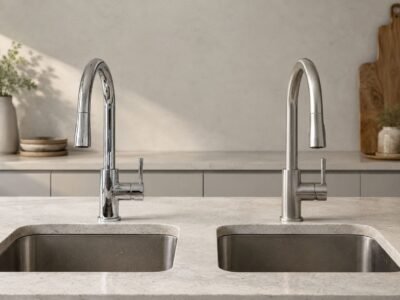
Stainless steel gives a cleaner look. It feels modern, quiet, and practical. Think white countertop, deep stainless sink, and a slim pull-down faucet under soft morning light. Nice, right?
Surface treatment is where many buyers miss the real difference.
Electroplating usually builds layers such as copper, nickel, and chrome. It is widely used on brass faucets because brass accepts plating well after polishing. ASTM B456 covers electrodeposited copper/nickel/chromium and nickel/chromium coatings where both appearance and corrosion protection matter.
PVD, or Physical Vapor Deposition, is a vacuum coating process. It is often used for brushed gold, gunmetal, rose gold, and black finishes. ISO 23100:2024 is written for decorative PVD coatings on kitchen and sanitary fittings, including performance and test methods.

At A-TORNEIRA, I always tell buyers this: finish color is only the first layer of the story. Adhesion, salt spray performance, coating thickness, and cleaning resistance decide how the faucet looks after two years.
Health and Safety Considerations: Lead Content vs. Lead-Free
This is where many homeowners slow down.
Older brass products could contain more lead. Modern drinking-water brass faucets should meet lead-free rules, but you need proof.
For the U.S. market, the EPA defines “lead free” for plumbing fixtures as a weighted average of no more than 0.25% lead across wetted surfaces.
Stainless steel has a simple advantage here. A true stainless steel faucet body is naturally lead-free.
My advice is direct: do not buy only by color or weight. Ask for material grade, lead-free certification, and test reports.
Cost Comparison and Long-Term Value
Brass is often more expensive than basic stainless steel or zinc alloy faucets. But high-grade stainless steel, especially 316 stainless steel, can also cost more.
A cheap faucet is only cheap at checkout.
If the cartridge fails, the finish peels, or the body corrodes, you pay again with repairs, returns, and customer complaints.
Before you compare prices, it helps to know what is inside the faucet. The body material is important, but the cartridge, aerator, hose, and mounting parts also decide how the faucet feels after daily use. I explain these parts in more detail in my guide to faucet body structure and internal components.
Look at the full value: body material, cartridge, aerator, hose, finish process, warranty, and after-sales support.
Pros and Cons Breakdown
Advantages and Disadvantages of Brass Faucets
Brass faucets have a strong reputation because they work well when the material is real and the finish is well made.
| Advantages of Brass Faucets | What It Means in Daily Use |
|---|---|
| Strong faucet body | The handle feels stable, not loose or hollow |
| Great design flexibility | Better for curved, classic, and luxury shapes |
| Wide finish choices | Chrome, gold, bronze, black, nickel, and more |
| Good corrosion resistance | Works well in most home water conditions |
| Easy to machine and plate | Good for detailed designs and smooth finishes |
| Long industry use | Many factories understand brass production well |
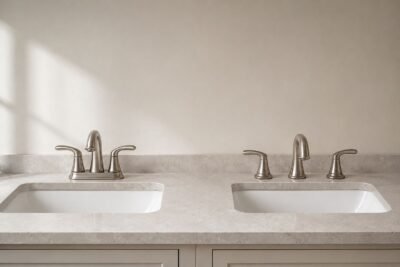
I like brass for decorative bathrooms. A brushed gold brass faucet over a stone vanity can change the whole room. It feels warm, rich, and calm.
Brass is also strong for traditional kitchen designs, bridge faucets, and hotel-style projects.
But brass needs honest material control.
| Disadvantages of Brass Faucets | Why It Matters |
|---|---|
| Quality varies a lot | Solid brass, brass-plated, and zinc alloy are different |
| Lead concern | Buyers must check lead-free certification |
| Possible dezincification | Aggressive water can damage poor brass |
| Finish depends on plating quality | Weak plating may peel, tarnish, or spot |
| Usually heavier | Shipping cost may be higher |
| Can cost more | Good brass is rarely the cheapest choice |
The biggest brass problem is confusion. I have seen buyers pay for “brass” and receive only a brass-colored faucet. That is a painful mistake.
So ask direct questions. Is it solid brass? Is it CW617N, low-lead brass, or DZR brass? Is the faucet certified for drinking water? What salt spray result does the finish pass?
For A-TORNEIRA customers, I prefer clear material descriptions. A good faucet should not need mystery to sell.
If your bathroom is humid, poorly ventilated, or exposed to hard water, material choice is only part of the battle. Small habits like drying the faucet base and avoiding harsh cleaners can make the finish last much longer. I share more practical steps in this guide on bathroom faucet corrosion prevention.

Advantages and Disadvantages of Stainless Steel Faucets
Stainless steel is the practical friend in the room.
It may not always look fancy, but it is clean, strong, and easy to explain to customers.
| Advantages of Stainless Steel Faucets | What It Means in Daily Use |
|---|---|
| Naturally lead-free body | Strong choice for drinking-water areas |
| Excellent rust resistance | Good for wet kitchens and bathrooms |
| Clean modern look | Matches stainless sinks and appliances |
| Good hygiene image | Popular in homes and commercial kitchens |
| Strong in humid areas | 316 works well near coastal air |
| Lower finish risk in natural color | Brushed steel does not need heavy decorative plating |
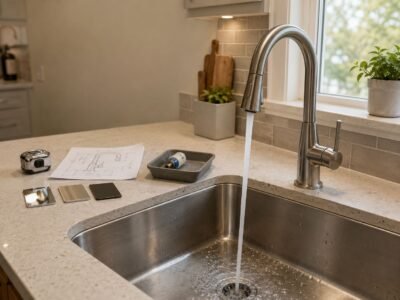
Picture a busy kitchen at 7 p.m. Pasta is boiling. Kids are washing hands. Sauce splashes near the sink. Someone pulls the spray head again and again.
A good stainless steel faucet handles that kind of life without drama.
But stainless steel is not perfect either.
| Disadvantages of Stainless Steel Faucets | Why It Matters |
|---|---|
| Fewer decorative styles | Less flexible for vintage or luxury looks |
| Shows water spots | Hard-water homes need more wiping |
| Can show scratches | Brushed surfaces may mark over time |
| Harder to form | Complex shapes may cost more |
| Grade confusion | Low-grade stainless may stain |
| “Stainless finish” can mislead | The body may not be stainless steel |
The water-spot issue is real. In hard-water homes, stainless steel can look cloudy if nobody wipes it. That is usually mineral buildup, not rust.
Also, check the grade. 201 stainless steel is not the same as 304 or 316. For faucets, that difference matters.
Which Faucet Material Is Right for You?
Best Suitability: Kitchen vs. Bathroom Environments
For kitchens, I often lean toward stainless steel when the buyer wants a clean, modern, lead-free body.
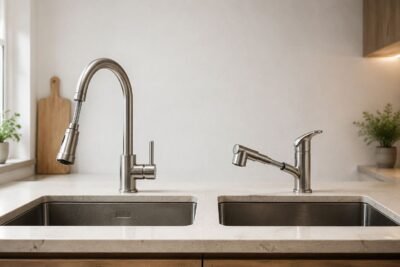
If you are choosing for a real kitchen project, start with the sink layout and daily workflow. A busy family kitchen often needs easy cleaning, smooth water control, and enough reach around the sink. You can browse A-TORNEIRA’s kitchen sink faucet options for daily use to compare practical styles before deciding on brass or stainless steel.
For bathrooms, brass often gives more design freedom. It works beautifully for guest bathrooms, hotel vanities, and warm decorative spaces.
For a bathroom, the faucet is also part of the room’s style. Height, finish, handle shape, and basin size all affect the final look. If you are planning a vanity, guest bath, or hotel-style space, A-TORNEIRA’s bathroom sink faucets for modern and classic vanities can help you match the right material with the right design.
For coastal homes, I would choose 316 stainless steel or high-quality plated brass with strong test reports.
For commercial spaces, stainless steel is easy to recommend. It looks clean and handles repeated use well.
A Strategic Framework for Choosing Based on Your Needs
Choose brass if you want:
- A richer decorative style
- More finish choices
- A heavy, premium feel
- Classic or luxury design
- Strong casting and machining flexibility
Choose stainless steel if you want:
- A naturally lead-free faucet body
- Strong rust resistance
- A modern kitchen look
- Easy matching with sinks and appliances
- Better performance in humid or coastal spaces
My rule is simple: never choose only by the outside finish. Ask what is under it.
Frequently Asked Questions (FAQs)
Do Brass or Stainless Steel Faucets Rust?
Brass does not rust like iron, but it can tarnish or corrode in poor water conditions. Stainless steel is highly rust-resistant, especially 304 and 316 grades. Low-grade stainless steel may still stain.
Which Faucet Material Actually Lasts Longer?
Both can last many years if the material and cartridge are good. In coastal or chloride-heavy areas, 316 stainless steel often has an edge. In normal homes, solid brass and quality stainless steel are both reliable.
Are Brass Faucets Always More Expensive Than Stainless Steel?
No. Solid brass often costs more than basic stainless steel, but premium 304 or 316 stainless steel can also be expensive. Price depends on grade, finish, cartridge, design, and certification.
How Do I Properly Maintain and Clean Each Material?
Use mild soap, water, and a soft cloth. Avoid bleach, strong acid cleaners, and rough pads. Wipe the faucet dry after use, especially if your home has hard water.