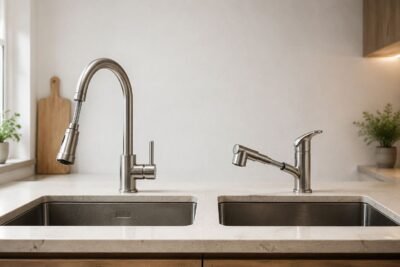
If you’ve ever tried to swap a kitchen faucet, you know the real fear isn’t the “install” part.
It’s the moment you turn the valves back on… and a tiny drip starts soaking the cabinet floor. Yep—been there!
I’ve been writing about faucets for 10 years, and I still do the same thing every time: slow down, prep well, and test like I don’t trust myself. Let’s do it together.
If you want the longer version with extra checklists and a bigger “before/after” view of the whole job, I also have a full walkthrough here: Replace a kitchen sink faucet step by step.
Essential Tools and Preparation
Check Faucet and Sink Compatibility
First, look at your sink. One hole? Three holes?
Your new faucet has to match, or you’ll need a deck plate.
Then check your shutoff valves under the sink. Most modern supply connections are common, but “common” doesn’t mean “guaranteed.”
One pro tip: choose a faucet that’s tested for drinking-water contact. NSF/ANSI 61 is a major health-effects standard for components that touch drinking water, including faucets.
When I install an A-TORNEIRA faucet for my own kitchen tests, this is one of the first things I confirm.
For most homes, a single handle kitchen faucet keeps installation simple and makes temperature control faster, especially when your hands are messy.
If you prefer separate hot and cold control, or you’re matching a classic kitchen look, a two handle kitchen faucet may fit your sink layout better.
Tools Needed for Kitchen Faucet Installation

Here’s the kit I keep close so I’m not stuck mid-job:
- Adjustable wrench
- Basin wrench
- Bucket and towels
- Flashlight or headlamp
- Screwdriver
- Plumber’s putty or silicone (only if your faucet requires it)
- New braided supply lines (recommended)
Yes, a headlamp matters. Under-sink light is always worse than you expect.
Water Shutoff and Pre-Installation Safety
Turn off the hot and cold shutoff valves under the sink.
Then open the faucet above to release pressure.
Put a towel under the shutoff valves and place a small bucket below.
Even when valves are “off,” a little water likes to surprise you.
If turning handles with dirty hands drives you crazy, a touchless kitchen faucet is a smart upgrade—less mess on the handle, and it’s great when you’re cooking.
How to Remove the Old Kitchen Faucet
Before you start this part, I came across this YouTube video—hope it helps!
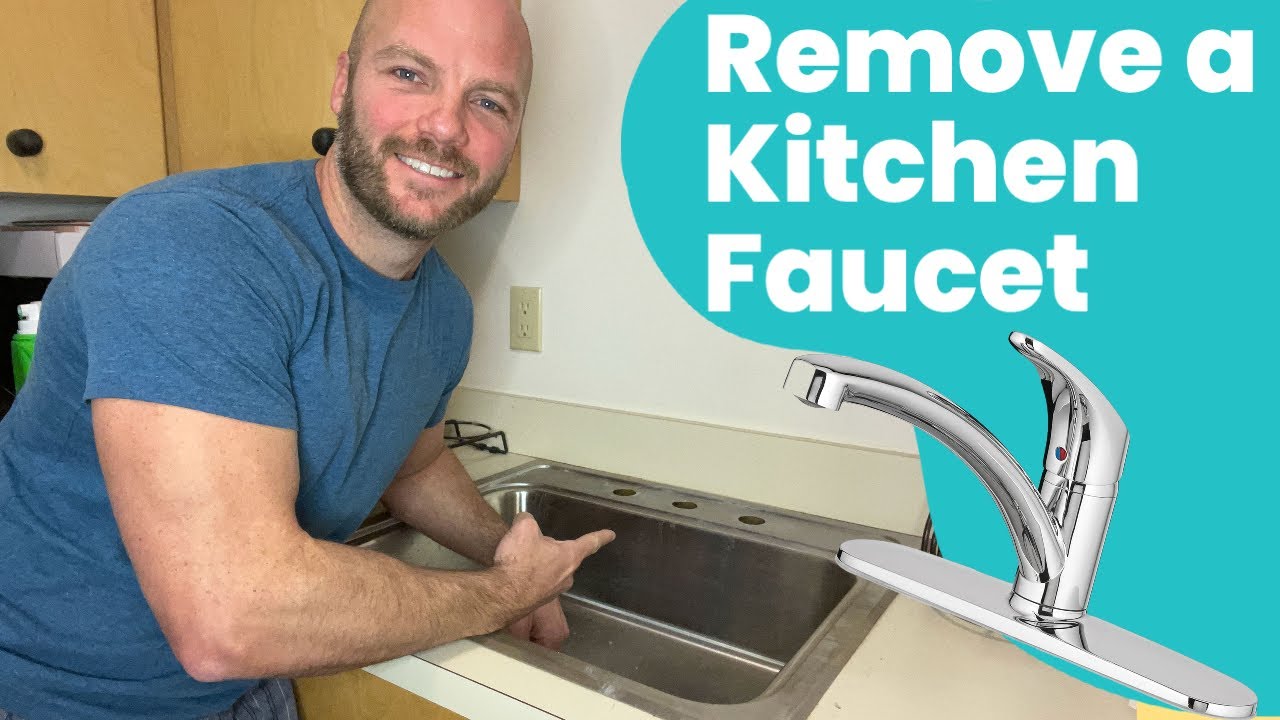
Disconnect the Kitchen Faucet Supply Lines
Use your wrench to loosen the nuts where the supply lines meet the shutoff valves.
Loosen the Mounting Nuts Under the Sink
Look up under the sink. You’ll see the mounting hardware holding the faucet to the sink.
This is where a basin wrench earns its paycheck.
Turn slowly. If the nut won’t move, don’t force it yet.
Some older faucets make removal harder because the handle or trim is in the way. If you need to take that off first, I wrote a quick guide here: Remove a faucet handle safely.
Remove Stuck or Corroded Faucet Fasteners
If the hardware is rusty, use penetrating oil and wait a few minutes.
If it’s still stuck, I’ll often switch tactics: short turns, back-and-forth.
Patience beats snapped parts.
Clean the Sink Deck for a Watertight Seal
Once the faucet lifts out, scrape off old putty or gunk.
Wipe the area clean and dry.
A clean, flat surface helps your new faucet seal correctly.
Step-by-Step Kitchen Faucet Installation
Step 1: Prepare the New Kitchen Faucet Components
Unbox everything and lay it out.
Check for these parts:
- Faucet body
- Gasket or rubber ring
- Deck plate (if included)
- Mounting bracket and nut
- Hose and quick-connect (for pull-down styles)
Many A-TORNEIRA faucet sets include a quick-connect style hose. I love it because it reduces “did I tighten that enough?” stress.
Step 2: Select and Apply the Correct Sealant
Let me say this clearly for beginners: if your faucet comes with a rubber gasket that sits under the base, you usually do not need plumber’s putty or silicone.
In that case, you simply place the gasket where the instructions show, and move on.
Only use sealant if your faucet or deck plate design calls for it, or if the instructions specifically say to.
When sealant is needed, apply it before you set the faucet or deck plate onto the sink, so it seals as you press it down.
Apply a thin, even bead.
Think “raincoat,” not “glue mountain.”

Step 3: Install and Align the Faucet on the Sink Deck
Feed the hoses and shank through the sink hole.
Before you tighten anything underneath, stand above the sink and align the faucet:
- Center it
- Make sure the handle can move freely
- Confirm the spout points straight
I always pause here and look at it from three angles.
It’s way easier to fix now than later.
Step 4: Tighten the Mounting Hardware Under the Sink
Under the sink, slide on the washer or bracket, then thread the mounting nut.
Tighten by hand first so you don’t cross-thread.
Then use the basin wrench or tool included with your faucet.
Don’t over-tighten.
If the faucet base starts to flex or squeak, back off a little.

Step 5: Connect Hot and Cold Water Supply Lines
Connect the faucet’s hot line to the hot shutoff valve, and cold to cold.
Hand-tighten first until the connection feels fully seated.
Then use a wrench to snug it an extra quarter-turn to half-turn—this is the “pro” range I use for most modern hoses with rubber washers.
If your old lines look stiff, cracked, or kinked, replace them.
New braided lines are cheap insurance.
Step 6: Install the Pull-Down or Pull-Out Sprayer Hose
If your faucet has a pull-down head:
- Connect the hose to the faucet’s quick-connect
- Tug gently to confirm it’s locked
If you like the one-hand rinse-and-spray style, you’ll probably enjoy a pull-down kitchen faucet—it’s the easiest format for daily dish cleanup.
Then attach the weight on the hose so it sits on the down-hanging side of the pull-out line.
Make sure the weight can move freely and won’t hit obstacles like the drain pipe, the shutoff valves, or a basket of cleaning supplies.
This is a super common beginner issue. The faucet is “installed,” but the hose retracts badly because the weight keeps bumping something.
Pro check: pull the sprayer out and push it back in a few times.
If it rubs or catches, fix the routing now.
Step 7: Turn On the Water and Check for Leaks
Close the faucet handle above the sink first.
Slowly open the shutoff valves under the sink.
Then look and feel around every connection.
My favorite trick: wrap each joint with a dry paper towel.
A leak shows up as a dark spot fast.

Don’t panic. Common faucet leak causes usually come down to a connection that needs re-seating, a washer that isn’t sitting flat, or a part that needs a small re-tighten.
I once saw a single shiny bead forming on a fitting—so small it looked harmless. Ten minutes later, the cabinet floor was wet. That one bead was a warning. Catch it early!
Step 8: Flush the Faucet and Clean the Aerator Screen
Run cold water for a few minutes, then hot water.
Yes, flushing clears debris—but it also pushes out stale water that’s been sitting in the pipes, which helps keep your drinking water fresher.
Research on building plumbing shows water quality can change after stagnation, and flushing can refresh conditions at the tap.
If the flow feels weak right after installation, the aerator is the first place I check. If yours is stuck or you’re worried about scratching the finish, follow my quick method here: Remove a faucet aerator without scratching.
If flow seems weak, remove and rinse the aerator screen.
I’ve fixed “low pressure” in 30 seconds just by clearing grit.

Troubleshooting and FAQ
Fixing Common Post-Installation Problems
Faucet Leaks at the Supply Connection
Turn off the valves. Tighten the fitting slightly.
Still leaking? Re-seat the connection and try again.
Low Water Pressure After Installation
Check the aerator screen first.
Then confirm the shutoff valves are fully open.
Faucet Base Is Loose or Wobbly
The mounting nut likely needs a bit more tightening.
Hold the faucet straight from above while you snug it below.
Sealants and Tapes to Use and Where to Apply Them
Use sealant only under the base or deck plate if required.
Tape is for threaded pipe-style connections, not most compression nuts.
Frequently Asked Questions About Installation and Maintenance
Tightening Mounting Nuts and Preventing Movement
Tighten until the faucet stops moving, then give a small extra snug.
If the sink flexes, you went too far.
Replacing Supply Lines During Installation
If the lines are old, stiff, or kinked, replace them.
It’s fast and helps prevent leaks later.
Preventing Future Leaks and Common Wear Points
Check under the sink once a month for the first few months.
Most leaks start small, then grow.
When Professional Plumbing Help Is Recommended
Call a plumber if shutoff valves won’t close, won’t open, or start leaking.
Also call if you see corrosion on the valve or pipe threads.
If you’re installing an A-TORNEIRA kitchen faucet, this exact flow still applies—prep, clean surfaces, align carefully, and test like your cabinet depends on it… because it does!