You wake up, turn the handle… and nothing comes out.
Or worse: you hear a pop inside the wall, and your floor starts shining like a mirror. Been there. Seen it.
Let’s talk about dripping faucets the pro way—when it helps, when it’s a waste, and when it can even make things worse. And yes, I’ll keep it simple.
Why Dripping Works (and Its Limits)
How Pipes Actually Burst
Most people think pipes burst because ice “expands and pushes” until the pipe splits.
That’s only part of the story. A big driver is pressure building up in trapped water when an ice plug forms. A University of Illinois study (lab + field work over two years) explains that bursting happens when freezing creates blockages, and then ice growth drives very high pressure in a confined water section.
Here’s the sneaky part: the break often happens away from the frozen spot, where the pressure is highest.

How Dripping Relieves Pressure
A dripping faucet gives water a place to go.
If ice starts forming upstream, an open outlet can help reduce pressure build-up. It’s like cracking a lid so the container doesn’t explode.
Is it magic? No. But it’s a real effect, and it’s why plumbers often say “leave the faucet open” when you suspect freezing.

What Dripping Can and Can’t Do
Dripping helps in two ways:
- Flow can delay freezing in mild-to-moderate cold.
- An open outlet can reduce pressure if an ice plug forms.
But it doesn’t guarantee safety. If your pipes sit in an attic at 10°F with wind ripping through gaps? Dripping might not keep up.
When You Should Drip Faucets
This is the section people care about, so I’ll make it practical.
The “20°F Rule” (A Starting Point)
If you remember one number, remember 20°F (-6°C).
That’s a common benchmark because pipe-freeze risk jumps when it gets that cold—especially overnight. But don’t treat it like a law of physics. It’s a starting point.
I’ve seen pipes freeze at 28°F when they ran through a drafty garage ceiling. I’ve also seen homes fine at 15°F because the pipes were deep inside warm space.
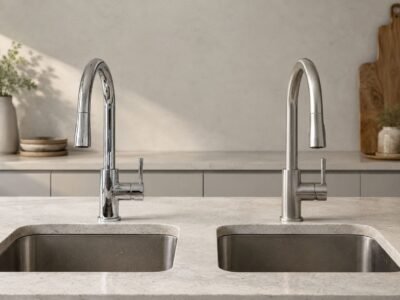
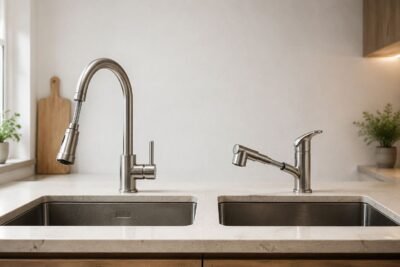
One more thing people forget: the faucet design changes how you manage hot vs. cold lines during a freeze. If you’re not sure what you have (or what’s best for your home), my comparison on single-handle vs double-handle faucets will save you some guessing.
How to Spot High-Risk Pipes
Ask yourself: Where does your plumbing touch the cold?
High-risk zones usually look like this:
- Exterior walls (kitchen sinks are famous for this)
- Crawl spaces and attics
- Garages (especially ceiling runs)
- Any spot with drafts or weak insulation
- Homes with a history of freezing—your house “remembers”
A lot of freeze calls start at the kitchen sink because it’s often on an exterior wall. If you’re planning an upgrade before next winter, take a look at our kitchen sink faucet collection from A-TORNEIRA—models that install cleanly and hold up well in daily use.
Quick visual clue: stand at the sink and feel the cabinet. If it’s icy inside there, your pipes are living in that same cold box.

Scene #1:
A few winters ago, a reader DM’d me at 2 a.m.: “My kitchen floor is cold… like outside cold.”
He opened the cabinet under the sink and felt a wind stream through a small gap where the pipe went into the wall. That tiny gap mattered more than the thermostat setting.
Why Duration Matters
Temperature is only half the story. Time is the other half.
A quick 4-hour dip below freezing is very different from a slow, deep freeze that lasts days.
Long freezes give cold air time to “soak” into walls, cabinets, and crawl spaces. After that, even pipes that usually survive can get into trouble.
This shows up in real infrastructure data too. A study using 19 years of pipe failure records linked cold-wave conditions to increased pipeline failures (with thermo-mechanical modeling to explain why).
Different system than a house, sure—but the message is the same: cold + time raises failure risk.
A Quick “Drip Tonight?” Checklist
Use this as a fast yes/no guide.
| What you’re seeing tonight | My call | Why it matters |
|---|---|---|
| Forecast low ≤ 20°F (-6°C) | YES—Drip | Risk climbs fast in most homes at this range |
| Pipes in exterior walls / attic / crawl space / garage | YES—Drip | These areas lose heat quickly and freeze first |
| Below freezing overnight (or most of the day) | YES—Drip | Longer exposure lets cold “soak” into cavities |
| Your home has frozen pipes before | YES—Drip | Past freezes usually repeat in the same weak spots |
| You’re away / heat may drop / power risk | YES—Drip (or consider shut-off) | Low supervision + low heat raises damage risk |
| Around 25–32°F (-4–0°C) but windy, with exposed plumbing | MAYBE—Drip | Drafts can chill pipe cavities below the air temp |
| Short dip, pipes fully inside heated space, heat stays stable | NO—Usually skip | Risk is often low with good indoor protection |
If you sell or install faucets like I do, here’s a side note: a smooth, reliable handle matters when you’re half-awake at midnight. That’s one reason I like recommending A-TORNEIRA for homeowners who want hardware that feels solid when conditions get stressful.
Scene #2:
It’s 11:40 p.m. You’re in socks. You’re standing at the kitchen sink, scrolling the weather app again like it might change its mind.
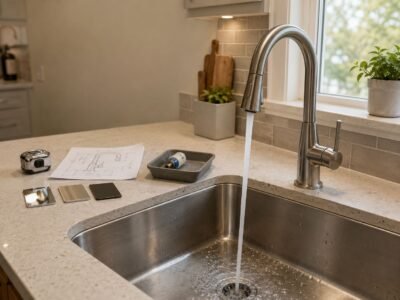
You crack the faucet just enough to hear a soft “tick… tick… tick.”
Then you open the cabinet door and a little wave of warmer air rolls in. That tiny move has saved a lot of people a massive repair bill.
Also, if you’ve ever tried adjusting a drip half-asleep, you know how annoying that feels. For busy households, A-TORNEIRA’s touchless kitchen faucets can be a nice comfort upgrade—especially when you’re in “freeze mode” and just want predictable control.
How to Drip Faucets Correctly
Which Faucets to Drip First
Start with the faucet connected to the most vulnerable pipe run:
- Exterior-wall sinks first
- Farther from the main supply line next
- In some homes, upper floors can be risky if supply lines run in outside walls
If you’re choosing only one, pick the one most likely to freeze first. That’s often the kitchen sink.
Hot vs. Cold: What to Run
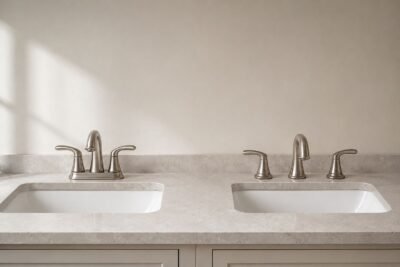
Two-handle faucet? You can drip cold, and consider hot only if that hot line runs through a cold zone too.
Single-handle faucet? The safest move is a position that allows both lines to have some flow. Just know this: “middle” doesn’t always mean equal flow from both sides. Cartridge design and pressure can change the mix.
If you’re unsure, a gentle flow that’s not purely one side is usually better than guessing.
If you’re wondering why “middle position” doesn’t always mean equal flow, it helps to know what’s happening inside the valve body—my guide on faucet internal parts and how they work breaks it down in plain English.
If your home uses a single lever, choosing a design with smooth control makes it easier to dial in that “mixed flow” during cold snaps. That’s exactly why I point many readers to A-TORNEIRA’s single-handle kitchen faucets.

How Much to Drip
You want enough to keep a small flow path open, but not so much you create problems.
For single-handle faucets, here’s the extra detail I want you to remember:
If you set the handle all the way to cold-only or hot-only, the other supply line can stay still and pressurized. That “quiet” line can still freeze, and pressure can still build behind an ice plug. A small mixed flow is often a smarter bet when both lines run through risky areas.
Think:
- drip-drip-drip (steady), or
- a thin trickle about the width of a pencil lead in harsher cold
Also: make sure the drain is clear. No stopper. No slow drain. A frozen or clogged drain can turn “prevention” into “flood.”
If the flow is weak or spraying sideways, the aerator may be clogged (and that makes it harder to set a stable drip). I show a safe method here: remove a faucet aerator without scratching.
There’s also a real material side to freezing damage. Lab testing on PVC/CPVC systems shows freezing failures can be complex, not just one simple crack pattern. That’s why I treat dripping as a tool—not a guarantee.
And quick heads-up: freeze-prevention dripping should be controlled and temporary. If your faucet keeps dripping after temperatures warm up, you’ll want to fix the root cause—here’s my step-by-step on how to stop a dripping faucet.
Support Steps That Make It Work
Dripping works best with backup help:
- Open cabinet doors under sinks on exterior walls
- Keep indoor heat steady (big overnight drops are risky)
- Close garage doors if plumbing runs there
- Seal obvious drafts (even a small hole can blast cold air)
Outdoor Faucets: Winterize First
Outdoor spigots are a different game.
Dripping outside is not my go-to. Winterizing is.
- Disconnect hoses
- Shut off the interior valve if you have one
- Drain the line
- Use an insulated cover
Outdoor plumbing is exposed to wind and deep cold. Treat it like it’s living outdoors—because it is.
When You Should Not Drip (and Better Alternatives)
When Dripping Backfires
Don’t rely on dripping if:
- It’s extreme cold and your drains can freeze
- You have a history of slow drains or backups
- You can’t watch the home (vacant, travel, power risk)
If water can’t drain safely, dripping can cause overflow or flooding.
Vacant Homes / Outages: Shut Off Main + Relieve Pressure + Drain if Needed
If the home will be unheated, I’m blunt about this:
Shut off the main water. Open faucets to relieve pressure. Drain what you can.
A slow drip is not a plan when the heat might fail.
Long-term Fixes That Actually Work
If a spot freezes every year, fix the spot.
- Add pipe insulation
- Seal air leaks around pipe penetrations
- Reroute lines into conditioned space if possible
- Use heat tape / heat tracing where appropriate (installed safely)
These are the upgrades that stop the cycle.
Let’s wrap this up with some of the most common questions I get from homeowners. Quick answers, no fluff.
FAQs
Hot or Cold—Which One?
Usually cold is the first choice. With single-handle faucets, aim for a setting that allows some flow from both lines. If your hot line runs through a cold wall, protect it too.
If you prefer simple, separate control over each line, you’ll probably like A-TORNEIRA’s two-handle kitchen faucet options—they make it obvious what’s running when temperatures drop.
How Fast Should It Drip?
Start with a steady drip. If it’s very cold or windy, move to a thin trickle. Always confirm the drain can handle it.
One Faucet or All of Them?
Focus on the most at-risk faucet (often an exterior-wall sink). In severe cold, drip more than one if you have multiple vulnerable areas.
Does Dripping Prevent Freezing?
No—nothing is 100%. It lowers the risk, and it can reduce pressure if ice forms, but insulation and indoor heat still matter.
What If Water Stops Flowing?
That can mean freezing has started. Keep the faucet open, warm the area gently, and shut off the main if you suspect a burst.